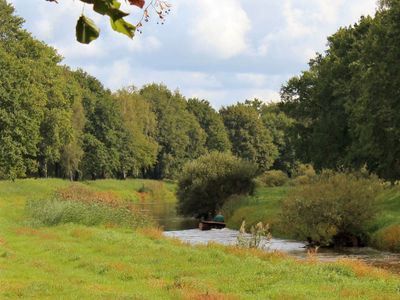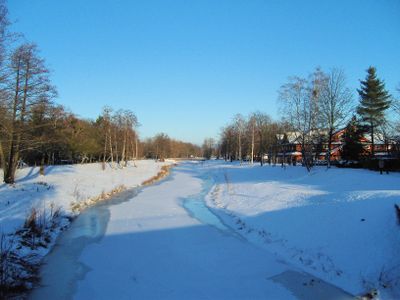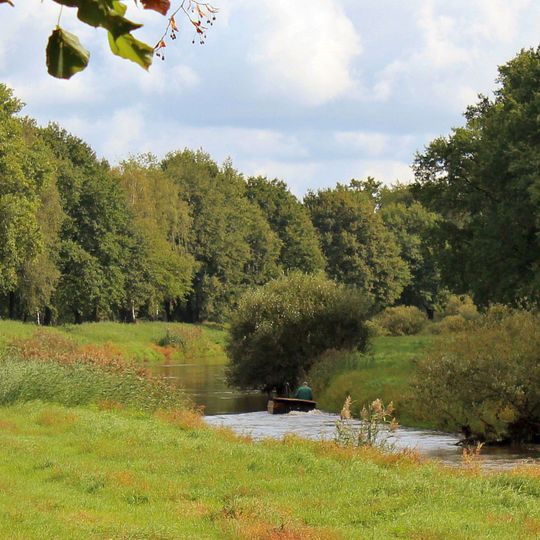
Black Elster, River in eastern Saxony, Germany
The Black Elster flows through Saxony and Brandenburg, traveling approximately 179 kilometers before joining the Elbe River near Wittenberg. The waterway receives contributions from tributaries including the Pulsnitz, Große Röder, and Kleine Elster throughout its journey.
The Black Elster developed as a waterway in a region shaped by multiple territorial changes over time. In 1813, the area witnessed significant military movements during the Napoleonic Wars as armies reorganized across eastern Germany.
The river has different names across local languages: Schwarze Elster in German, Carny Halšter in Lower Sorbian, and Čorny Halštrow in Upper Sorbian. This linguistic diversity reflects the region's cultural heritage shaped by several communities.
The river is most accessible during warmer months when water flow is stable and riverbank access is easier. Those exploring the waterway should follow established regional walking paths and use designated crossing points when moving between riverbanks.
Between Hoyerswerda and Senftenberg, the river passes through a major lignite mining district that shaped the region's industrial past. These mining landscapes reveal the economic transformations that have reshaped eastern Germany over recent decades.
The community of curious travelers
AroundUs brings together thousands of curated places, local tips, and hidden gems, enriched daily by 90,807 contributors worldwide.