Zollkanal, Historic canal in HafenCity, Germany
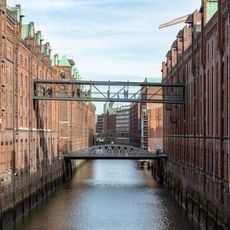
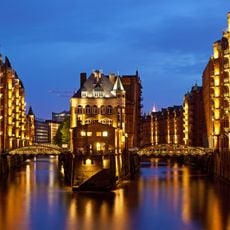
The Zollkanal is a 45-metre-wide canal along the north edge of the Speicherstadt, linking the Binnenhafen with the Oberhafen. It has no lock, so the Elbe's tide raises and lowers its water. From west to east it is crossed by the Brooksbrücke, the pedestrian Jungfernbrücke, the Kornhausbrücke, the Wandrahmsteg and the Oberbaumbrücke.
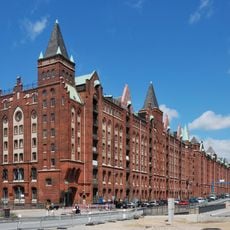
The Zollkanal was created in the late 19th century by widening the medieval Binnenhafen and Oberhafen to form a waterway outside the free port established in 1888. It served as the customs border until 2003. Its construction required about 20,000 residents of the Altstadt to leave their homes, and the resulting overcrowding contributed to the 1892 cholera epidemic.
The waterway marks the historical boundary between Hamburg's historic core and its free port zone, shaping how locals and visitors understand the city's trade-based development. Walking along the banks, people experience this division as a tangible feature of urban geography.
The waterside paths are easily accessible on both sides of the canal with level walking routes. The area nearby includes a museum building with exhibitions plus cafes and restaurants where you can stop for refreshments.
The water level rises and falls daily with the Elbe River's tides since the canal connects directly to the main river. This constant tidal movement visibly demonstrates the physical link to the river that built Hamburg's strength as a port city.
The community of curious travelers
AroundUs brings together thousands of curated places, local tips, and hidden gems, enriched daily by 93,190 contributors worldwide.