Villa Ten Hompel, Memorial museum in Münster, Germany
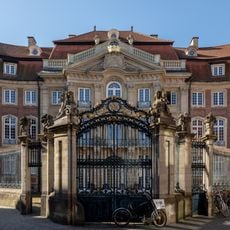
Villa Ten Hompel is a heritage-listed residential building in Münster that now serves as a memorial and museum. The house displays exhibitions and archives that document how police and administrative officials operated during the Nazi period.
Rudolf ten Hompel, co-owner of the Wicking cement works and a Centre Party Reichstag deputy from 1920 to 1928, had the villa built from 1924. After his 1935 conviction for embezzlement and forgery, the Reich treasury acquired it in 1939. From April 1940 the Order Police used it as headquarters for Military District VI, directing over 20 police battalions and organizing deportation guards. From 1954 the reparations office paid 100 million D-Marks to 12,000 applicants by 1968.
The name honors Rudolf ten Hompel, an industrial merchant who originally built it as a residence. Today visitors use this space to understand how local administration and police operated during the Nazi period.
The building is located in a central neighborhood and accessible by public transportation. Visitors should know that opening hours are limited, so it pays to check the current schedule in advance.
The building preserves records showing how ordinary administrative officials were drawn into the structures of the Nazi period. These documents make clear that the machinery of repression relied on people working in everyday positions.
The community of curious travelers
AroundUs brings together thousands of curated places, local tips, and hidden gems, enriched daily by 93,952 contributors worldwide.