Hülfensberg, Mountain summit in Geismar, Germany
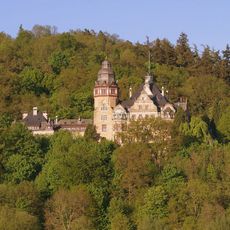
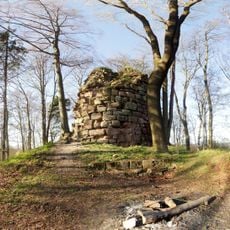
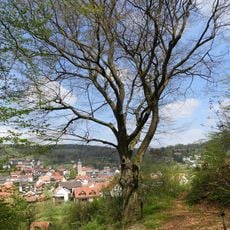
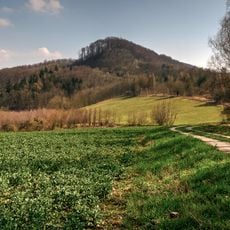
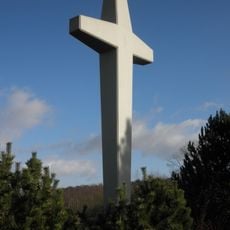
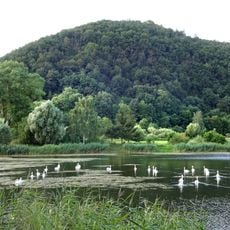
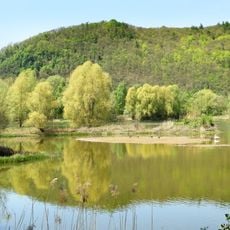
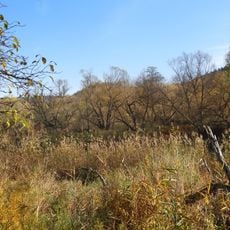
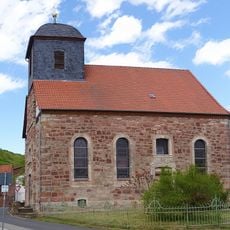
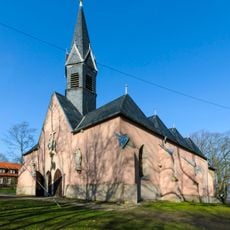
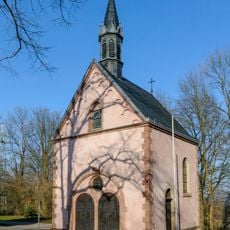
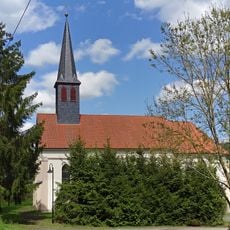
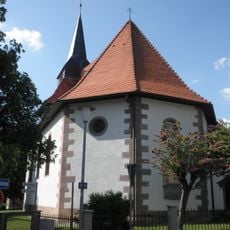
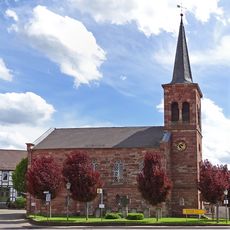
Hülfensberg is a 448-metre wooded summit in the Geismar municipality, near the former inner-German border. Its plateau holds the St. Salvator church, a Franciscan friary, a Boniface chapel and a large free-standing cross. The mountain is a cone-shaped outlier of Lower Muschelkalk limestone over Buntsandstein.
The mountain was originally called Stuffenberg but received its current name in the 14th century when a particular crucifix became the center of religious activity. The name change marked a turning point in the place's importance as a pilgrimage site.
The name Hülfensberg comes from the Hülfenskreuz, a 12th-century Romanesque wooden crucifix of Christ crowned as king, kept in the church on a red background with gold stars and the Latin motto Salve Crux Pretiosa. Pilgrims have come to it since the late Middle Ages, when the mountain was among the seven most popular pilgrimage sites in Germany. Four major pilgrimages are held each year, drawing 1000 to 2000 participants each.
The mountain is accessible on foot and sits at a height that makes for a clear hike with moderate climbing. It is wise to bring comfortable shoes since the paths wind through forest and may vary in condition depending on the season.
After German division, the mountain was difficult to reach for a long time due to its proximity to the border, and it experienced a sharp decline in visitors. This period of isolation shaped the character of the place for decades.
The community of curious travelers
AroundUs brings together thousands of curated places, local tips, and hidden gems, enriched daily by 93,597 contributors worldwide.