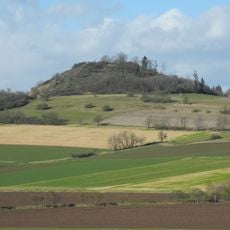
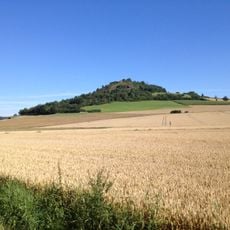
Megalithic tomb, Neolithic burial monument near Fritzlar, Germany
The Züschen megalithic tomb is a rectangular stone chamber near Fritzlar made from massive sandstone blocks arranged upright. It spans about 20 meters in length and 3.5 meters in width, showing the impressive building methods of prehistoric people.
A local miller discovered the tomb in 1894 while removing sandstone blocks from his field. Archaeological excavations in 1939 and 1949 uncovered the structure and revealed its importance for understanding Neolithic cultures in the region.
The carvings on the interior slabs are made of rows of punched dots and show stylised cattle, often two animals linked by a line interpreted as a plough, or more rarely by a yoke and pole suggesting a cart. Similar cattle teams appear in much later rock art at Valcamonica in Italy and Mont Bégo in France.
The site has an accessible viewing area where you can examine the construction and stone techniques of prehistoric builders. It is helpful to wear appropriate clothing since the location is exposed to the elements.
The anteroom is separated from the burial chamber by a slab pierced by a circular hole 50 cm across, the Seelenloch. Its floor was densely trampled mud, and a continuous ash layer lay in the centre, suggesting rituals held there. Whether the hole could be closed, as in some French tombs, is unknown.
The community of curious travelers
AroundUs brings together thousands of curated places, local tips, and hidden gems, enriched daily by 92,910 contributors worldwide.