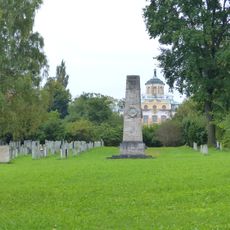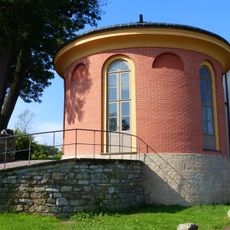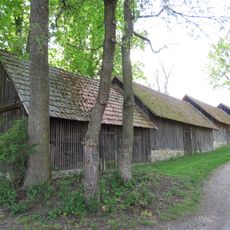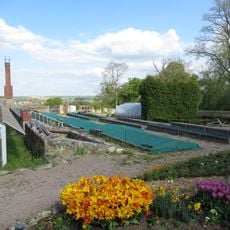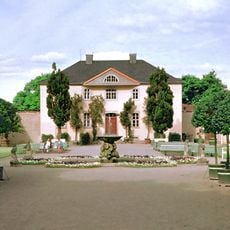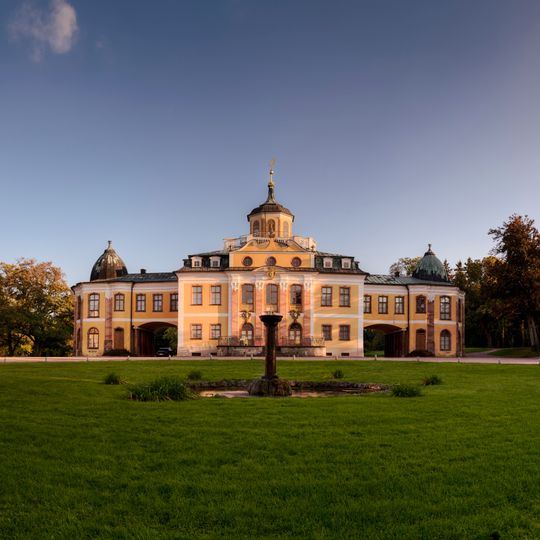
Schloss Belvedere, Baroque palace in Weimar, Germany.
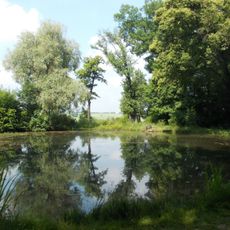
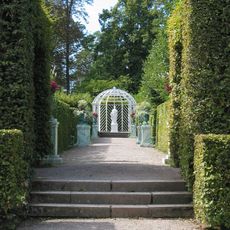
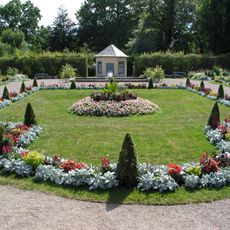
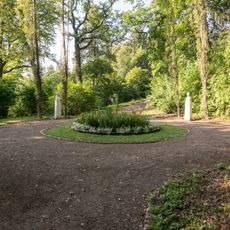
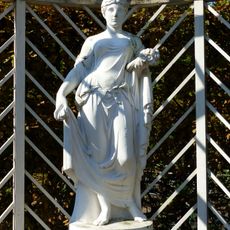
Schloss Belvedere is a Baroque palace in Weimar with a central building flanked by symmetrical pavilions and surrounded by extensive gardens. The grounds feature both formal French-style layouts and more naturalistic English garden sections, with an Orangery and additional service buildings completing the complex.
Built from 1724 to 1748 for Duke Ernst August I of Saxe-Weimar, the palace was designed by Gottfried Heinrich Krohne, with Johann Adolph Richter contributing to the orangery. It was one of roughly twenty hunting and pleasure palaces the duke owned, and its layout without outbuildings survives. From 1796 to 1801 it housed a school for wealthy young Englishmen led by Jean-Joseph Mounier, and Goethe finished Torquato Tasso here in 1789.
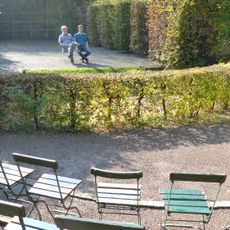
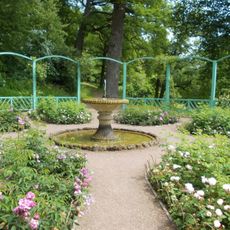
The cavalier houses around the forecourt carry the names Beethovenhaus and Bachhaus to the east, Mozarthaus and Haydnhaus to the west; they now serve the Franz Liszt University of Music as practice rooms for singers, guitarists and accordionists. In the park, the Russian Garden laid out from 1811 to 1815 for Tsar's daughter Maria Pavlovna copies the private garden of the tsars' summer residence at Pavlovsk, and a hedge theatre was added in 1823, a maze in 1843.
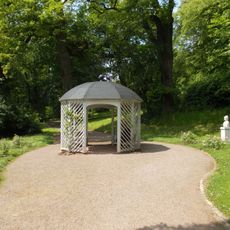
The palace stands on the Eichenleite hill about four kilometres south of Weimar's centre, reached by the straight Belvedere Allee; the grounds slope north, so the walk back is uphill. The park covers 43 hectares, with the orangery and its carriage collection in the eastern section. The cavalier houses flanking the forecourt now serve the Franz Liszt music academy.
The Orangery holds a notable collection of historic carriages that reveal how transportation looked in earlier times. A horticultural catalog from 1820 documents exotic plants that once grew on the grounds.
The community of curious travelers
AroundUs brings together thousands of curated places, local tips, and hidden gems, enriched daily by 92,925 contributors worldwide.