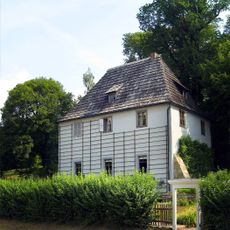
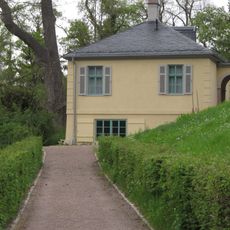
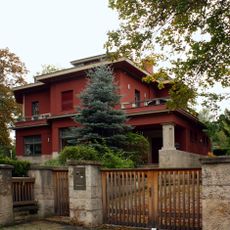
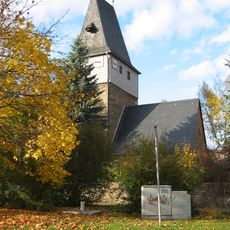
Deutsches Bienenmuseum Weimar, Bee museum in Weimar, Germany.
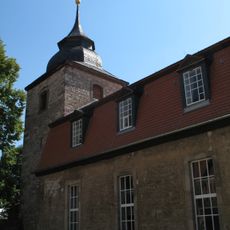
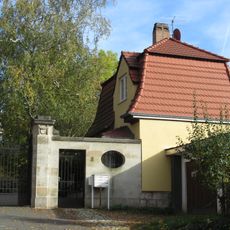
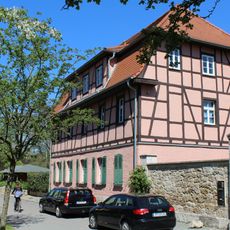
The Deutsches Bienenmuseum Weimar occupies the former Goldener Schwan inn at Ilmstraße 3 in Oberweimar, whose gateway inscription reads 1677, dating it just after the village fire of 1676. Inside, around 1500 objects cover bee biology, the history of beekeeping and its links to nutrition, art, religion and ecology, with a children's trail and an outdoor bee garden.
Ferdinand Gerstung founded this educational institution in 1907, making it the first museum in Germany dedicated to beekeeping. This founding marked the beginning of systematic documentation of beekeeping history.
The museum displays traditional craftsmanship through decorated beehives and maintains active observation hives in its garden for educational purposes.
The museum stands at Ilmstraße 3 in Oberweimar, in the former Goldener Schwan inn; the entrance gate bears the year 1677. The building is listed as not wheelchair accessible, so visitors with mobility needs should plan accordingly. The permanent exhibition includes a children's route, and the outdoor area with bee houses, wagons and the bee pasture garden can be visited as well.
The museum holds the last surviving wax hammer from 1637, which was still in regular use until 1912 in the small mining and shoemaking town of Siebenlehn. It is not kept in a courtyard side room but belongs to the collection alongside the world's largest set of figure-shaped beehives.
The community of curious travelers
AroundUs brings together thousands of curated places, local tips, and hidden gems, enriched daily by 92,893 contributors worldwide.