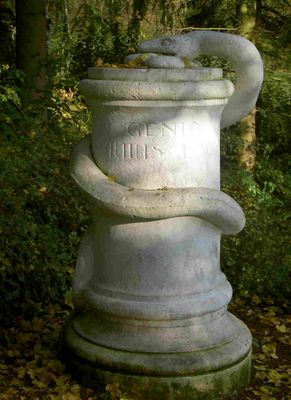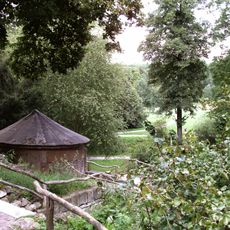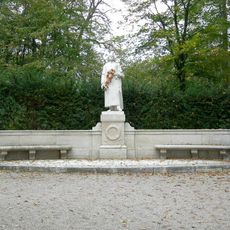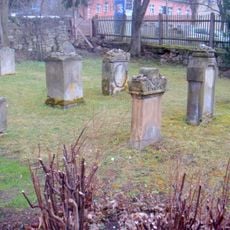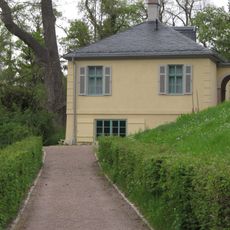
Schlangenstein in Weimar, Stone monument in Park an der Ilm, Weimar, Germany.
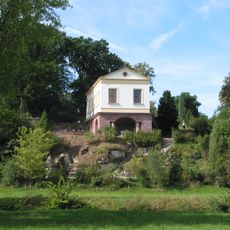
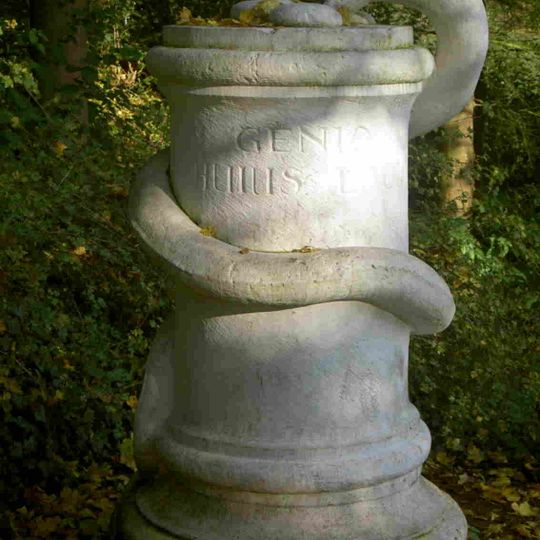
The Schlangenstein in Park an der Ilm shows a snake coiled around a stone pillar with its mouth biting into bread at the top. The version standing in the park today dates from 1968 and was created by Franz Dospiel, while the original sculpture resides in the Roman House.
Martin Gottlieb Klauer created the original in 1787 when commissioned by Duke Carl August while Goethe was away traveling in Italy. The sculpture was made during a period when literary symbols were becoming prominent features in Weimar's parks.
The inscription on the monument speaks to the soul and spirit of this place in the park. It connects the natural world around it with the literary traditions that shaped Weimar.
The monument stands in the open park and is accessible year-round without special entry requirements. Visitors should note that only the 1968 copy is on display here, with the original housed elsewhere for preservation.
The snake with its tail in its own mouth draws from a classical symbol used in ancient art and alchemy. This image held special appeal for Weimar's intellectual circles and appears throughout the literary works of that era.
The community of curious travelers
AroundUs brings together thousands of curated places, local tips, and hidden gems, enriched daily by 60,000 contributors worldwide.