Museum Wiesbaden, Art and natural history museum in Wiesbaden, Germany
Museum Wiesbaden houses art and natural history collections under one roof, with exhibition spaces spread across multiple levels. The displays show both regional and broader collections of paintings, sculptures, and natural specimens.
The three museums originated in 1825, when Goethe persuaded Frankfurt collector Johann Isaac von Gerning to give his art and natural history collections to the Duchy of Nassau for an annuity. From 1821 they occupied the Erbprinzenpalais on Wilhelmstraße. After the city took over in 1899, architect Theodor Fischer designed a new three-wing building at Wilhelmstraße/Rheinstraße, its foundation stone laid in 1913. The painting gallery opened on 1 October 1915; the natural history and Nassau antiquities museums reopened on 15 July 1920.
The museum's best-known holding is the Alexej von Jawlensky collection, built up by director Clemens Weiler from the 1950s; Jawlensky's late works are a local point of reference. The Nassauischer Kunstverein, founded in 1812, organized changing exhibitions in half of the picture gallery in the 1920s and early 1930s.
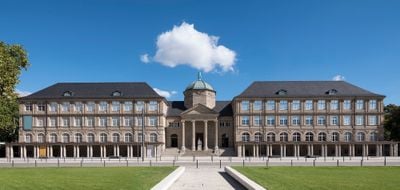
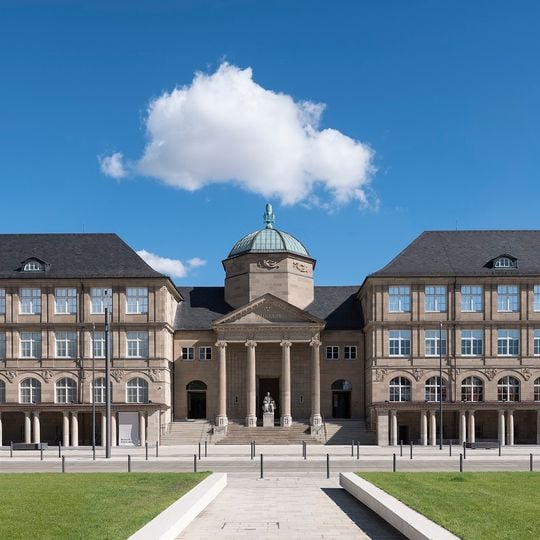
The museum stands at the corner of Wilhelmstraße and Rheinstraße in the Südost district, a short walk from the city centre. The entrance lies beneath the four-columned portico and pediment of the central section, reached by steps. The north wing holds the natural history collection, the south wing the art galleries.
The natural history section combines regional rocks and fossils with international specimens, revealing how local geology connects to the wider world. Many visitors overlook this part entirely and focus only on the art galleries.
The community of curious travelers
AroundUs brings together thousands of curated places, local tips, and hidden gems, enriched daily by 92,807 contributors worldwide.