Bayreuth Festival Theatre, Opera house on a green hill in Bayreuth, Germany
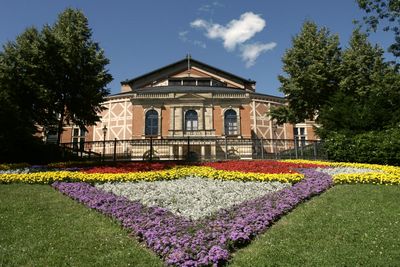
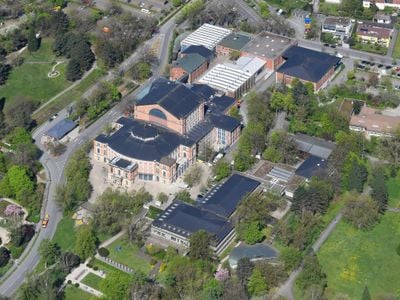
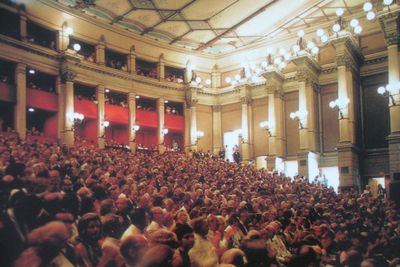
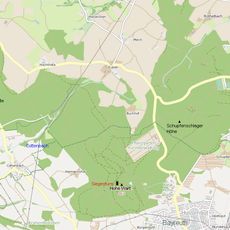
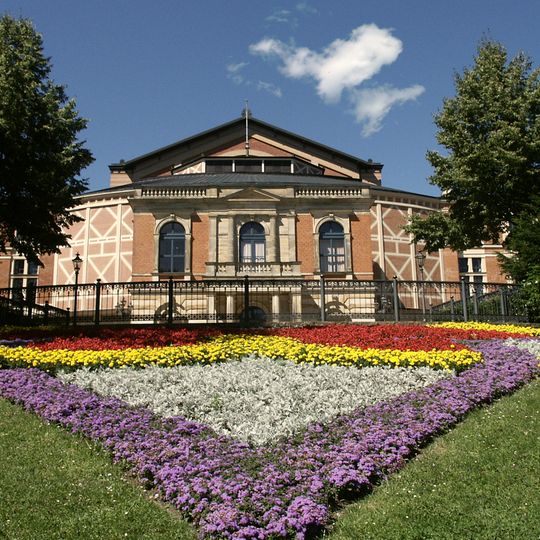
The Bayreuth Festival Theatre is an opera house on the Green Hill north of Bayreuth, built mainly of wood with 1,925 seats in a single steeply raked wedge and galleries along the back wall. Its double proscenium and recessed orchestra pit create what Wagner called a "mystic gulf" between audience and stage. The exterior is mostly undecorated brick, with ornamentation only on the entry façade.
Wagner adapted an unrealised Munich design by Gottfried Semper without his permission; the architect Otto Brückwald carried out the building on the Green Hill from 1872 to 1875. The foundation stone was laid on 22 May 1872, Wagner's 59th birthday, and King Ludwig II of Bavaria was the main funder. The house opened from 13 to 17 August 1876 with the first complete performance of the four-opera Ring des Nibelungen.
The theatre serves as the setting for the annual Bayreuth Festival, where Wagner's operas are performed in sequence and visitors from around the world gather. These performances have become a major gathering point for those interested in German music and opera culture.
The hidden orchestra pit beneath the stage floor allows audiences to focus entirely on the singers without being distracted by musicians. Every seat in the house offers a clear view of the stage, making your visit particularly enjoyable.
The first violins sit to the right of the conductor rather than the left, and the double basses, cellos and harps are split into groups on either side of the pit. Most players sit directly under the stage and cannot see or hear the singers, so they depend on the conductor.
The community of curious travelers
AroundUs brings together thousands of curated places, local tips, and hidden gems, enriched daily by 93,771 contributors worldwide.