Alter Elbpark, Historical park in Neustadt and St. Pauli, Hamburg, Germany.
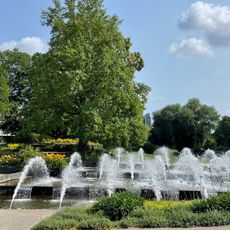
Alter Elbpark is a historical green space covering nearly four hectares that connects the northern section of Planten un Blomen with Stintfang hill. The terrain slopes toward the Elbe river and features multiple pathways winding through its undulating landscape.
The park occupies the site of the Casparus bastion, which with the Albertus bastion (today Stintfang) formed the western end of Hamburg's ramparts from the Thirty Years' War onward. After the French occupation the fortifications were decommissioned in 1820–1837 and turned into an English-style park under landscape gardener Isaak Altmann, who kept the old bastions as viewpoints. In 1869 the grounds hosted the International Horticultural Exhibition, laid out by nurseryman Friedrich Jürgens. The section north of Seewartenstraße was officially renamed Alter Elbpark in 1906, the year the Bismarck Monument was inaugurated.
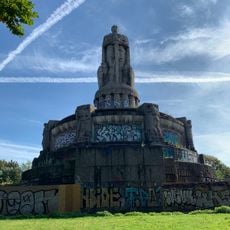
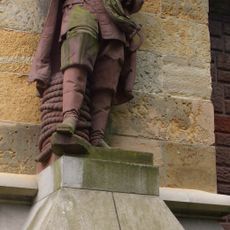
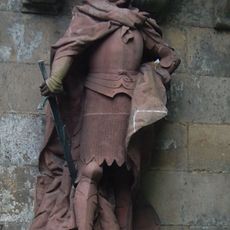
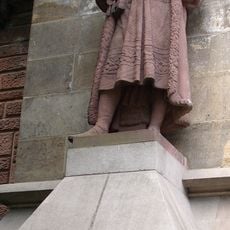
The Bismarck Monument has shaped the park's character for over a century and serves as a landmark that many Hamburg residents recognize instantly. Visitors naturally gravitate toward it during walks, making it a focal point for people seeking respite.
The park is easily accessible via the U3 line at Sankt Pauli station or via S1, S2, and S3 trains at Landungsbrücken. A playground is located in the northwestern section for families, and entry is free at all times.
The park's oldest trees, oaks, chestnuts and planes, date from the mid-19th century; the Japanese cherry trees were replanted in the 1950s. An Aleppo pine also grows here, a species rarely seen in northern Germany. The grounds were laid out by garden entrepreneur Friedrich Jürgens for the 1869 International Horticultural Exhibition.
The community of curious travelers
AroundUs brings together thousands of curated places, local tips, and hidden gems, enriched daily by 93,053 contributors worldwide.