St. Pauli Landing Stages, Waterfront pier complex in St. Pauli, Germany
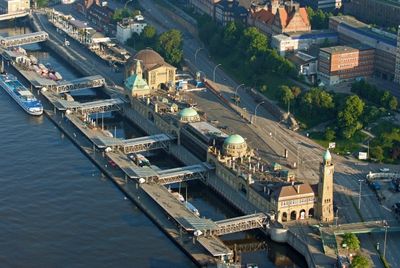
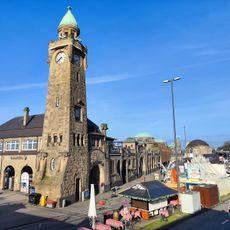
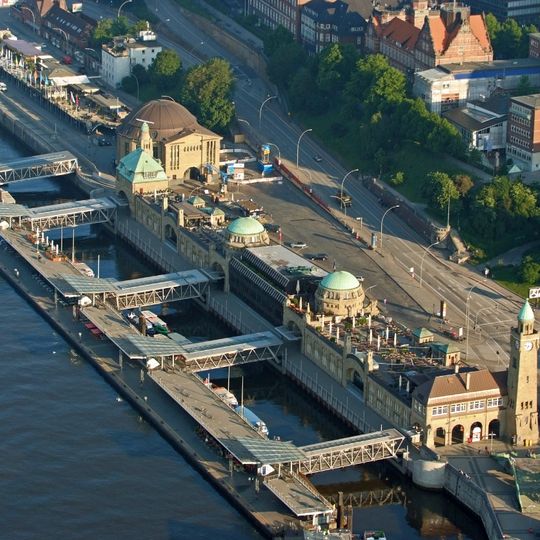
The St. Pauli Landing Stages are a 688-metre landing site on floating pontoons along the north bank of the Elbe in Hamburg. The terminal building, 205 metres long, was built from volcanic tuff between 1907 and 1909 to designs by Raabe & Wöhlecke, with domes, towers and sculptures by Arthur Bock. The photograph shows three green copper domes and a square clock tower inscribed "HAMBURG" at the eastern end.
The first wooden pier was built in 1839 for steamships, while the present structure was constructed between 1907 and 1909 by architects Raabe and Wöhlecke. This new design was meant to meet the growing demands of modern harbor traffic.
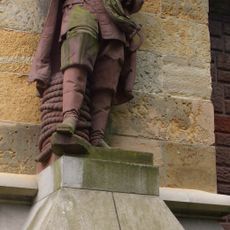
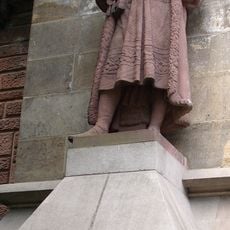
The terminal building of 1907–1909, designed by Raabe & Wöhlecke, is built of volcanic tuff, and its architectural sculptures were made by Arthur Bock. It was listed as a historical monument on 15 September 2003. The three green copper domes and the Pegelturm clock tower with the inscription "HAMBURG" mark the waterfront.
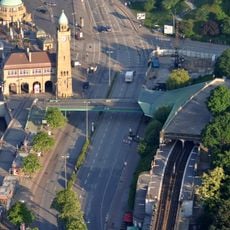
The complex serves as a major transport hub where trains, subway lines, buses, and ferries all connect. The movable bridges adjust to water levels, so it helps to explore the paths toward the water and be aware of the different levels as you walk around.
The Pegelturm at the eastern end of the complex carries a water-level indicator set into the wall halfway up its Elbe side, showing the current tide. It also serves as clock and bell tower: the dial is visible from afar, and the bell rings the full and half hour in the rhythm of ship's bells. The tower's green copper roof appears beside the pale terminal buildings.
The community of curious travelers
AroundUs brings together thousands of curated places, local tips, and hidden gems, enriched daily by 92,798 contributors worldwide.