Elbe Tunnel, Underwater tunnel in St. Pauli, Germany
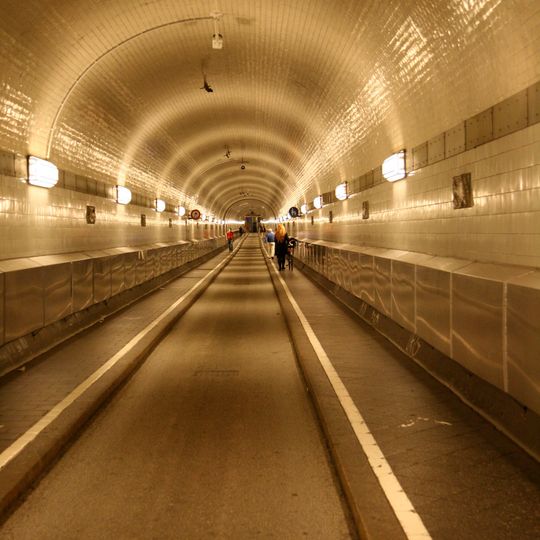
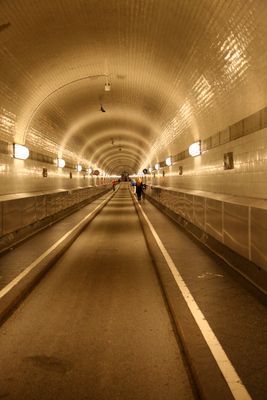
The Elbe Tunnel, opened in 1911, consists of two parallel tubes 6 metres in diameter that run 426.5 metres beneath the Norderelbe, with their crowns about 12 metres below mean high water and their floors 24 metres down. Each tube carries a central asphalt lane flanked by two raised walkways, and the curved upper walls are clad in small light-coloured tiles with rectangular light fixtures mounted along the crown.
Construction began in 1907 and employed 4,400 workers who completed the first fixed link between central Hamburg and the southern shipyards in 1911. Caisson methods allowed safe work beneath the riverbed despite the high water pressure overhead.
The tunnel walls carry glazed terracotta ornaments depicting items linked to the Elbe: most show fish or crabs, but a few depict litter and rats. The passage also hosts temporary art exhibitions, and in May 2019 four concerts for 144 musicians were staged in the tubes, with the score sent to tablets in real time.
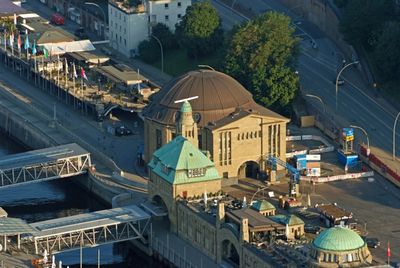
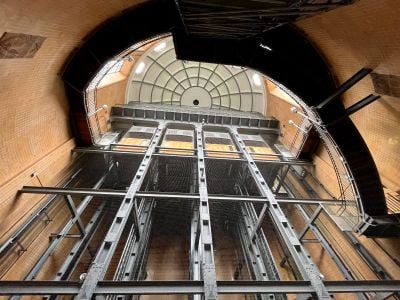
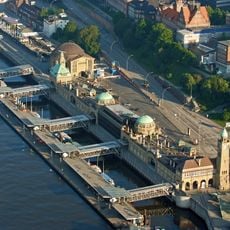
Access remains free all year for pedestrians and cyclists, while motor vehicles have been prohibited since 2023. Large lifts inside a square domed building at the St. Pauli landing stage carry visitors down to the passage below.
The tunnel walls carry glazed terra-cotta ornaments of Elbe river life: most show fish or crabs, but a few depict litter and rats. The tubes also served as a film set, appearing in The Odessa File, The American Friend and Matchless, and in a Scooter music video.
The community of curious travelers
AroundUs brings together thousands of curated places, local tips, and hidden gems, enriched daily by 92,722 contributors worldwide.
![[Schiff Exodus, 1947]](https://img5.digsty.com/Ao0PUvk4P_voE6gOkcnjQ5lHRXTvTWb8xlLtB-lyBfU/rs:fill:230:230:1/g:fp:0.5:0.5/czM6Ly9hcm91bmR1cy80OS8xODI5MTQ2NzAtZDE0ZWM3OGUuanBn.jpg)
![[Schiff St. Louis, 1939]](https://img9.digsty.com/mPZXD0ny0s1RWigfNwRvKgHRJTZWdm_QwOl3wrzIxrw/rs:fill:230:230:1/g:fp:0.5:0.5/czM6Ly9hcm91bmR1cy80OS8xODI5MTQ2NzEtZWVhYjA4YWYuanBn.jpg)