See the monuments around you in AROpen chests in the app
Around Us is built for your phone — point your camera at the streets and discover the monuments and places around you in augmented reality.Around Us is built for your phone — chests unlock when you walk, explore and capture nearby places.
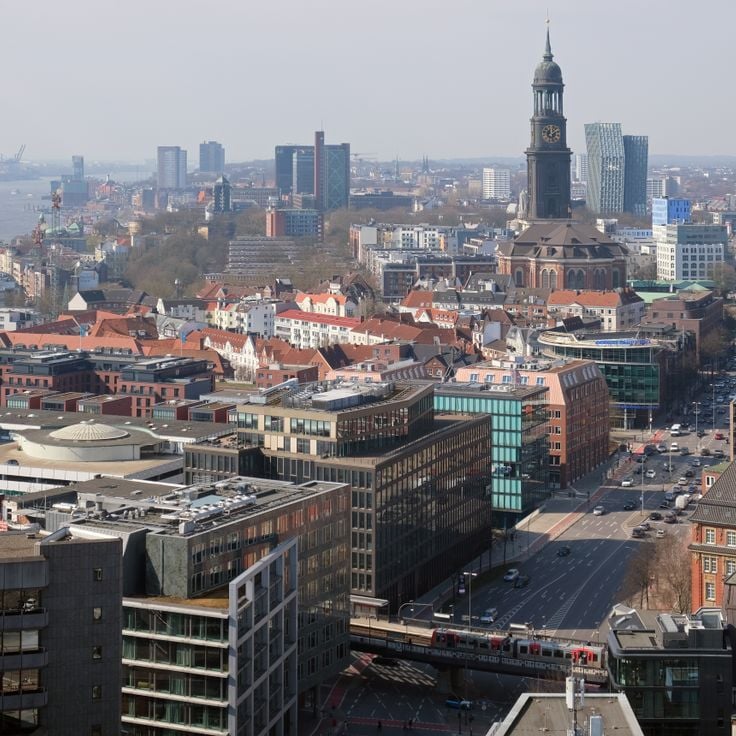
Hamburg is a city shaped by water and commerce, where history flows through the streets as much as the Elbe River flows through the port. This collection guides you to the places that define the city - the grand buildings that announce Hamburg's importance, the museums where you can spend hours lost in art and curiosity, and the waterfront spaces where you see how the city actually works and lives. You will find yourself in the renovated warehouse quarter, climbing the towers of centuries-old churches, and watching boats move through tunnels built more than a hundred years ago. Beyond the famous landmarks, the collection also includes the quieter corners and smaller museums that reveal how Hamburgers really spend their days - the kind of places that make you understand why people choose to live here rather than just visit. Whether you come for the grand architecture or the unexpected discoveries tucked between the main streets, these places tell the story of a port city that reinvented itself while staying true to what it has always been.
Hamburg is a city shaped by water and commerce, where history flows through the streets as much as the Elbe River flows through the port. This collection guides you to the places that define the city - the grand buildings that announce Hamburg's importance, the museums where you can spend hours lost in art and curiosity, and the waterfront spaces where you see how the city actually works and lives. You will find yourself in the renovated warehouse quarter, climbing the towers of centuries-old churches, and watching boats move through tunnels built more than a hundred years ago. Beyond the famous landmarks, the collection also includes the quieter corners and smaller museums that reveal how Hamburgers really spend their days - the kind of places that make you understand why people choose to live here rather than just visit. Whether you come for the grand architecture or the unexpected discoveries tucked between the main streets, these places tell the story of a port city that reinvented itself while staying true to what it has always been.
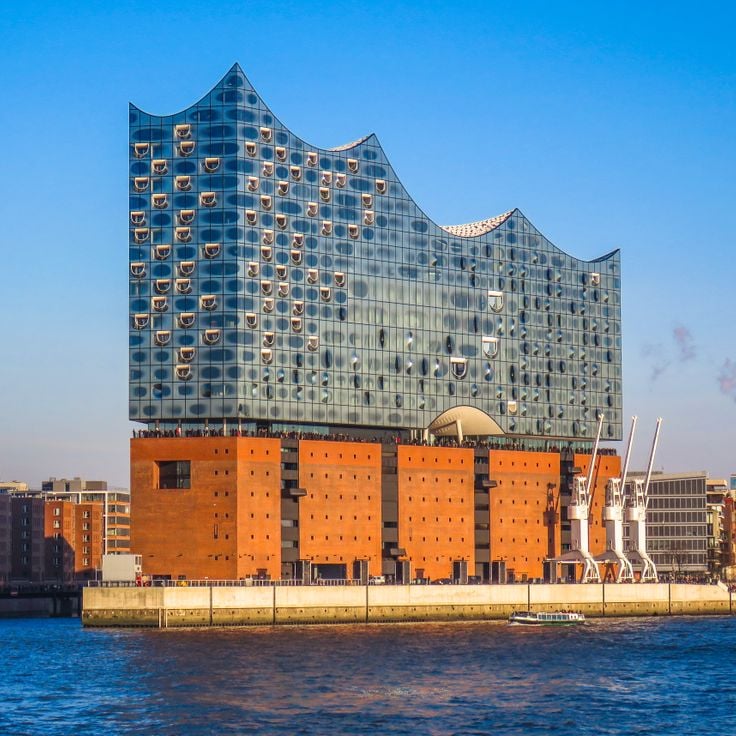
The Elbphilharmonie combines three concert halls within its architecturally notable building in HafenCity, where a glass structure rises above a former harbor warehouse. The concert house presents a varied program of classical music and symphonic performances by international ensembles and orchestras. The Grand Hall seats 2,100 people and features vineyard architecture, where the audience surrounds the orchestra from all sides. In addition to regular concerts, the venue hosts chamber music performances and contemporary music programs.
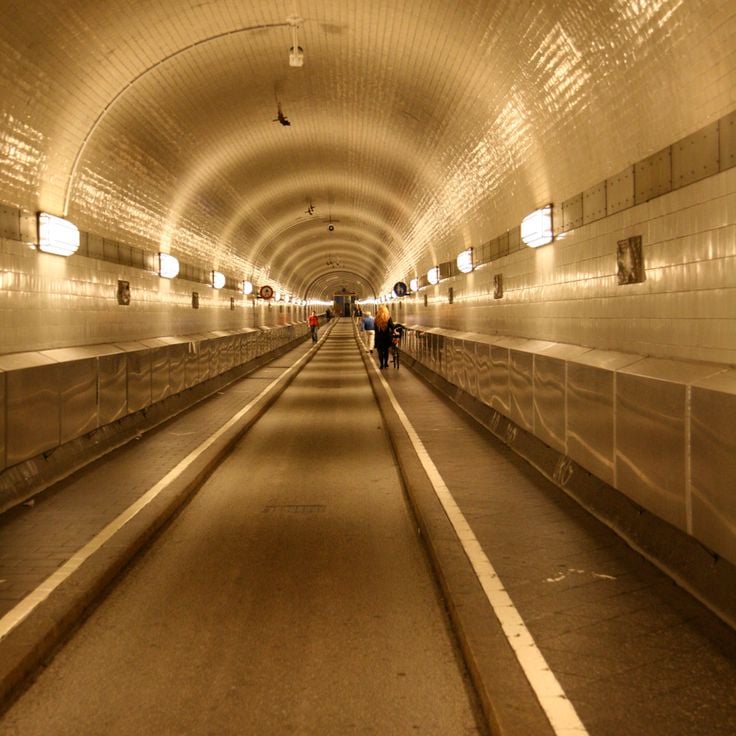
The Old Elbe Tunnel has connected the St. Pauli and Steinwerder districts since 1911 through a 1,398 foot (426 meter) tunnel located 79 feet (24 meters) beneath the riverbed. The two tunnel tubes for pedestrians and vehicles are accessed by historic elevators whose mechanical systems remain in operation today. The tiled tunnel walls and cast iron elevator cabins provide an impression of early twentieth century engineering. The tunnel was built to give dockworkers direct access to the shipyards on the southern bank of the Elbe.
The Miniatur Wunderland spans 16,100 square feet (1,500 square meters) and presents detailed recreations of European and American regions on a model railway layout with 9.3 miles (15 kilometers) of track. The exhibition displays various landscapes, cities, and scenes in miniature scale, with operating trains, moving elements, and alternating day and night lighting conditions. Visitors can explore the technical implementation and numerous details of individual sections representing regions such as the Alps, Hamburg, Scandinavia, and various American landscapes.
The Port of Hamburg is Germany's primary maritime port, founded in the 9th century. It covers an area of 28 square miles (72 square kilometers) and receives merchant vessels from around the world. As a historical and economic center of the city, this port has shaped Hamburg's maritime identity for over a thousand years and ranks among the most important hubs for international trade in Northern Europe.
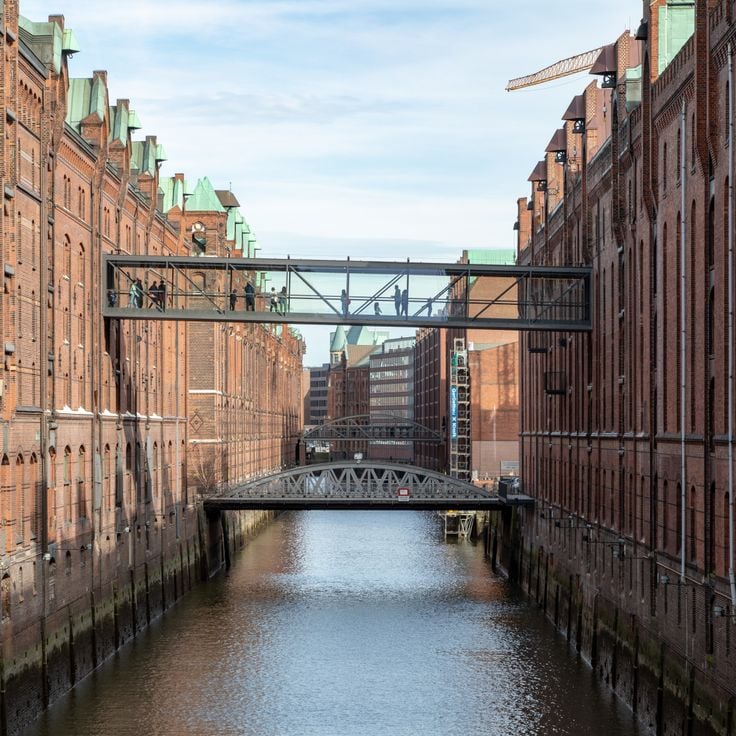
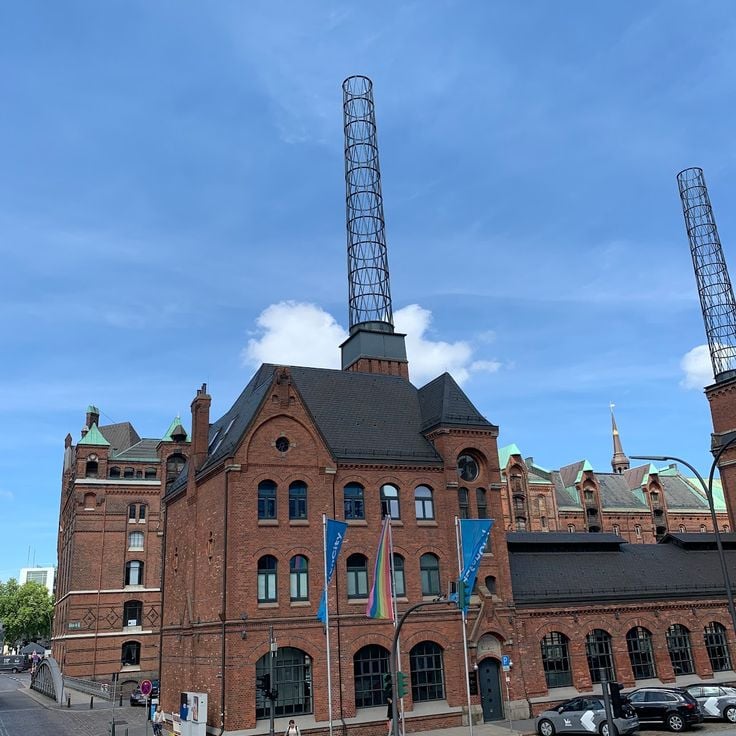
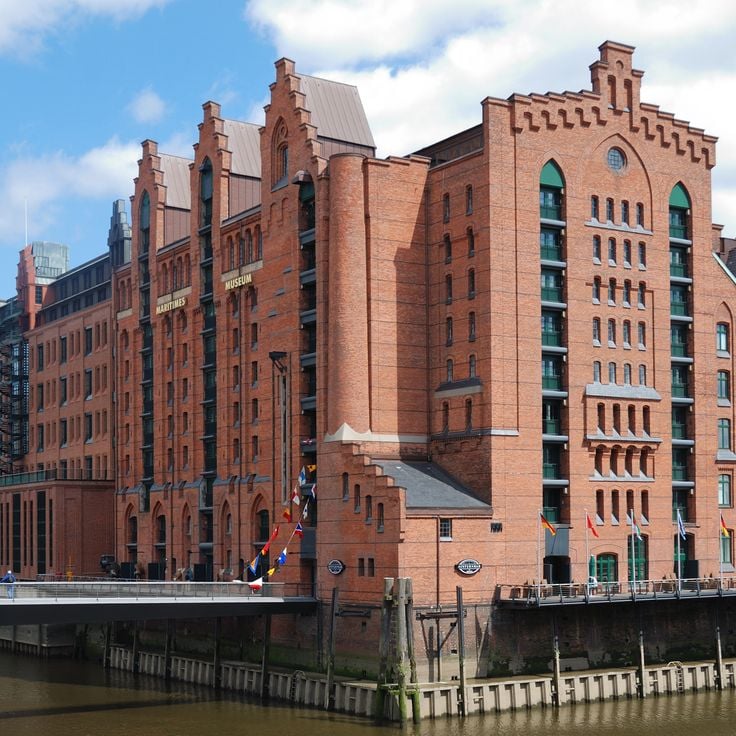
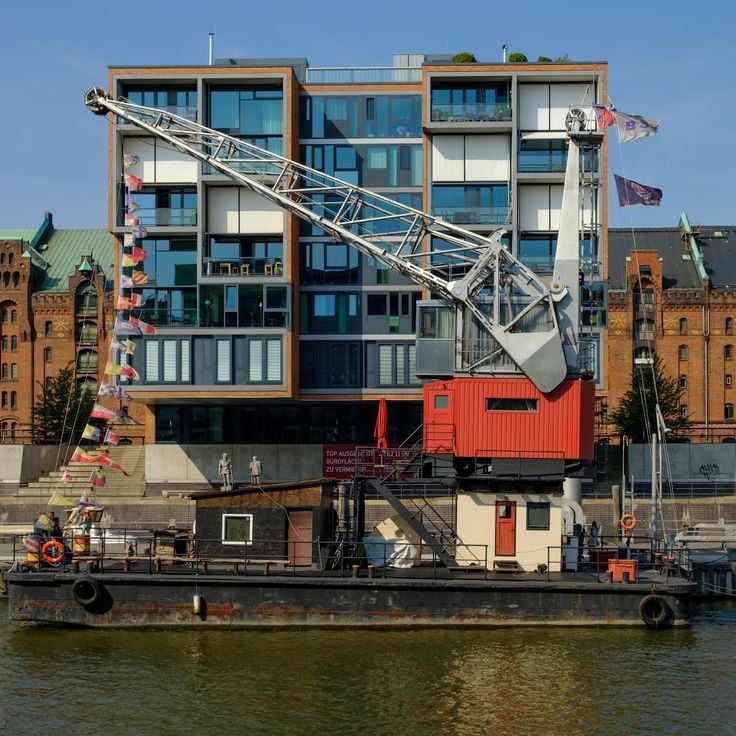
The Warehouse District is a historic industrial area built between 1883 and 1927 on fourteen islands in Hamburg's harbor. The red brick storage buildings are connected by a system of bridges and canals and originally served to store coffee, tea, spices, and other goods. The complex covers an area of about 64 acres and is now part of the UNESCO World Heritage Site. Many of the buildings today house museums, offices, and cultural institutions.
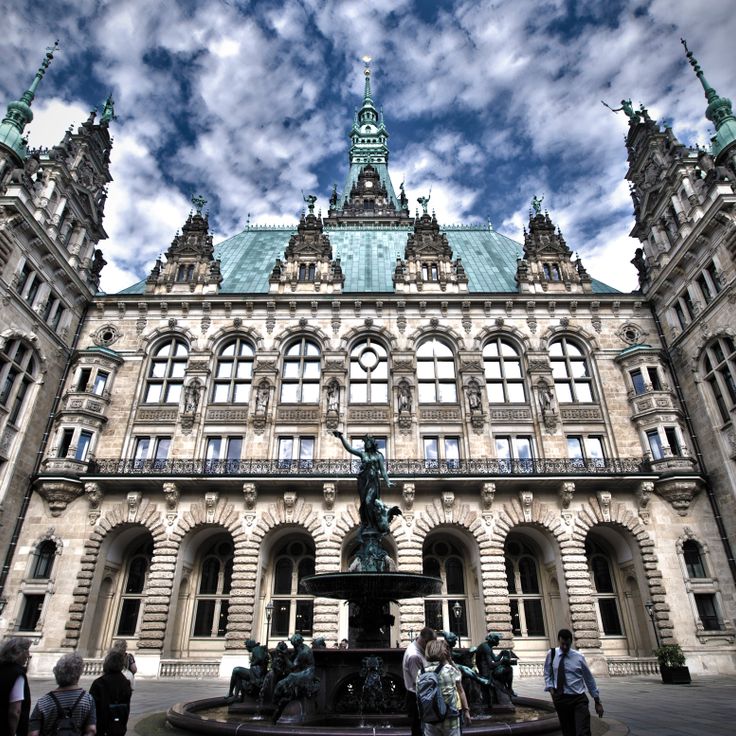
Hamburg City Hall was constructed between 1886 and 1897 in the Neo-Renaissance style and serves as the seat of the state parliament and senate of the Free and Hanseatic City of Hamburg. The facade is built from green sandstone and displays ornate decoration with numerous sculptures and reliefs. The central tower rises to a height of 367 feet (112 meters). The interior contains richly furnished halls and chambers, including the Grand Ballroom and the Emperor's Hall, which feature wall paintings, carved wood paneling, and elaborate ceiling designs. The building encompasses 647 rooms and stands as one of the most important city halls in Germany.
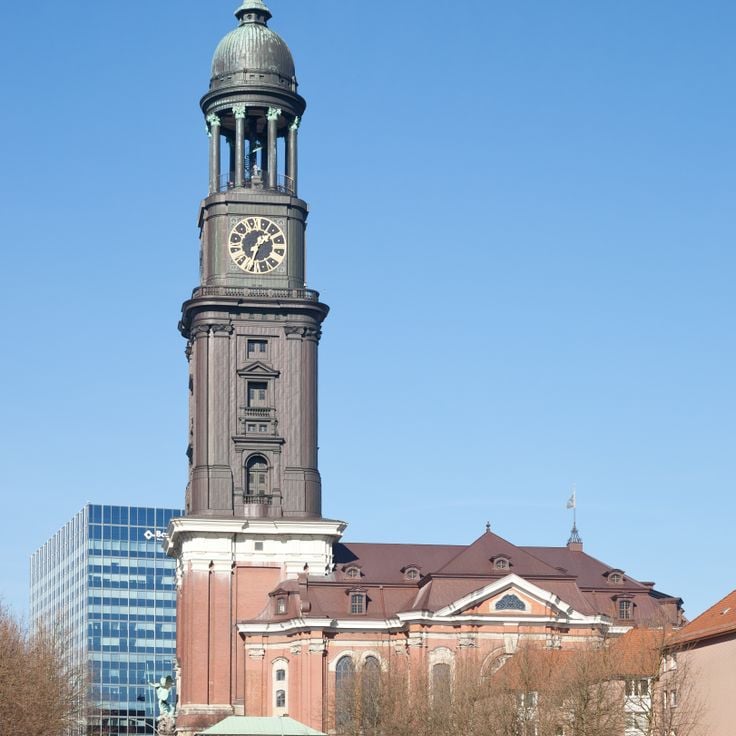
Saint Michael's Church is a monumental 18th-century building and one of Hamburg's main landmarks. Its 433-foot (132-meter) copper tower rises above the harbor and provides extensive views over the city. This Protestant Baroque church stands out for its classical exterior and ornate interior design. The organ ranks among the most significant instruments in northern Germany. Visitors can reach the tower by stairs or elevator and observe the Hanseatic city from the observation platform.
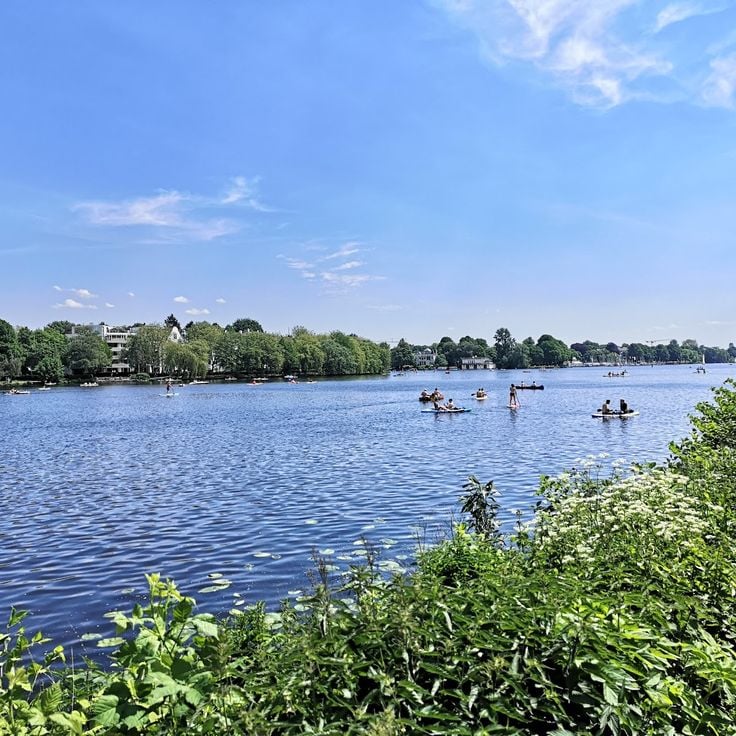
This artificial lake covers 160 hectares (395 acres) and provides walking paths and water sports opportunities. Sailboats, paddleboats, and kayaks navigate the Alster throughout the year, while the surrounding shores offer routes for walking, jogging, and cycling. The lake divides into the Binnenalster in the city center and the larger Außenalster, bordered by parks and residential neighborhoods. On weekends and during summer months, the waters attract people seeking recreation, athletes, and families.
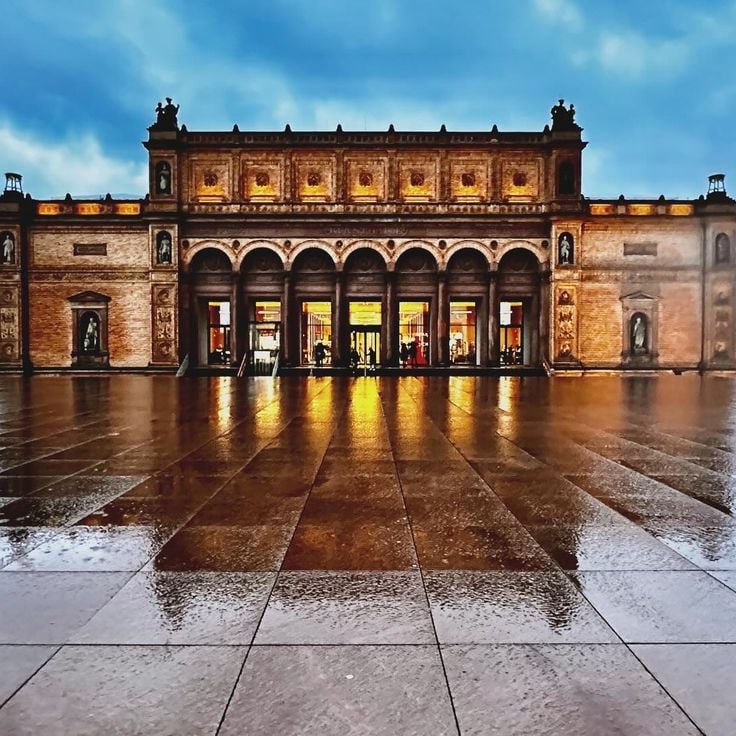
The Kunsthalle stands among the most important art museums in Germany and presents an extensive collection of European painting and sculpture spanning from the Middle Ages to the present day across more than 140,000 square feet (13,000 square meters). Founded in 1869, this museum houses works by German Romantic painters such as Caspar David Friedrich and Philipp Otto Runge, as well as paintings by German Impressionists Max Liebermann and Lovis Corinth. The collection also includes Dutch and Flemish Old Masters, Italian Renaissance art, and modern works from the 20th century. The contemporary art section displays positions from 1960 to the present.
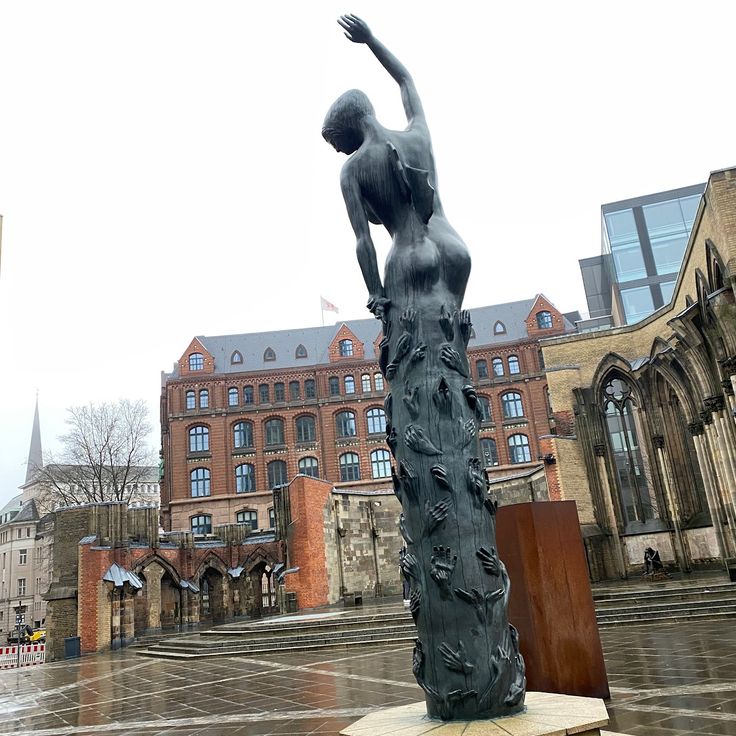
This 12th-century church was destroyed during World War II. Only the tower and exterior walls remain, transformed into a memorial site. The St. Nicholas Memorial commemorates the victims of war and tyranny while documenting the history of Hamburg's destruction by air raids. The preserved tower spire was once the tallest structure in the city and now serves as a visible reminder against war.
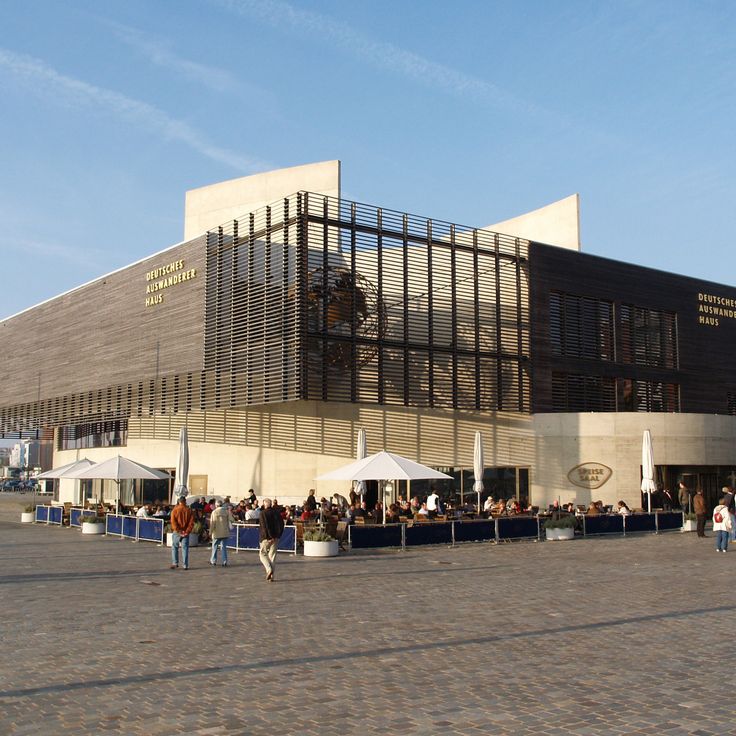
The Emigration Museum tells the stories of over five million Europeans who departed from Hamburg between 1850 and 1934 heading to North and South America. Personal belongings, letters, documents, and photographs reveal the hopes and fears of these travelers. The museum lets you walk through recreated emigration halls with sleeping quarters, waiting rooms, and a ship corridor that shows how the journey began. On this spot on the Elbe island of Veddel, millions of people spent their final night in Europe before setting sail across the Atlantic.
This botanical garden houses over 10,000 plant species from various climate zones and continents. The grounds include a tropical greenhouse with exotic plants, a Japanese garden featuring traditional design elements, a rose collection, and several decorative water features. As part of the city's scientific institutions, the park serves both research and public education purposes, offering visitors an opportunity to explore the diversity of the plant kingdom.
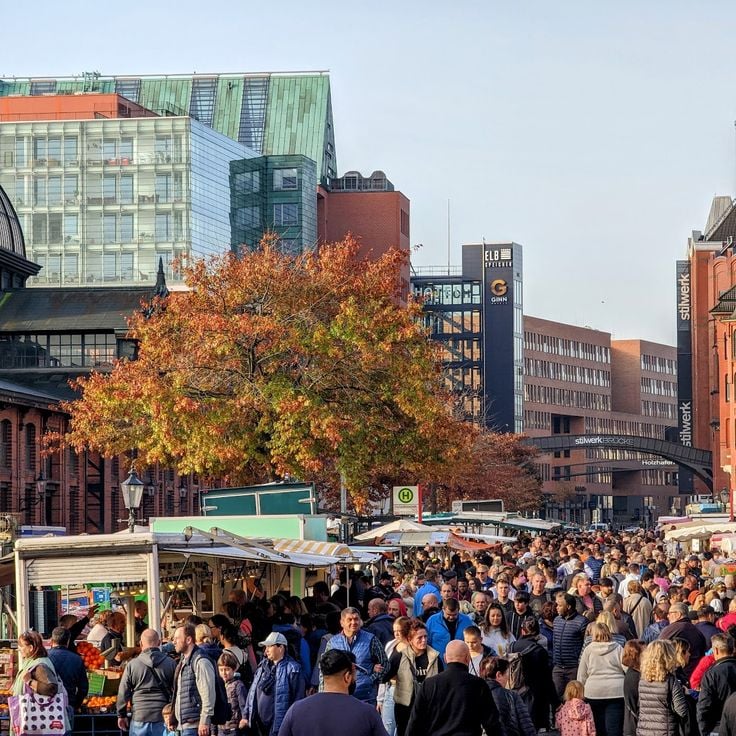
The fish market in St. Pauli has been selling fresh fish, seafood, and local specialties every Sunday morning since 1703. Vendors begin their sales in the early morning hours and advertise their goods in the traditional manner of market criers. In addition to fish, the market offers fruits, vegetables, flowers, and other products. This market attracts both locals and visitors and ranks among the most well-known traditional markets in the city.
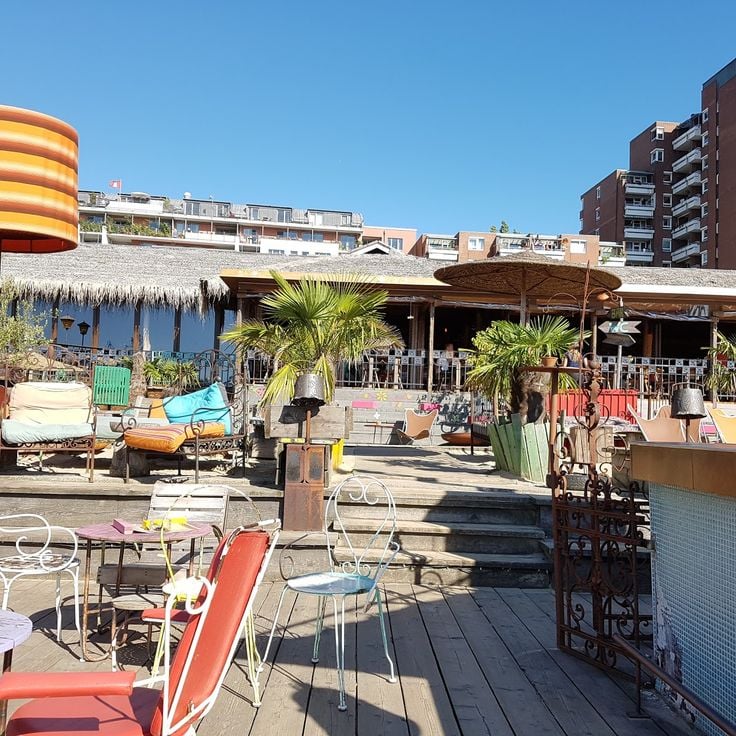
Strand Pauli stands on the banks of Hamburg's port and features an artificial beach with views of the Elbe River. Visitors can relax in deck chairs and watch ship traffic on the river while enjoying drinks and food. The bar combines the maritime traditions of the Hanseatic city with the recreational offerings of the St. Pauli district and creates an unconventional meeting point directly on the waterfront.
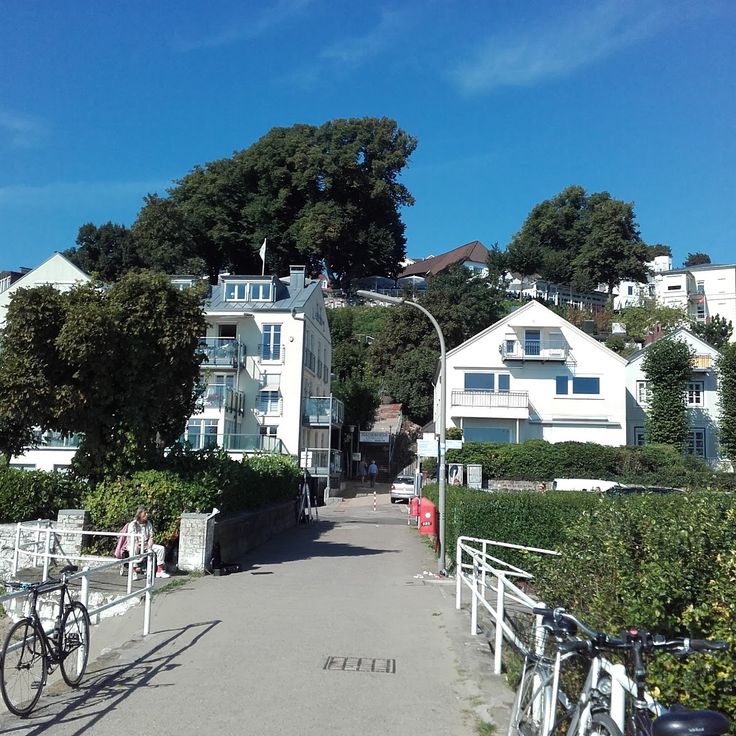
Blankenese is a historic village on the Elbe River, defined by its winding stairways, cobblestone streets, and distinctive hillside location. The settlement still displays captains' villas and former fishermen's houses that reflect the maritime past of this district. The narrow lanes and steep staircases connect different levels of the hillside and form a distinctive urban ensemble on the western edge of Hamburg.
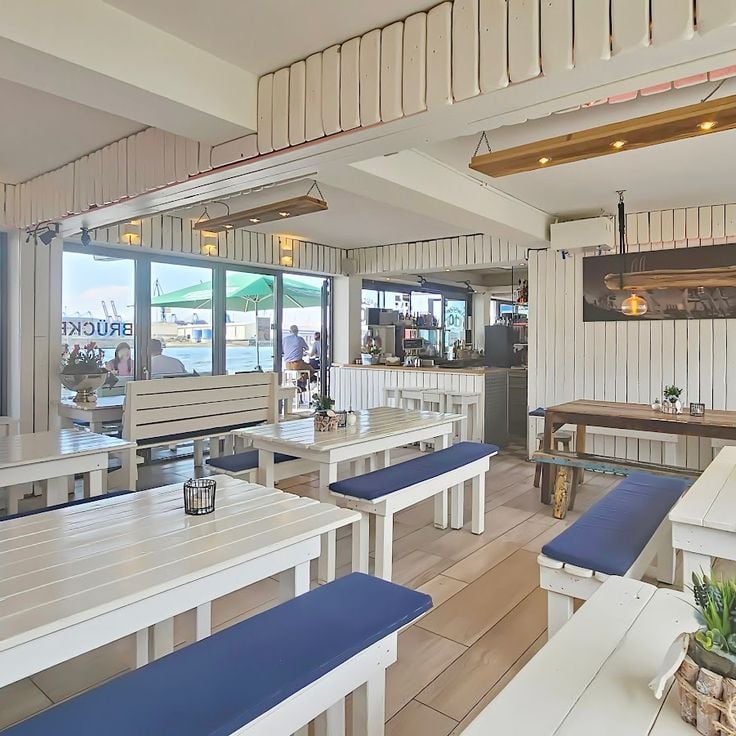
Brücke 10 is a family-run restaurant located along the harbor waterfront that has been serving fresh fish sandwiches, pickled herring, and local shrimp since 1970. The restaurant is situated in St. Pauli and offers traditional northern German fish specialties directly by the water. The menu features various fish dishes prepared according to time-tested recipes. Over the decades, this restaurant has become a destination for visitors and locals seeking authentic maritime cuisine in a casual setting.
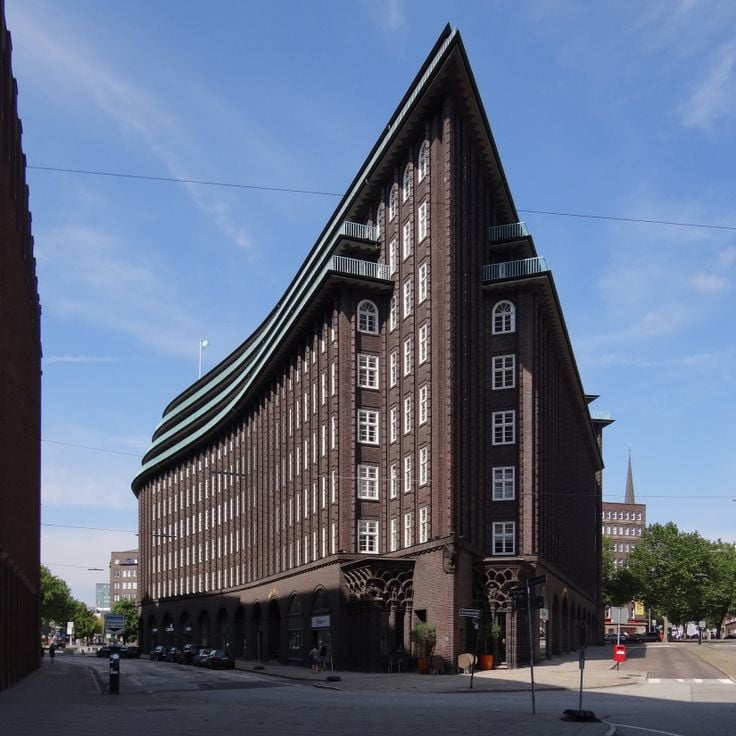
The Chilehaus is a brick office building constructed in 1924 in the Kontorhausviertel district, recognized as one of the finest examples of German Brick Expressionism with its distinctive ship's prow shape. Designed by architect Fritz Höger, the ten-story structure features sharp angles, curved facades, and intricate detailing throughout its exterior. The building was commissioned by merchant Henry Sloman, who made his fortune trading saltpeter in Chile, and has been part of a UNESCO World Heritage Site since 2015.
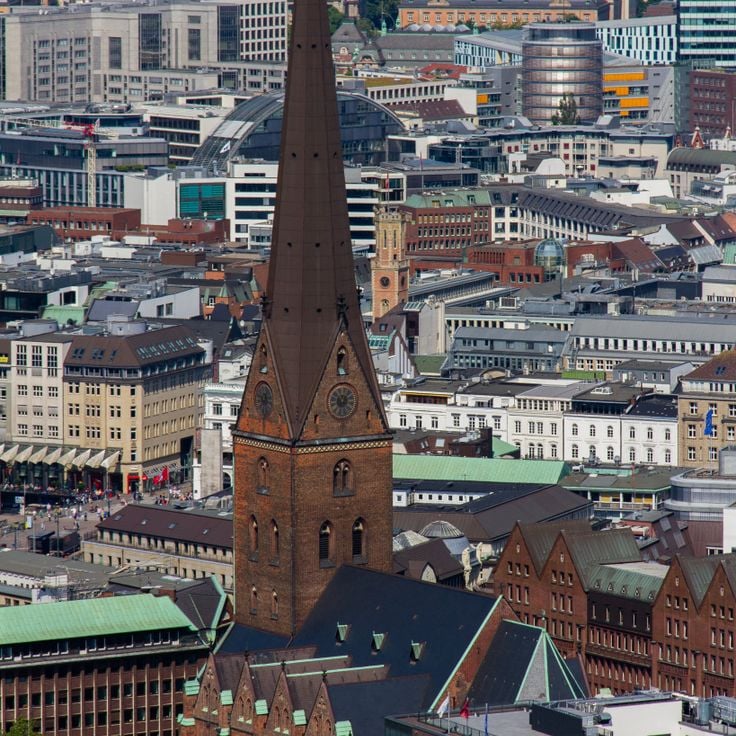
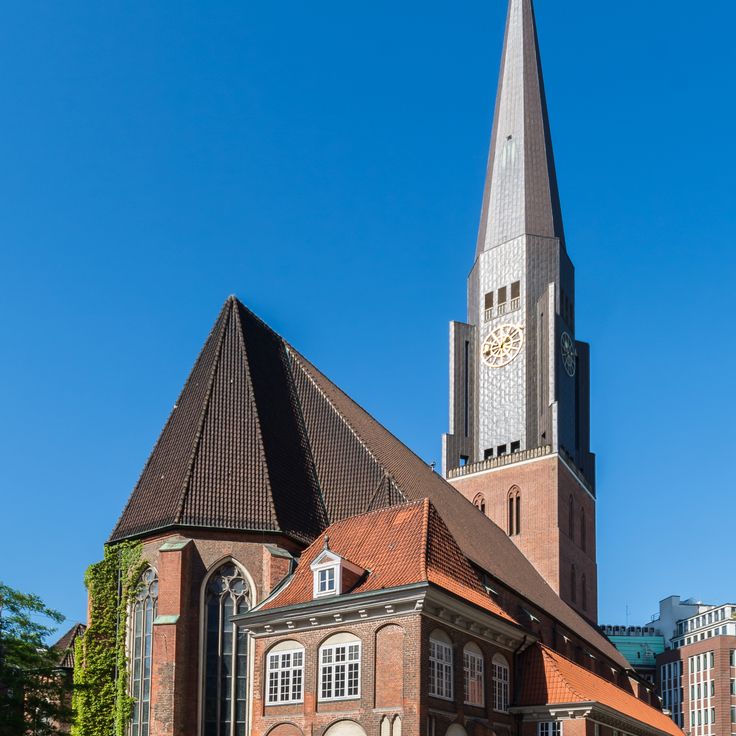
This brick church in the city center dates from the 13th century. Its current neo-Gothic architecture resulted from the reconstruction carried out after the fire of 1842. St. Petri Church ranks among the oldest religious buildings in Hamburg and its tower shapes the skyline of the old town. The interior displays typical features of North German brick Gothic with high vaults and slender columns. The church tower offers a viewpoint over the historic center and the Elbe River.
This medieval church from the 14th century displays Gothic brick architecture with five altars and a baroque organ from 1693 built by Arp Schnitger. The red brick nave embodies the Hanseatic building tradition and forms an important part of the architectural heritage of Hamburg's old town. The Schnitger organ ranks among the notable baroque organs of Northern Germany and regularly attracts visitors and music enthusiasts.
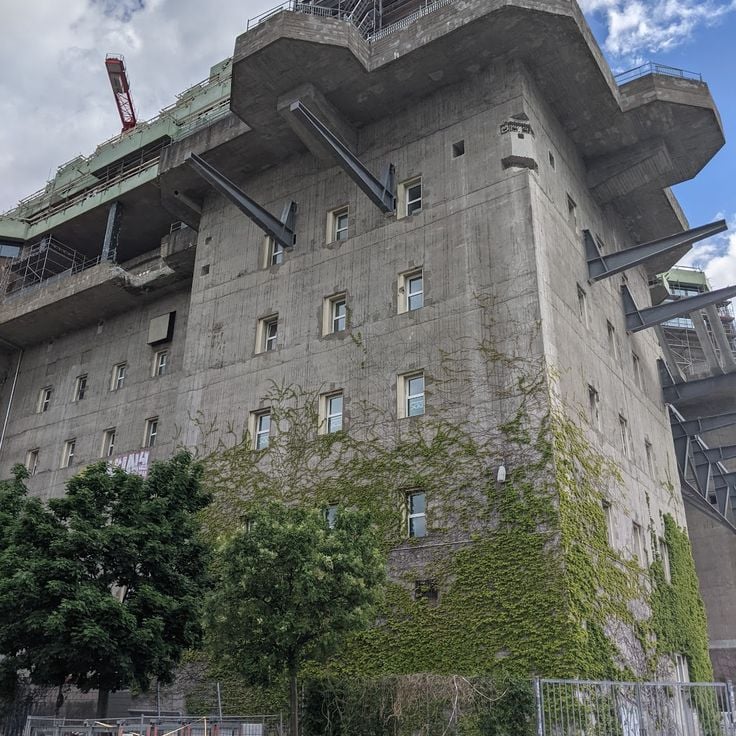
The Feldstrasse bunker is a former military structure built in 1942 that now serves as a center for artistic creation. The building houses music studios where concerts are regularly held and exhibitions are presented. This repurposed bunker connects Hamburg's history with contemporary culture and provides space for various artistic projects.
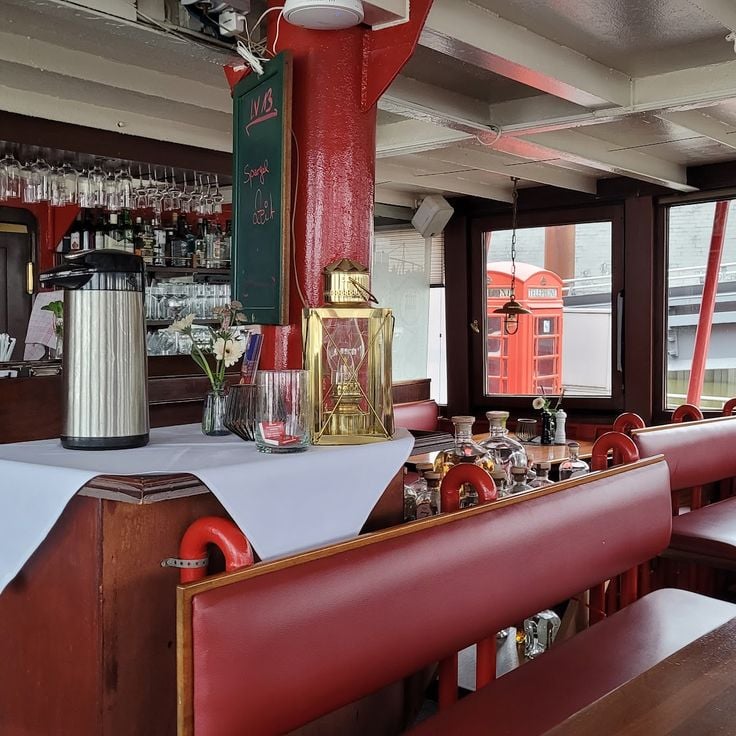
This red lightship built in 1936 once served as a maritime signal vessel and now operates as a restaurant in Hamburg Harbor. The interior spaces preserve the original maritime architecture with period equipment and onboard furnishings. The vessel provides insights into Hamburg's maritime history while combining historical character with dining facilities.
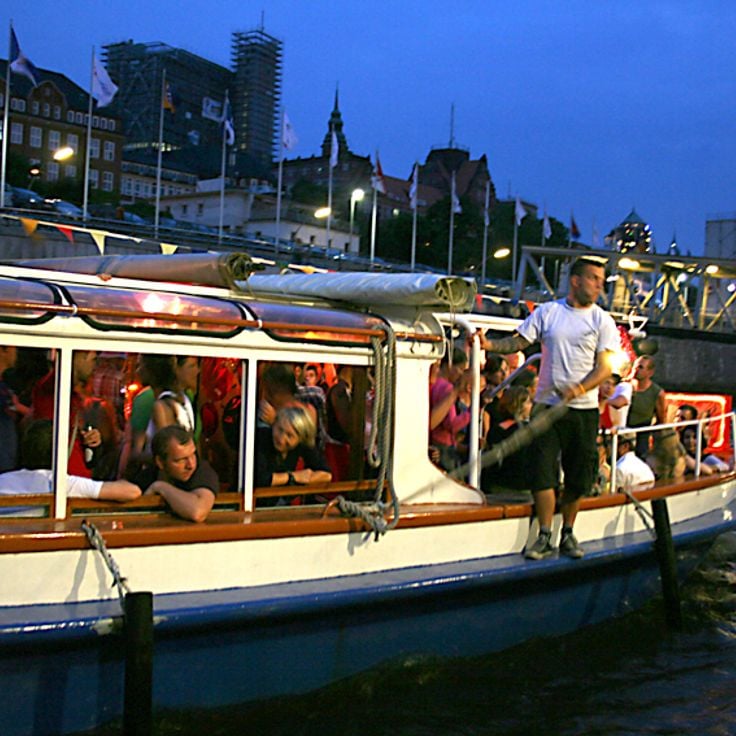
The Frau Hedi is a 105 foot (32 meter) long houseboat that hosts events and parties during evening cruises through the port and canals of Hamburg. This floating vessel provides a mobile venue on the water, allowing guests to experience the city from the waterways while celebrating on board. The cruises navigate through the harbor areas and the extensive canal network of the Hanseatic city, combining social gatherings with a tour through the maritime districts of Hamburg.
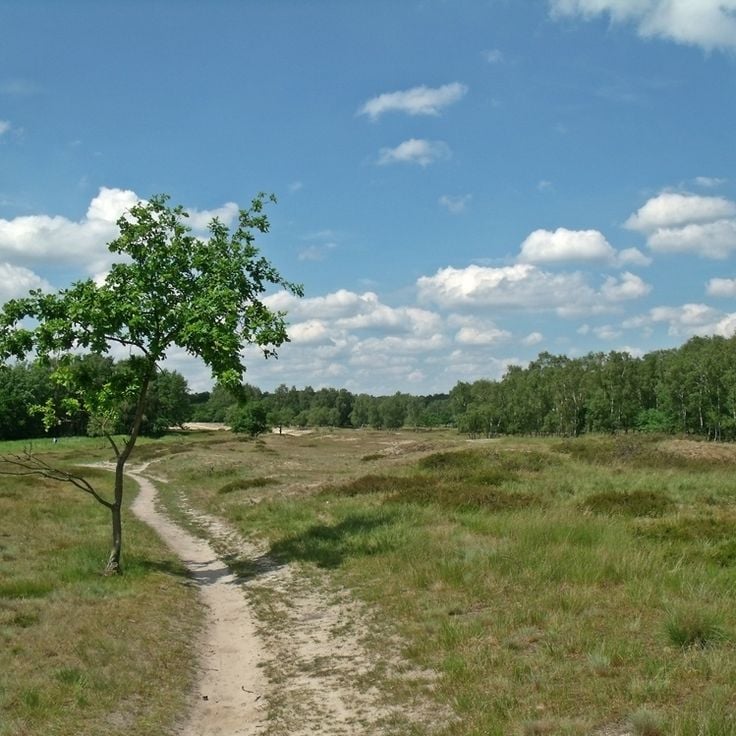
The Boberg Dunes are a natural area with white sand dunes in eastern Hamburg, formed by deposits from the Elbe River. The site extends over several hectares and displays vegetation adapted to sandy soils, including various grasses, mosses, and low shrubs. This dune landscape forms one of the few inland dune sites in Northern Germany and provides habitat for specialized plant and animal species. Several paths lead through the area, allowing visitors to observe the particular vegetation and terrain formations.
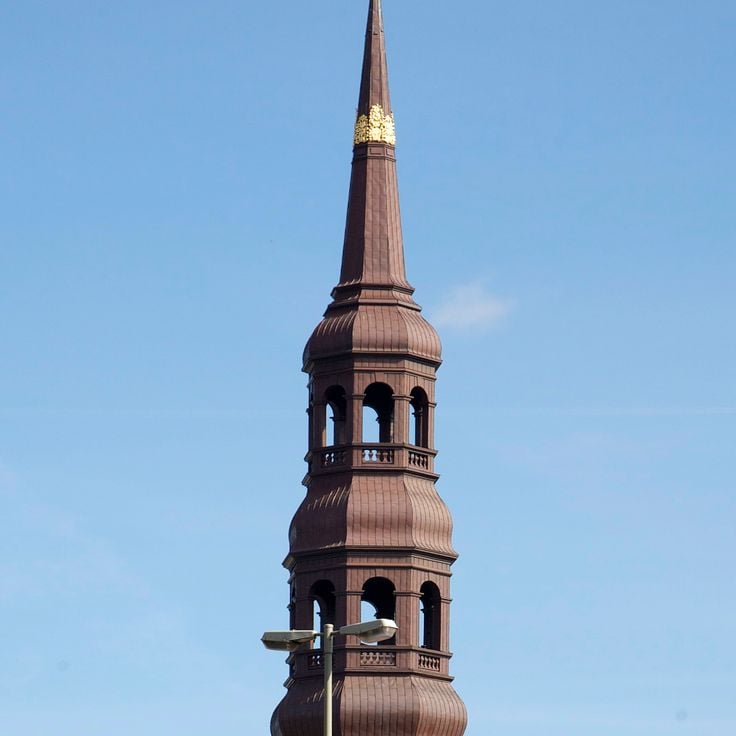
Saint Catherine's Church is a Gothic religious building in Hamburg's old town, with masonry dating from the 13th century. The distinctive copper onion dome was added to the tower in 1657. The five naves represent medieval Hanseatic architecture and document the religious history of this northern German port city. This Evangelical Lutheran main church ranks among Hamburg's significant historical church buildings and displays the architectural characteristics of North German brick Gothic construction.
The Pegelhäuschen restaurant occupies a former water gauge station in Hamburg's harbor and, with seating for just two guests, ranks among the smallest restaurants in the world. This tiny establishment serves regional dishes in a historic building that originally measured Elbe water levels. Diners can enjoy traditional northern German cuisine while sitting directly by the water with views of the Elbe River, making for an unusual dining experience in a compact historic setting.
The Museum of Medical History presents the development of medicine since the 19th century through surgical instruments, prosthetics, and anatomical wax models. The permanent collection documents medical practices, diagnostic procedures, and therapeutic approaches from different periods. The museum provides insight into scientific advances and changes in medical care in Hamburg and beyond.
Harry's Harbor Bazaar is an antique market in a historic building that presents maritime objects such as ship models, navigation instruments, and old maps. This market offers visitors the opportunity to discover historical items that reflect Hamburg's maritime tradition. The collection includes artifacts from various periods of seafaring and recalls the city's long harbor history. The bazaar is a destination for collectors and enthusiasts of nautical history.
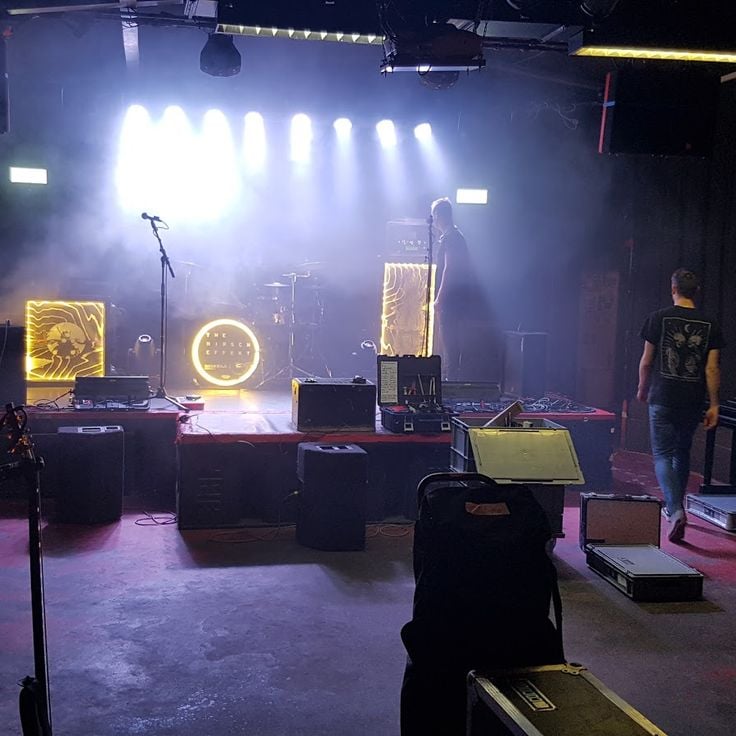
The Indra Club is a historic concert venue in the St. Pauli district that holds an important place in pop music history. This small basement venue hosted the Beatles' first performances in Hamburg in August 1960, marking the beginning of their international career. Then a relatively unknown band from Liverpool, they played long evening sets here and developed their distinctive sound. The club stands as a testament to an era when St. Pauli became a center of rock music, and recalls the cultural connections between Hamburg and the British music scene of the early 1960s.
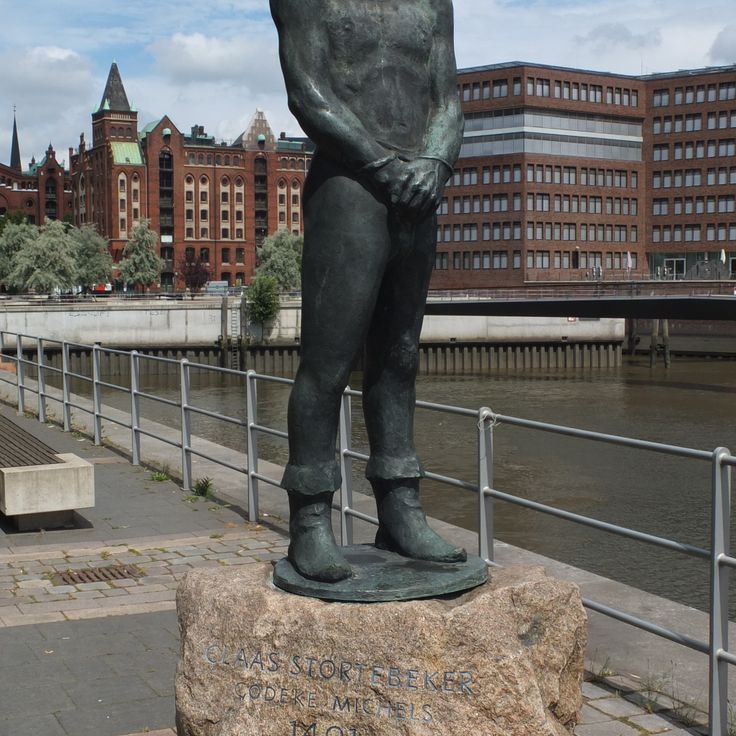
The skull of Klaus Störtebeker is displayed at the Museum of Hamburg History and bears the marks of his violent execution. This notorious pirate and leader of the Victual Brothers controlled large areas of the Baltic Sea in the late 14th century and was beheaded at Hamburg's Grasbrook in October 1401 after his capture. The pierced skull represents an important relic of medieval Hanseatic history and documents the harsh justice system of that era. Its authenticity has been confirmed through forensic examinations, which showed that the man was between 30 and 40 years old at the time of his death.
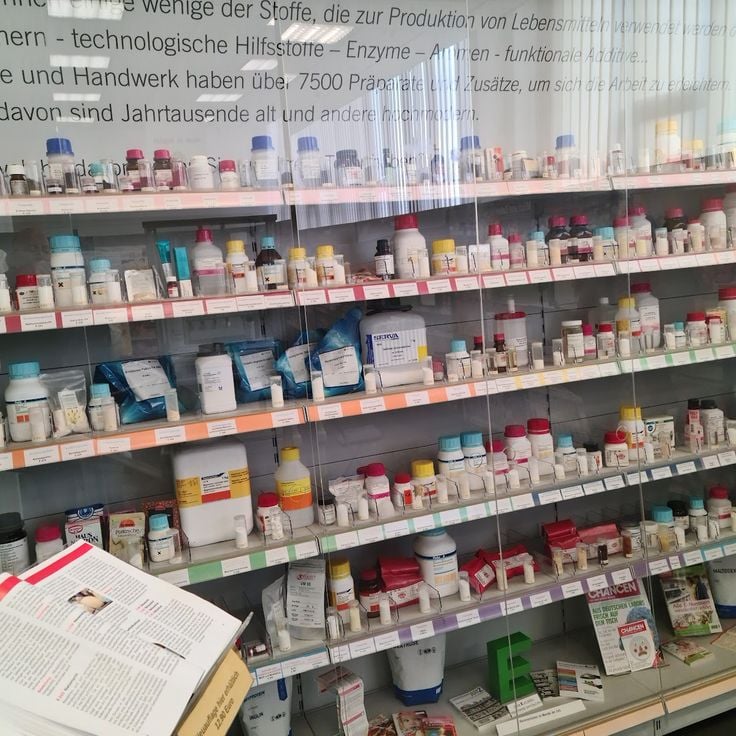
This museum examines the history and use of additives in the food industry. The exhibitions cover colorants, preservatives, and other chemical substances used in food production. The museum provides insights into the development of food technology and explains the functions of various additives. Visitors can learn about the regulation and labeling of these substances as well as their effects on modern nutrition and dietary habits.
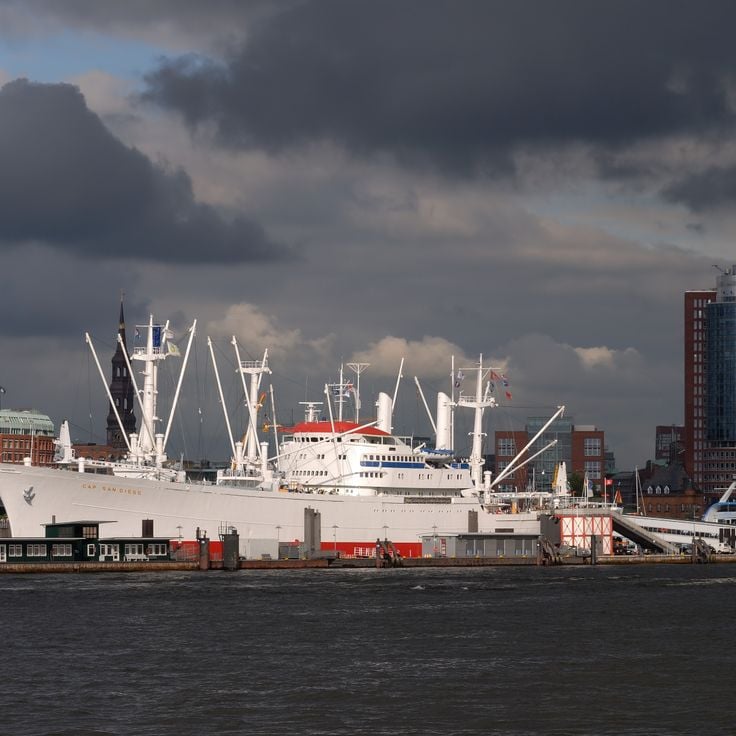
The Cap San Diego is a cargo ship built in 1961 that has served as a floating museum in Hamburg's port since 1986. The vessel was constructed at Deutsche Werft AG shipyard and originally sailed between Europe and South America. Visitors can tour the crew cabins, the engine room with its diesel engines, the bridge, and the cargo holds. The ship provides an authentic view of maritime freight technology and daily life aboard a cargo vessel from the 1960s. The Cap San Diego complements Hamburg's maritime history and illustrates the importance of merchant shipping for the city.
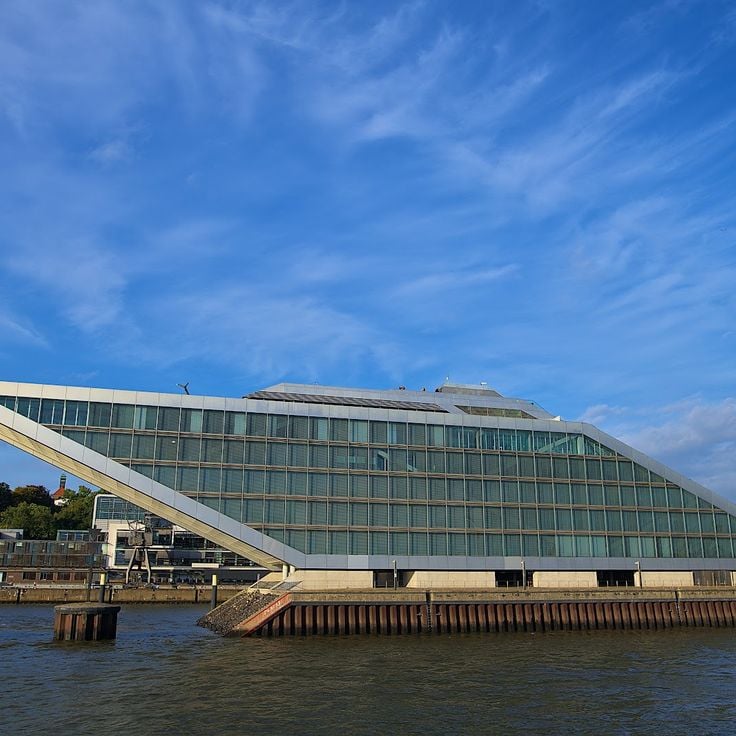
Dockland is an office building in the Port of Hamburg, distinguished by its striking architecture. Completed in 1993, this ten-story structure features a glass and steel facade that leans at a 66-degree angle toward the Elbe River. This design gives the building the appearance of a ship's bow. Located in the Altona district, Dockland offers views of the river and harbor landscape from its publicly accessible rooftop terrace. The building represents modern harbor architecture in Hamburg and demonstrates how industrial areas have been transformed through contemporary construction. It serves as one of the notable architectural landmarks along the waterfront of this northern German city.
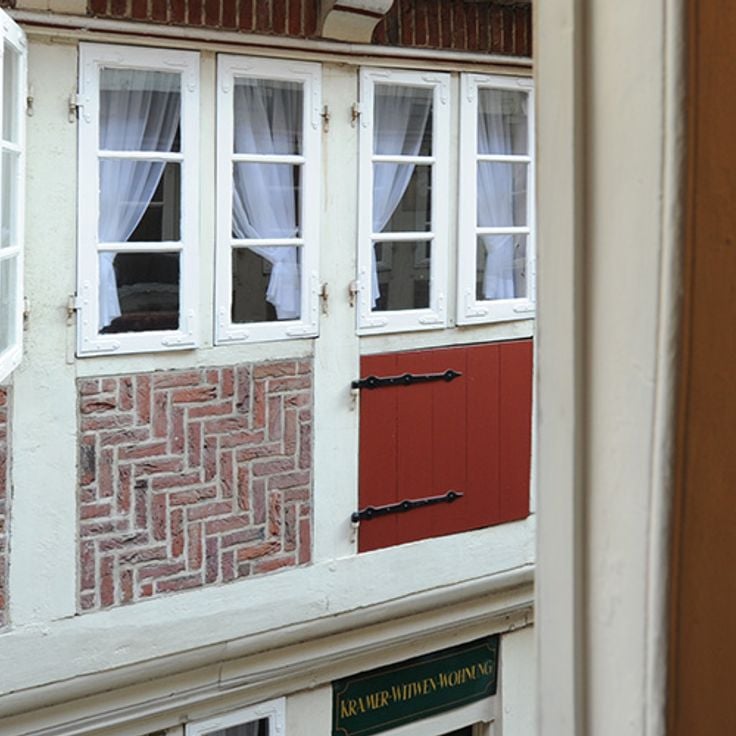
The Krameramtswohnungen are historic merchants' residences built in 1676. These red and white timber framed houses form a narrow alley in the old town district and are among the oldest surviving residential buildings in Hamburg. The complex consists of several single story houses with steep roofs and small windows. Originally, they served as widows' homes for the grocers' guild. Today, some of the buildings house shops, galleries, and a small museum that provides insights into the lives of residents in the 17th century.
The Hammaburg marks the origins of the medieval city foundation in Hamburg's historic center. The archaeological site preserves remains of walls and fortifications from the 9th century and documents the earliest traces of urban settlement in this part of northern Germany. These foundations formed the starting point for the development of the later Hanseatic city and testify to the strategic importance of this location at the confluence of the Alster and Elbe rivers. The Hammaburg provides insights into the early history of the city and its role as a trading hub.
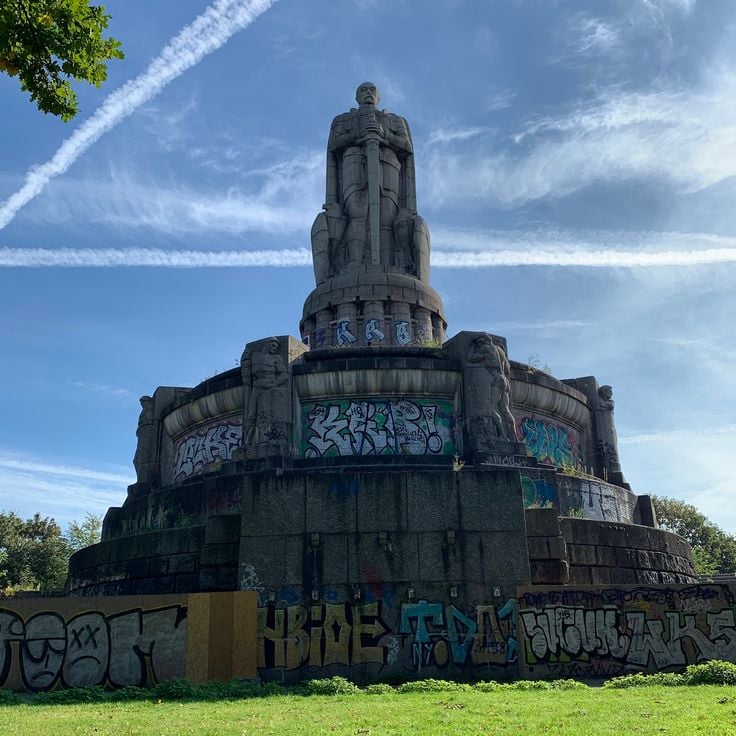
The Bismarck Monument in St. Pauli honors the first German Chancellor through a 34-meter (112-foot) sandstone construction. Unveiled in 1906, the statue depicts Otto von Bismarck as a medieval knight holding a sword and represents the historical importance of this figure in German history. The monument stands as one of Hamburg's notable structures and documents the political history of the 19th century.
The Star-Club was a legendary concert venue in St. Pauli that made music history from 1962 to 1969. The Beatles performed here in 1962 over a period of 13 weeks, completing a total of 98 shows with Pete Best on drums. The club was located at Große Freiheit 39 and became an important venue for rock music development in Germany. Besides the Beatles, numerous other international bands and artists played here, contributing to the evolution of Hamburg's music scene. Today, a memorial plaque at this location commemorates the cultural significance of the former club for the city of Hamburg.
The Elbphilharmonie combines three concert halls within its architecturally notable building in HafenCity, where a glass structure rises above a former harbor warehouse. The concert house presents a varied program of classical music and symphonic performances by international ensembles and orchestras. The Grand Hall seats 2,100 people and features vineyard architecture, where the audience surrounds the orchestra from all sides. In addition to regular concerts, the venue hosts chamber music performances and contemporary music programs.
The Old Elbe Tunnel has connected the St. Pauli and Steinwerder districts since 1911 through a 1,398 foot (426 meter) tunnel located 79 feet (24 meters) beneath the riverbed. The two tunnel tubes for pedestrians and vehicles are accessed by historic elevators whose mechanical systems remain in operation today. The tiled tunnel walls and cast iron elevator cabins provide an impression of early twentieth century engineering. The tunnel was built to give dockworkers direct access to the shipyards on the southern bank of the Elbe.
The Miniatur Wunderland spans 16,100 square feet (1,500 square meters) and presents detailed recreations of European and American regions on a model railway layout with 9.3 miles (15 kilometers) of track. The exhibition displays various landscapes, cities, and scenes in miniature scale, with operating trains, moving elements, and alternating day and night lighting conditions. Visitors can explore the technical implementation and numerous details of individual sections representing regions such as the Alps, Hamburg, Scandinavia, and various American landscapes.
The Port of Hamburg is Germany's primary maritime port, founded in the 9th century. It covers an area of 28 square miles (72 square kilometers) and receives merchant vessels from around the world. As a historical and economic center of the city, this port has shaped Hamburg's maritime identity for over a thousand years and ranks among the most important hubs for international trade in Northern Europe.
The Warehouse District is a historic industrial area built between 1883 and 1927 on fourteen islands in Hamburg's harbor. The red brick storage buildings are connected by a system of bridges and canals and originally served to store coffee, tea, spices, and other goods. The complex covers an area of about 64 acres and is now part of the UNESCO World Heritage Site. Many of the buildings today house museums, offices, and cultural institutions.
Hamburg City Hall was constructed between 1886 and 1897 in the Neo-Renaissance style and serves as the seat of the state parliament and senate of the Free and Hanseatic City of Hamburg. The facade is built from green sandstone and displays ornate decoration with numerous sculptures and reliefs. The central tower rises to a height of 367 feet (112 meters). The interior contains richly furnished halls and chambers, including the Grand Ballroom and the Emperor's Hall, which feature wall paintings, carved wood paneling, and elaborate ceiling designs. The building encompasses 647 rooms and stands as one of the most important city halls in Germany.
Saint Michael's Church is a monumental 18th-century building and one of Hamburg's main landmarks. Its 433-foot (132-meter) copper tower rises above the harbor and provides extensive views over the city. This Protestant Baroque church stands out for its classical exterior and ornate interior design. The organ ranks among the most significant instruments in northern Germany. Visitors can reach the tower by stairs or elevator and observe the Hanseatic city from the observation platform.
This artificial lake covers 160 hectares (395 acres) and provides walking paths and water sports opportunities. Sailboats, paddleboats, and kayaks navigate the Alster throughout the year, while the surrounding shores offer routes for walking, jogging, and cycling. The lake divides into the Binnenalster in the city center and the larger Außenalster, bordered by parks and residential neighborhoods. On weekends and during summer months, the waters attract people seeking recreation, athletes, and families.
The Kunsthalle stands among the most important art museums in Germany and presents an extensive collection of European painting and sculpture spanning from the Middle Ages to the present day across more than 140,000 square feet (13,000 square meters). Founded in 1869, this museum houses works by German Romantic painters such as Caspar David Friedrich and Philipp Otto Runge, as well as paintings by German Impressionists Max Liebermann and Lovis Corinth. The collection also includes Dutch and Flemish Old Masters, Italian Renaissance art, and modern works from the 20th century. The contemporary art section displays positions from 1960 to the present.
This 12th-century church was destroyed during World War II. Only the tower and exterior walls remain, transformed into a memorial site. The St. Nicholas Memorial commemorates the victims of war and tyranny while documenting the history of Hamburg's destruction by air raids. The preserved tower spire was once the tallest structure in the city and now serves as a visible reminder against war.
The Emigration Museum tells the stories of over five million Europeans who departed from Hamburg between 1850 and 1934 heading to North and South America. Personal belongings, letters, documents, and photographs reveal the hopes and fears of these travelers. The museum lets you walk through recreated emigration halls with sleeping quarters, waiting rooms, and a ship corridor that shows how the journey began. On this spot on the Elbe island of Veddel, millions of people spent their final night in Europe before setting sail across the Atlantic.
This botanical garden houses over 10,000 plant species from various climate zones and continents. The grounds include a tropical greenhouse with exotic plants, a Japanese garden featuring traditional design elements, a rose collection, and several decorative water features. As part of the city's scientific institutions, the park serves both research and public education purposes, offering visitors an opportunity to explore the diversity of the plant kingdom.
The fish market in St. Pauli has been selling fresh fish, seafood, and local specialties every Sunday morning since 1703. Vendors begin their sales in the early morning hours and advertise their goods in the traditional manner of market criers. In addition to fish, the market offers fruits, vegetables, flowers, and other products. This market attracts both locals and visitors and ranks among the most well-known traditional markets in the city.
Strand Pauli stands on the banks of Hamburg's port and features an artificial beach with views of the Elbe River. Visitors can relax in deck chairs and watch ship traffic on the river while enjoying drinks and food. The bar combines the maritime traditions of the Hanseatic city with the recreational offerings of the St. Pauli district and creates an unconventional meeting point directly on the waterfront.
Blankenese is a historic village on the Elbe River, defined by its winding stairways, cobblestone streets, and distinctive hillside location. The settlement still displays captains' villas and former fishermen's houses that reflect the maritime past of this district. The narrow lanes and steep staircases connect different levels of the hillside and form a distinctive urban ensemble on the western edge of Hamburg.
Brücke 10 is a family-run restaurant located along the harbor waterfront that has been serving fresh fish sandwiches, pickled herring, and local shrimp since 1970. The restaurant is situated in St. Pauli and offers traditional northern German fish specialties directly by the water. The menu features various fish dishes prepared according to time-tested recipes. Over the decades, this restaurant has become a destination for visitors and locals seeking authentic maritime cuisine in a casual setting.
The Chilehaus is a brick office building constructed in 1924 in the Kontorhausviertel district, recognized as one of the finest examples of German Brick Expressionism with its distinctive ship's prow shape. Designed by architect Fritz Höger, the ten-story structure features sharp angles, curved facades, and intricate detailing throughout its exterior. The building was commissioned by merchant Henry Sloman, who made his fortune trading saltpeter in Chile, and has been part of a UNESCO World Heritage Site since 2015.
This brick church in the city center dates from the 13th century. Its current neo-Gothic architecture resulted from the reconstruction carried out after the fire of 1842. St. Petri Church ranks among the oldest religious buildings in Hamburg and its tower shapes the skyline of the old town. The interior displays typical features of North German brick Gothic with high vaults and slender columns. The church tower offers a viewpoint over the historic center and the Elbe River.
This medieval church from the 14th century displays Gothic brick architecture with five altars and a baroque organ from 1693 built by Arp Schnitger. The red brick nave embodies the Hanseatic building tradition and forms an important part of the architectural heritage of Hamburg's old town. The Schnitger organ ranks among the notable baroque organs of Northern Germany and regularly attracts visitors and music enthusiasts.
The Feldstrasse bunker is a former military structure built in 1942 that now serves as a center for artistic creation. The building houses music studios where concerts are regularly held and exhibitions are presented. This repurposed bunker connects Hamburg's history with contemporary culture and provides space for various artistic projects.
This red lightship built in 1936 once served as a maritime signal vessel and now operates as a restaurant in Hamburg Harbor. The interior spaces preserve the original maritime architecture with period equipment and onboard furnishings. The vessel provides insights into Hamburg's maritime history while combining historical character with dining facilities.
The Frau Hedi is a 105 foot (32 meter) long houseboat that hosts events and parties during evening cruises through the port and canals of Hamburg. This floating vessel provides a mobile venue on the water, allowing guests to experience the city from the waterways while celebrating on board. The cruises navigate through the harbor areas and the extensive canal network of the Hanseatic city, combining social gatherings with a tour through the maritime districts of Hamburg.
The Boberg Dunes are a natural area with white sand dunes in eastern Hamburg, formed by deposits from the Elbe River. The site extends over several hectares and displays vegetation adapted to sandy soils, including various grasses, mosses, and low shrubs. This dune landscape forms one of the few inland dune sites in Northern Germany and provides habitat for specialized plant and animal species. Several paths lead through the area, allowing visitors to observe the particular vegetation and terrain formations.
Saint Catherine's Church is a Gothic religious building in Hamburg's old town, with masonry dating from the 13th century. The distinctive copper onion dome was added to the tower in 1657. The five naves represent medieval Hanseatic architecture and document the religious history of this northern German port city. This Evangelical Lutheran main church ranks among Hamburg's significant historical church buildings and displays the architectural characteristics of North German brick Gothic construction.
The Pegelhäuschen restaurant occupies a former water gauge station in Hamburg's harbor and, with seating for just two guests, ranks among the smallest restaurants in the world. This tiny establishment serves regional dishes in a historic building that originally measured Elbe water levels. Diners can enjoy traditional northern German cuisine while sitting directly by the water with views of the Elbe River, making for an unusual dining experience in a compact historic setting.
The Museum of Medical History presents the development of medicine since the 19th century through surgical instruments, prosthetics, and anatomical wax models. The permanent collection documents medical practices, diagnostic procedures, and therapeutic approaches from different periods. The museum provides insight into scientific advances and changes in medical care in Hamburg and beyond.
Harry's Harbor Bazaar is an antique market in a historic building that presents maritime objects such as ship models, navigation instruments, and old maps. This market offers visitors the opportunity to discover historical items that reflect Hamburg's maritime tradition. The collection includes artifacts from various periods of seafaring and recalls the city's long harbor history. The bazaar is a destination for collectors and enthusiasts of nautical history.
The Indra Club is a historic concert venue in the St. Pauli district that holds an important place in pop music history. This small basement venue hosted the Beatles' first performances in Hamburg in August 1960, marking the beginning of their international career. Then a relatively unknown band from Liverpool, they played long evening sets here and developed their distinctive sound. The club stands as a testament to an era when St. Pauli became a center of rock music, and recalls the cultural connections between Hamburg and the British music scene of the early 1960s.
The skull of Klaus Störtebeker is displayed at the Museum of Hamburg History and bears the marks of his violent execution. This notorious pirate and leader of the Victual Brothers controlled large areas of the Baltic Sea in the late 14th century and was beheaded at Hamburg's Grasbrook in October 1401 after his capture. The pierced skull represents an important relic of medieval Hanseatic history and documents the harsh justice system of that era. Its authenticity has been confirmed through forensic examinations, which showed that the man was between 30 and 40 years old at the time of his death.
This museum examines the history and use of additives in the food industry. The exhibitions cover colorants, preservatives, and other chemical substances used in food production. The museum provides insights into the development of food technology and explains the functions of various additives. Visitors can learn about the regulation and labeling of these substances as well as their effects on modern nutrition and dietary habits.
The Cap San Diego is a cargo ship built in 1961 that has served as a floating museum in Hamburg's port since 1986. The vessel was constructed at Deutsche Werft AG shipyard and originally sailed between Europe and South America. Visitors can tour the crew cabins, the engine room with its diesel engines, the bridge, and the cargo holds. The ship provides an authentic view of maritime freight technology and daily life aboard a cargo vessel from the 1960s. The Cap San Diego complements Hamburg's maritime history and illustrates the importance of merchant shipping for the city.
Dockland is an office building in the Port of Hamburg, distinguished by its striking architecture. Completed in 1993, this ten-story structure features a glass and steel facade that leans at a 66-degree angle toward the Elbe River. This design gives the building the appearance of a ship's bow. Located in the Altona district, Dockland offers views of the river and harbor landscape from its publicly accessible rooftop terrace. The building represents modern harbor architecture in Hamburg and demonstrates how industrial areas have been transformed through contemporary construction. It serves as one of the notable architectural landmarks along the waterfront of this northern German city.
The Krameramtswohnungen are historic merchants' residences built in 1676. These red and white timber framed houses form a narrow alley in the old town district and are among the oldest surviving residential buildings in Hamburg. The complex consists of several single story houses with steep roofs and small windows. Originally, they served as widows' homes for the grocers' guild. Today, some of the buildings house shops, galleries, and a small museum that provides insights into the lives of residents in the 17th century.
The Hammaburg marks the origins of the medieval city foundation in Hamburg's historic center. The archaeological site preserves remains of walls and fortifications from the 9th century and documents the earliest traces of urban settlement in this part of northern Germany. These foundations formed the starting point for the development of the later Hanseatic city and testify to the strategic importance of this location at the confluence of the Alster and Elbe rivers. The Hammaburg provides insights into the early history of the city and its role as a trading hub.
The Bismarck Monument in St. Pauli honors the first German Chancellor through a 34-meter (112-foot) sandstone construction. Unveiled in 1906, the statue depicts Otto von Bismarck as a medieval knight holding a sword and represents the historical importance of this figure in German history. The monument stands as one of Hamburg's notable structures and documents the political history of the 19th century.
The Star-Club was a legendary concert venue in St. Pauli that made music history from 1962 to 1969. The Beatles performed here in 1962 over a period of 13 weeks, completing a total of 98 shows with Pete Best on drums. The club was located at Große Freiheit 39 and became an important venue for rock music development in Germany. Besides the Beatles, numerous other international bands and artists played here, contributing to the evolution of Hamburg's music scene. Today, a memorial plaque at this location commemorates the cultural significance of the former club for the city of Hamburg.
The Elbphilharmonie combines three concert halls within its architecturally notable building in HafenCity, where a glass structure rises above a former harbor warehouse. The concert house presents a varied program of classical music and symphonic performances by international ensembles and orchestras. The Grand Hall seats 2,100 people and features vineyard architecture, where the audience surrounds the orchestra from all sides. In addition to regular concerts, the venue hosts chamber music performances and contemporary music programs.
The Old Elbe Tunnel has connected the St. Pauli and Steinwerder districts since 1911 through a 1,398 foot (426 meter) tunnel located 79 feet (24 meters) beneath the riverbed. The two tunnel tubes for pedestrians and vehicles are accessed by historic elevators whose mechanical systems remain in operation today. The tiled tunnel walls and cast iron elevator cabins provide an impression of early twentieth century engineering. The tunnel was built to give dockworkers direct access to the shipyards on the southern bank of the Elbe.
The Miniatur Wunderland spans 16,100 square feet (1,500 square meters) and presents detailed recreations of European and American regions on a model railway layout with 9.3 miles (15 kilometers) of track. The exhibition displays various landscapes, cities, and scenes in miniature scale, with operating trains, moving elements, and alternating day and night lighting conditions. Visitors can explore the technical implementation and numerous details of individual sections representing regions such as the Alps, Hamburg, Scandinavia, and various American landscapes.
The Port of Hamburg is Germany's primary maritime port, founded in the 9th century. It covers an area of 28 square miles (72 square kilometers) and receives merchant vessels from around the world. As a historical and economic center of the city, this port has shaped Hamburg's maritime identity for over a thousand years and ranks among the most important hubs for international trade in Northern Europe.
The Warehouse District is a historic industrial area built between 1883 and 1927 on fourteen islands in Hamburg's harbor. The red brick storage buildings are connected by a system of bridges and canals and originally served to store coffee, tea, spices, and other goods. The complex covers an area of about 64 acres and is now part of the UNESCO World Heritage Site. Many of the buildings today house museums, offices, and cultural institutions.
Hamburg City Hall was constructed between 1886 and 1897 in the Neo-Renaissance style and serves as the seat of the state parliament and senate of the Free and Hanseatic City of Hamburg. The facade is built from green sandstone and displays ornate decoration with numerous sculptures and reliefs. The central tower rises to a height of 367 feet (112 meters). The interior contains richly furnished halls and chambers, including the Grand Ballroom and the Emperor's Hall, which feature wall paintings, carved wood paneling, and elaborate ceiling designs. The building encompasses 647 rooms and stands as one of the most important city halls in Germany.
Saint Michael's Church is a monumental 18th-century building and one of Hamburg's main landmarks. Its 433-foot (132-meter) copper tower rises above the harbor and provides extensive views over the city. This Protestant Baroque church stands out for its classical exterior and ornate interior design. The organ ranks among the most significant instruments in northern Germany. Visitors can reach the tower by stairs or elevator and observe the Hanseatic city from the observation platform.
This artificial lake covers 160 hectares (395 acres) and provides walking paths and water sports opportunities. Sailboats, paddleboats, and kayaks navigate the Alster throughout the year, while the surrounding shores offer routes for walking, jogging, and cycling. The lake divides into the Binnenalster in the city center and the larger Außenalster, bordered by parks and residential neighborhoods. On weekends and during summer months, the waters attract people seeking recreation, athletes, and families.
The Kunsthalle stands among the most important art museums in Germany and presents an extensive collection of European painting and sculpture spanning from the Middle Ages to the present day across more than 140,000 square feet (13,000 square meters). Founded in 1869, this museum houses works by German Romantic painters such as Caspar David Friedrich and Philipp Otto Runge, as well as paintings by German Impressionists Max Liebermann and Lovis Corinth. The collection also includes Dutch and Flemish Old Masters, Italian Renaissance art, and modern works from the 20th century. The contemporary art section displays positions from 1960 to the present.
This 12th-century church was destroyed during World War II. Only the tower and exterior walls remain, transformed into a memorial site. The St. Nicholas Memorial commemorates the victims of war and tyranny while documenting the history of Hamburg's destruction by air raids. The preserved tower spire was once the tallest structure in the city and now serves as a visible reminder against war.
The Emigration Museum tells the stories of over five million Europeans who departed from Hamburg between 1850 and 1934 heading to North and South America. Personal belongings, letters, documents, and photographs reveal the hopes and fears of these travelers. The museum lets you walk through recreated emigration halls with sleeping quarters, waiting rooms, and a ship corridor that shows how the journey began. On this spot on the Elbe island of Veddel, millions of people spent their final night in Europe before setting sail across the Atlantic.
This botanical garden houses over 10,000 plant species from various climate zones and continents. The grounds include a tropical greenhouse with exotic plants, a Japanese garden featuring traditional design elements, a rose collection, and several decorative water features. As part of the city's scientific institutions, the park serves both research and public education purposes, offering visitors an opportunity to explore the diversity of the plant kingdom.
The fish market in St. Pauli has been selling fresh fish, seafood, and local specialties every Sunday morning since 1703. Vendors begin their sales in the early morning hours and advertise their goods in the traditional manner of market criers. In addition to fish, the market offers fruits, vegetables, flowers, and other products. This market attracts both locals and visitors and ranks among the most well-known traditional markets in the city.
Strand Pauli stands on the banks of Hamburg's port and features an artificial beach with views of the Elbe River. Visitors can relax in deck chairs and watch ship traffic on the river while enjoying drinks and food. The bar combines the maritime traditions of the Hanseatic city with the recreational offerings of the St. Pauli district and creates an unconventional meeting point directly on the waterfront.
Blankenese is a historic village on the Elbe River, defined by its winding stairways, cobblestone streets, and distinctive hillside location. The settlement still displays captains' villas and former fishermen's houses that reflect the maritime past of this district. The narrow lanes and steep staircases connect different levels of the hillside and form a distinctive urban ensemble on the western edge of Hamburg.
Brücke 10 is a family-run restaurant located along the harbor waterfront that has been serving fresh fish sandwiches, pickled herring, and local shrimp since 1970. The restaurant is situated in St. Pauli and offers traditional northern German fish specialties directly by the water. The menu features various fish dishes prepared according to time-tested recipes. Over the decades, this restaurant has become a destination for visitors and locals seeking authentic maritime cuisine in a casual setting.
The Chilehaus is a brick office building constructed in 1924 in the Kontorhausviertel district, recognized as one of the finest examples of German Brick Expressionism with its distinctive ship's prow shape. Designed by architect Fritz Höger, the ten-story structure features sharp angles, curved facades, and intricate detailing throughout its exterior. The building was commissioned by merchant Henry Sloman, who made his fortune trading saltpeter in Chile, and has been part of a UNESCO World Heritage Site since 2015.
This brick church in the city center dates from the 13th century. Its current neo-Gothic architecture resulted from the reconstruction carried out after the fire of 1842. St. Petri Church ranks among the oldest religious buildings in Hamburg and its tower shapes the skyline of the old town. The interior displays typical features of North German brick Gothic with high vaults and slender columns. The church tower offers a viewpoint over the historic center and the Elbe River.
This medieval church from the 14th century displays Gothic brick architecture with five altars and a baroque organ from 1693 built by Arp Schnitger. The red brick nave embodies the Hanseatic building tradition and forms an important part of the architectural heritage of Hamburg's old town. The Schnitger organ ranks among the notable baroque organs of Northern Germany and regularly attracts visitors and music enthusiasts.
The Feldstrasse bunker is a former military structure built in 1942 that now serves as a center for artistic creation. The building houses music studios where concerts are regularly held and exhibitions are presented. This repurposed bunker connects Hamburg's history with contemporary culture and provides space for various artistic projects.
This red lightship built in 1936 once served as a maritime signal vessel and now operates as a restaurant in Hamburg Harbor. The interior spaces preserve the original maritime architecture with period equipment and onboard furnishings. The vessel provides insights into Hamburg's maritime history while combining historical character with dining facilities.
The Frau Hedi is a 105 foot (32 meter) long houseboat that hosts events and parties during evening cruises through the port and canals of Hamburg. This floating vessel provides a mobile venue on the water, allowing guests to experience the city from the waterways while celebrating on board. The cruises navigate through the harbor areas and the extensive canal network of the Hanseatic city, combining social gatherings with a tour through the maritime districts of Hamburg.
The Boberg Dunes are a natural area with white sand dunes in eastern Hamburg, formed by deposits from the Elbe River. The site extends over several hectares and displays vegetation adapted to sandy soils, including various grasses, mosses, and low shrubs. This dune landscape forms one of the few inland dune sites in Northern Germany and provides habitat for specialized plant and animal species. Several paths lead through the area, allowing visitors to observe the particular vegetation and terrain formations.
Saint Catherine's Church is a Gothic religious building in Hamburg's old town, with masonry dating from the 13th century. The distinctive copper onion dome was added to the tower in 1657. The five naves represent medieval Hanseatic architecture and document the religious history of this northern German port city. This Evangelical Lutheran main church ranks among Hamburg's significant historical church buildings and displays the architectural characteristics of North German brick Gothic construction.
The Pegelhäuschen restaurant occupies a former water gauge station in Hamburg's harbor and, with seating for just two guests, ranks among the smallest restaurants in the world. This tiny establishment serves regional dishes in a historic building that originally measured Elbe water levels. Diners can enjoy traditional northern German cuisine while sitting directly by the water with views of the Elbe River, making for an unusual dining experience in a compact historic setting.
The Museum of Medical History presents the development of medicine since the 19th century through surgical instruments, prosthetics, and anatomical wax models. The permanent collection documents medical practices, diagnostic procedures, and therapeutic approaches from different periods. The museum provides insight into scientific advances and changes in medical care in Hamburg and beyond.
Harry's Harbor Bazaar is an antique market in a historic building that presents maritime objects such as ship models, navigation instruments, and old maps. This market offers visitors the opportunity to discover historical items that reflect Hamburg's maritime tradition. The collection includes artifacts from various periods of seafaring and recalls the city's long harbor history. The bazaar is a destination for collectors and enthusiasts of nautical history.
The Indra Club is a historic concert venue in the St. Pauli district that holds an important place in pop music history. This small basement venue hosted the Beatles' first performances in Hamburg in August 1960, marking the beginning of their international career. Then a relatively unknown band from Liverpool, they played long evening sets here and developed their distinctive sound. The club stands as a testament to an era when St. Pauli became a center of rock music, and recalls the cultural connections between Hamburg and the British music scene of the early 1960s.
The skull of Klaus Störtebeker is displayed at the Museum of Hamburg History and bears the marks of his violent execution. This notorious pirate and leader of the Victual Brothers controlled large areas of the Baltic Sea in the late 14th century and was beheaded at Hamburg's Grasbrook in October 1401 after his capture. The pierced skull represents an important relic of medieval Hanseatic history and documents the harsh justice system of that era. Its authenticity has been confirmed through forensic examinations, which showed that the man was between 30 and 40 years old at the time of his death.
This museum examines the history and use of additives in the food industry. The exhibitions cover colorants, preservatives, and other chemical substances used in food production. The museum provides insights into the development of food technology and explains the functions of various additives. Visitors can learn about the regulation and labeling of these substances as well as their effects on modern nutrition and dietary habits.
The Cap San Diego is a cargo ship built in 1961 that has served as a floating museum in Hamburg's port since 1986. The vessel was constructed at Deutsche Werft AG shipyard and originally sailed between Europe and South America. Visitors can tour the crew cabins, the engine room with its diesel engines, the bridge, and the cargo holds. The ship provides an authentic view of maritime freight technology and daily life aboard a cargo vessel from the 1960s. The Cap San Diego complements Hamburg's maritime history and illustrates the importance of merchant shipping for the city.
Dockland is an office building in the Port of Hamburg, distinguished by its striking architecture. Completed in 1993, this ten-story structure features a glass and steel facade that leans at a 66-degree angle toward the Elbe River. This design gives the building the appearance of a ship's bow. Located in the Altona district, Dockland offers views of the river and harbor landscape from its publicly accessible rooftop terrace. The building represents modern harbor architecture in Hamburg and demonstrates how industrial areas have been transformed through contemporary construction. It serves as one of the notable architectural landmarks along the waterfront of this northern German city.
The Krameramtswohnungen are historic merchants' residences built in 1676. These red and white timber framed houses form a narrow alley in the old town district and are among the oldest surviving residential buildings in Hamburg. The complex consists of several single story houses with steep roofs and small windows. Originally, they served as widows' homes for the grocers' guild. Today, some of the buildings house shops, galleries, and a small museum that provides insights into the lives of residents in the 17th century.
The Hammaburg marks the origins of the medieval city foundation in Hamburg's historic center. The archaeological site preserves remains of walls and fortifications from the 9th century and documents the earliest traces of urban settlement in this part of northern Germany. These foundations formed the starting point for the development of the later Hanseatic city and testify to the strategic importance of this location at the confluence of the Alster and Elbe rivers. The Hammaburg provides insights into the early history of the city and its role as a trading hub.
The Bismarck Monument in St. Pauli honors the first German Chancellor through a 34-meter (112-foot) sandstone construction. Unveiled in 1906, the statue depicts Otto von Bismarck as a medieval knight holding a sword and represents the historical importance of this figure in German history. The monument stands as one of Hamburg's notable structures and documents the political history of the 19th century.
The Star-Club was a legendary concert venue in St. Pauli that made music history from 1962 to 1969. The Beatles performed here in 1962 over a period of 13 weeks, completing a total of 98 shows with Pete Best on drums. The club was located at Große Freiheit 39 and became an important venue for rock music development in Germany. Besides the Beatles, numerous other international bands and artists played here, contributing to the evolution of Hamburg's music scene. Today, a memorial plaque at this location commemorates the cultural significance of the former club for the city of Hamburg.