Theodor-Heuss-Platz, large city square in Berlin
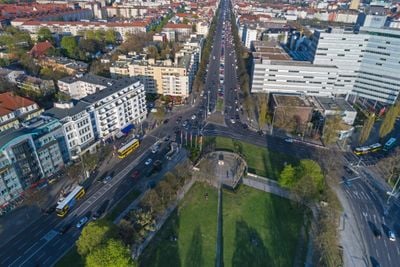
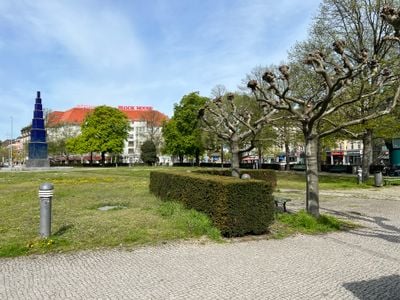
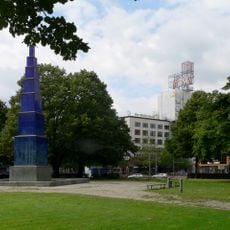
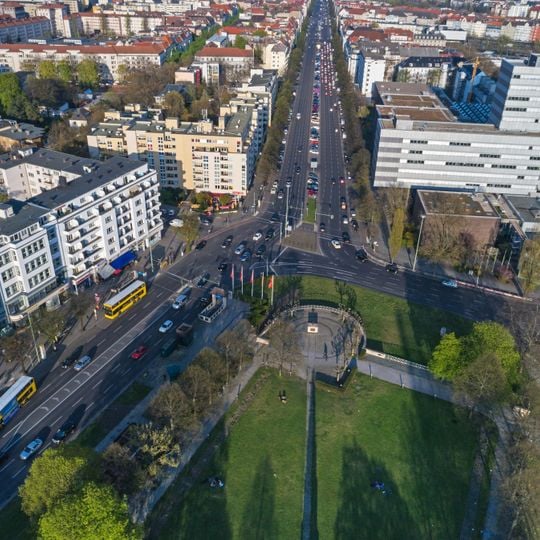
Theodor-Heuss-Platz is a large oval square in Berlin's Westend district, paved in dark grey asphalt with a broad roadway encircling a narrow central island. The island holds tall flagpoles and a rectangular structure, while straight avenues meet the oval. A paved area with fan-patterned cobblestones, a lawn with a low hedge, benches, and trees lies nearby, with the white Block House building behind.
The square was laid out between 1904 and 1908 during the development of Neu-Westend and named Reichskanzlerplatz after the office of the Imperial Chancellor; the U-Bahn station opened by Emperor Wilhelm II on 29 March 1908 stood beside still-empty land. On 21 April 1933 it was renamed Adolf-Hitler-Platz, and Albert Speer's Germania plans placed a heroes' memorial and a projected renaming to Mussoliniplatz at its western axis end. The name reverted to Reichskanzlerplatz on 31 July 1947, and six days after Theodor Heuss died it received its present name on 18 December 1963.
Locals call the square "Theo". Since 1955 an eternal flame commemorated the victims of flight and expulsion, traditionally honoured with a wreath-laying on the Day of the Homeland on 31 August; the flame was extinguished in September 2022 over the Ukraine war and relit two weeks later. The Blue Obelisk sculpture by Hella Santarossa has stood here since 1995.
The square is easily accessible by the U2 subway line, and several bus stops nearby connect to different parts of the city. Parking is available in the area, but using public transportation is often more practical and comfortable.
The square is home to the RBB radio and television station, a key media hub for Berlin and Brandenburg. Nearby stands the Funkturm, a historic radio tower built in 1924 with an observation deck and restaurant at the top.
The community of curious travelers
AroundUs brings together thousands of curated places, local tips, and hidden gems, enriched daily by 92,797 contributors worldwide.