Märkisches Museum, History museum in Mitte, Germany
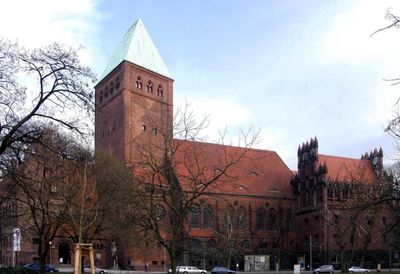
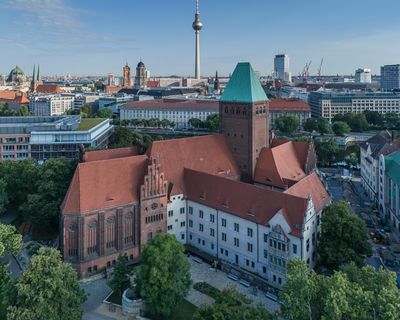
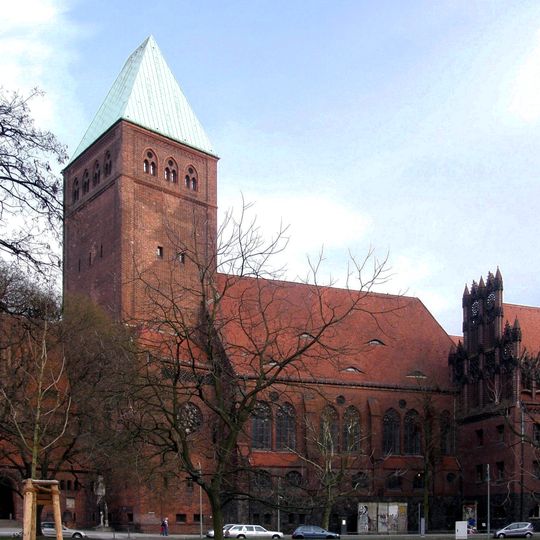
The Märkisches Museum stands on the northern edge of Köllnischer Park facing the Spree, a red brick complex of six connected sections grouped around two courtyards. A 53-metre square tower with a green copper pyramidal roof rises beside a long white plastered wing. Ludwig Hoffmann copied Gothic to Renaissance Brandenburg details, including stepped gables and tall tracery windows.
The museum was founded in 1874 from a collection of documents, coins, and artworks from Berlin and Brandenburg. It became the first purpose-built city museum of its kind, opening in 1908 under architect Ludwig Hoffmann.
Ludwig Hoffmann designed the museum as six connected buildings quoting Brandenburg brick architecture from Gothic to Renaissance, grouped around two courtyards. The 53-metre tower draws on the keep of the Bishop's Castle at Wittstock or Ratzeburg Cathedral; a facade is attributed to Tangermünde town hall or St. Catherine's in Brandenburg an der Havel. Inside, a vaulted Gothic chapel held medieval altars and sculptures, and visitors were led back to the vaulted Great Hall.
The museum closed for extensive renovations in 2023, and reopening is planned by 2029. Until then the galleries and the Hoffmann building on the northern edge of Köllnischer Park, facing the Spree, cannot be visited. Check the Stiftung Stadtmuseum Berlin's announcements before planning a visit.
The building was one of the first museum structures worldwide designed specifically to house urban history. This pioneering approach made it a model for many other city museums that followed later.
The community of curious travelers
AroundUs brings together thousands of curated places, local tips, and hidden gems, enriched daily by 93,687 contributors worldwide.