Brunswick Lion, bronze lion statue on Burgplatz in Brunswick, Germany
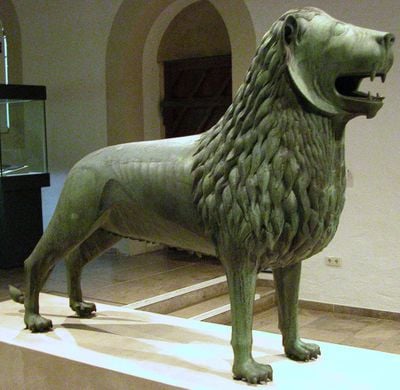
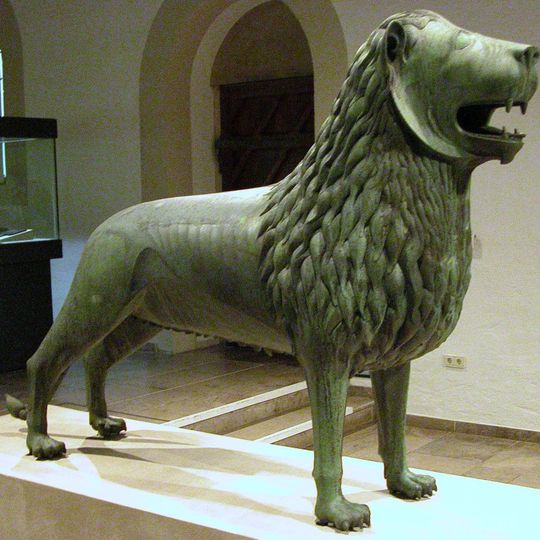
The Brunswick Lion is a bronze statue of a standing lion with its head raised and mouth open, showing teeth and tongue. A heavy mane of overlapping leaf-like shapes covers its neck, chest and shoulders; the smooth body shows leg muscles, and each paw has claws. It rests on a flat white plinth inside Dankwarderode Castle.
The work was created between 1164 and 1176 as a symbol of the rule of Duke Henry the Lion. Its creation coincided with a period when the city was growing and gaining political importance.
The lion became Brunswick's heraldic animal, appearing on the city seal and on ducal coins. The Büssing automotive company, founded in 1903, used it as a logo on its buses and trucks; after MAN took over in 1972, the signet still marks MAN commercial vehicles. A folktale from shortly after Henry's death in 1195 tells of a lion that fought a dragon beside him and died of grief on his grave.
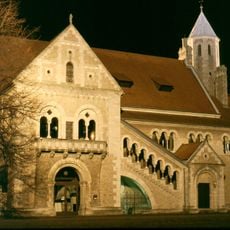
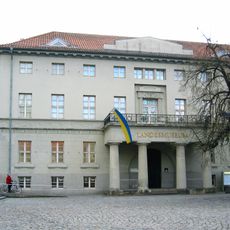
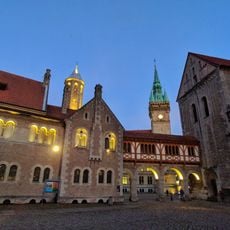
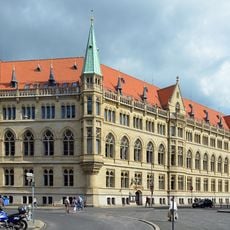
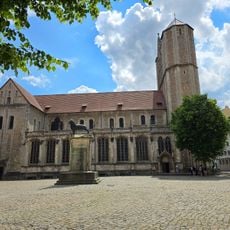
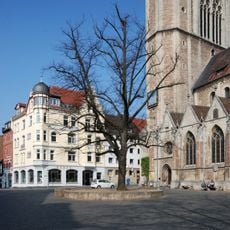
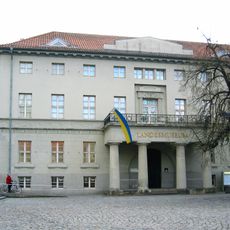
The original bronze stands inside Dankwarderode Castle, moved there in 1980 to shield it from air pollution; a replica cast for the purpose occupies the Burgplatz site. The castle and cathedral face each other across the square in Brunswick's old centre, so both versions can be seen on one walk.
The lion's mane hides traces of its original gilding, found between the curls during the last restoration, and its eyes were once enamelled. The hollow bronze cast weighs 880 kg, measures 1.78 m in height and 2.79 m in length, with walls up to 12 mm thick. The unknown artist was likely a Brunswick goldsmith or bell founder.
The community of curious travelers
AroundUs brings together thousands of curated places, local tips, and hidden gems, enriched daily by 92,875 contributors worldwide.