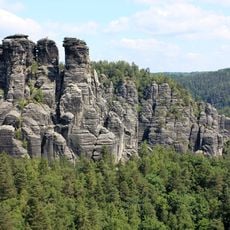
Bastei, Rock formation in Saxon Switzerland, Germany.
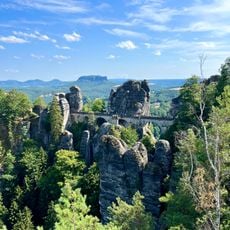
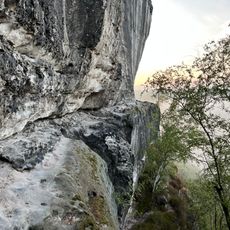
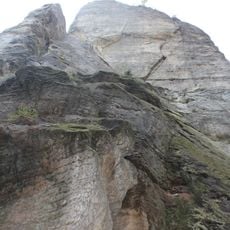
Bastei is a rock formation in Saxon Switzerland, Germany, rising 194 meters above the Elbe River. The sandstone pillars formed through water erosion over millions of years, creating a connected group of peaks and pinnacles.
Workers replaced the original wooden bridge from 1824 with a permanent sandstone structure in 1851 to connect different rock formations. This bridge allowed visitors to walk between the stone pillars and reach the Neurathen Fort on a neighboring peak.
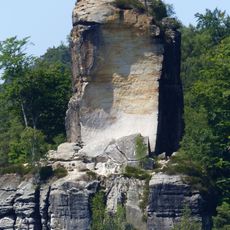
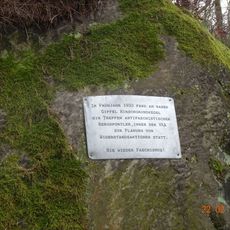
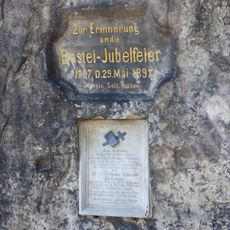
The name Bastei ("bastion") comes from the rocks' role in the defensive ring of Neurathen Castle. At the Jahrhundertturm, a rock pinnacle by the bridge, plaques commemorate the first mention of the Bastei in travel literature and the pioneers Wilhelm Lebrecht Götzinger and Carl Heinrich Nicolai. Another plaque honours court photographer Hermann Krone, who took Germany's first landscape photographs on the Bastei Bridge in 1853.
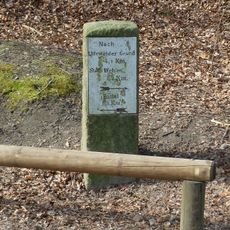
The sandstone Bastei Bridge is 76.5 m long and crosses the Mardertelle ravine on seven arches, about 40 m above the cleft floor. From Rathen, the climb follows a staircase of 487 steps built in 1814 through the Vogeltelle; the old path ends just before the western end of the bridge. The bridge deck has a low metal railing and a small green sign near the middle pillar.
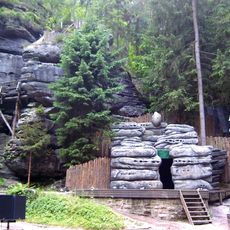
The Neurathen rock castle reached across the Bastei Bridge is the largest rock castle in Saxon Switzerland; visitors see beam joints, rooms cut into the rock, a cistern and stone balls found from medieval slings and catapults. A reconstructed stone sling was set up there in 1986.
The community of curious travelers
AroundUs brings together thousands of curated places, local tips, and hidden gems, enriched daily by 92,781 contributors worldwide.