Hamburg S-Bahn, Metropolitan railway system in Hamburg, Germany
The Hamburg S-Bahn is a metropolitan railway system in Hamburg, Germany, that connects the city center with suburban areas through roughly 147 kilometers of track and 68 stations. The network includes four main lines that intersect at central junctions, carrying travelers to different districts and surrounding communities.
Operations started in 1906 with steam-powered trains running between Blankenese and Altona, switching to electric service the following year. Between 1939 and 1940, the system converted from overhead wires to a specialized third rail carrying 1,200-volt direct current.
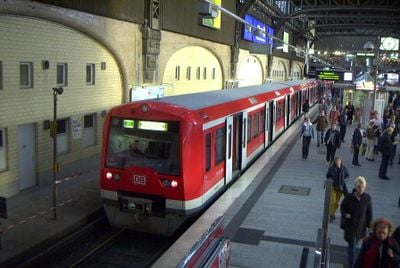
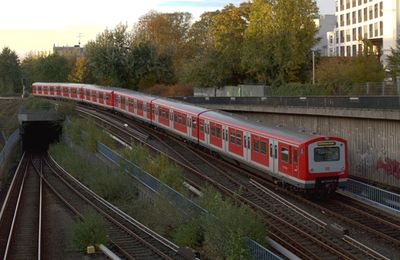
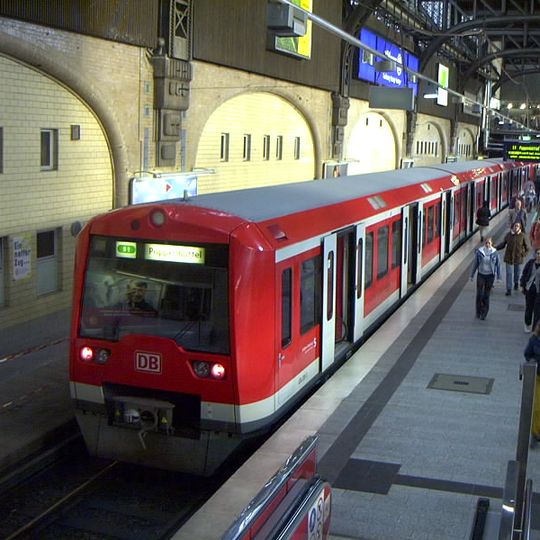
The name derives from the German term "Schnellbahn," meaning rapid transit, which describes its role as a fast urban railway for local travel. Commuters rely on the trains daily for their journeys, with the red carriages forming a familiar sight in the cityscape and often crowded during rush hours.
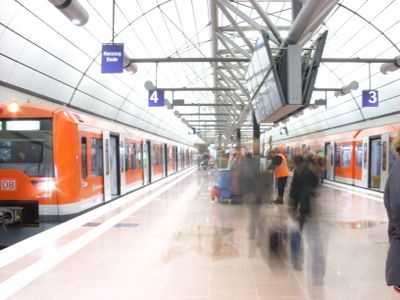
Trains begin around 4:30 in the morning and continue until 1:00 at night on weekdays, while weekend service runs continuously through the night. All stations can be reached via stairs, elevators, or ramps, with display boards showing the next departure and line.
Power comes from a side-mounted third rail instead of overhead wires, which becomes visible when standing on the platforms. This setup was introduced in 1939 and allows steady current flow while keeping tunnel heights lower.
The community of curious travelers
AroundUs brings together thousands of curated places, local tips, and hidden gems, enriched daily by 90,764 contributors worldwide.