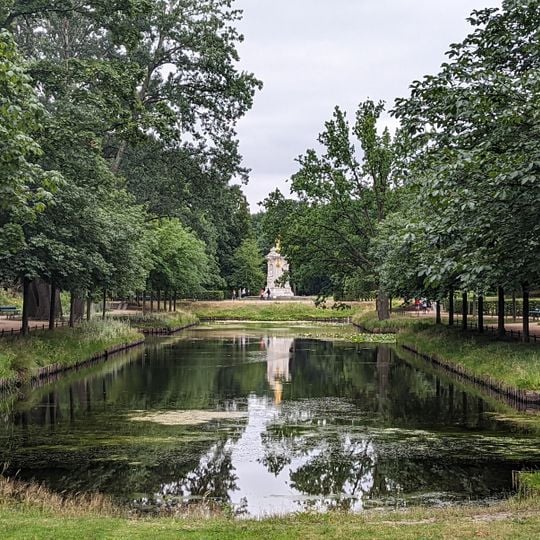
Großer Tiergarten, Public park in central Berlin, Germany
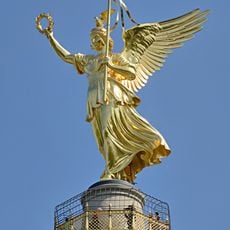
The Großer Tiergarten covers 210 hectares in Berlin's Mitte district, crossed by the Straße des 17. Juni and other broad roads that meet at the Großer Stern, the roundabout holding the Siegessäule. Peter Joseph Lenné's plan of 1833–1840 gave it wide lawns cut by streams, groups of trees, lakes with small islands, bridges such as the Löwenbrücke, and long allées. The Brandenburg Gate marks its eastern edge, the Charlottenburger Tor its western.
The Tiergarten began as a hunting ground for Berlin's rulers in the early 16th century. In the 18th century, architect Georg von Knobelsdorff helped transform the area into a public garden.
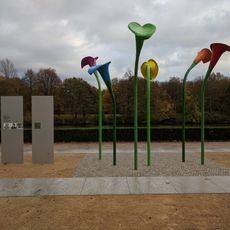
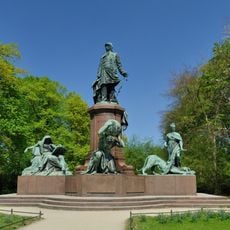
Bronze animal figures and large hunting scenes stand among the paths, and statues honour figures such as Queen Luise, Goethe, Lessing and Fontane. On the Komponistendenkmal, Beethoven, Mozart and Haydn share a neo-Rococo structure nicknamed the "Musikerofen". The street name In den Zelten recalls the Huguenot refugees who sold refreshments here from 1745.
The Straße des 17. Juni runs east–west through the park and crosses the Große Stern, where the Siegessäule stands; the Charlottenburger Chaussee was widened from 27 to 53 metres under the Nazis and still divides the grounds. The S-Bahn stations Tiergarten and Bellevue sit on the park's edge, and the Brandenburger Tor marks its eastern boundary.
After World War II, Berliners felled nearly every tree in the park between 1945 and 1946 for fuel. Reforestation efforts began in 1949 and gradually restored the green landscape.
The community of curious travelers
AroundUs brings together thousands of curated places, local tips, and hidden gems, enriched daily by 92,868 contributors worldwide.