Babelsberg Palace, Gothic Revival château in Potsdam, Germany
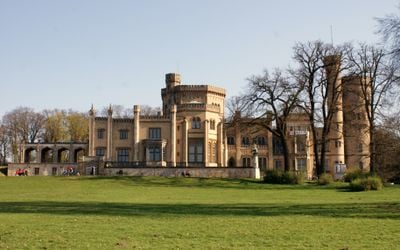
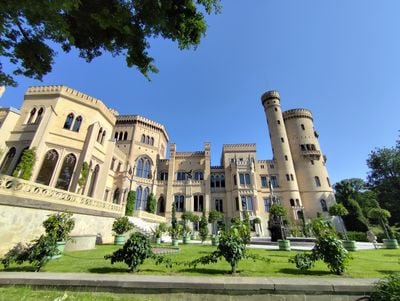
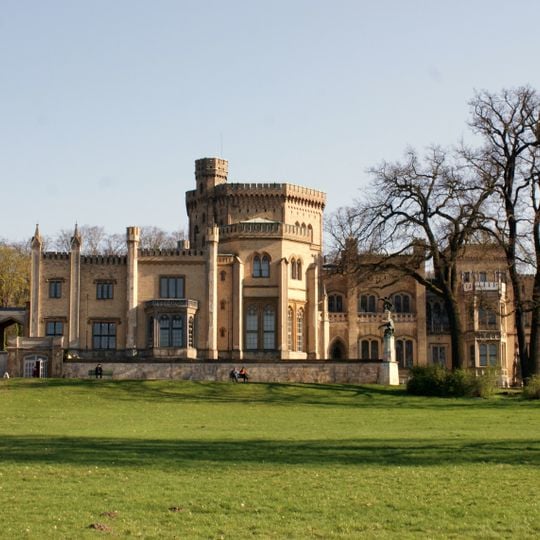
Babelsberg Palace is a Gothic Revival palace in Park Babelsberg, Potsdam, built in two phases from 1834 to 1849 after designs by Karl Friedrich Schinkel and Ludwig Persius. Its pale yellow and tan brick facade has tall buttresses with pinnacles, a square tower with a crenellated parapet, and a smaller octagonal turret above it. The east wing, with three arched windows in a projecting bay, housed the rooms of William and Augusta; the west wing contained the banqueting halls.
Prince William received the Babelsberg site from his father on 3 August 1833, and Karl Friedrich Schinkel designed the first, eastern section, built in 1834–35. Ludwig Persius added the western wing with the state halls between 1844 and 1849. Queen Victoria visited in 1858, and in 1862 William met Bismarck here before naming him Prussian minister president.
Augusta of Saxe-Weimar-Eisenach shaped the palace's look: after studying English country-house engravings she sketched designs herself and pressed the architects to follow them, rejecting classical and Italian models. The walls were built of brick with a sandstone facade, and the Tudor style recalls Windsor Castle.
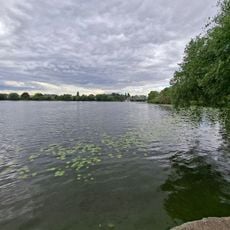
The palace stands halfway up the Babelsberg hill in Park Babelsberg, reached on foot through the park; the terrace and retaining wall face the Potsdam lake landscape. Facades and terraces were restored between 2013 and 2016, while the interiors have been under restoration since 2019, so the museum rooms may be closed. The site belongs to the UNESCO World Heritage "Palaces and Parks of Potsdam and Berlin".
In 1862, King William I and Otto von Bismarck met here in a conversation that led to Bismarck's appointment as Minister President of Prussia. This meeting shaped Germany's political future in fundamental ways.
The community of curious travelers
AroundUs brings together thousands of curated places, local tips, and hidden gems, enriched daily by 93,060 contributors worldwide.