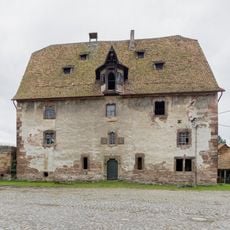
Auer Wasserburg, Medieval castle ruin in Wanfried, Germany
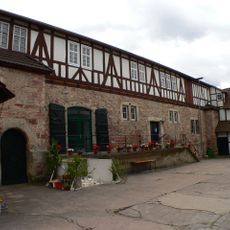
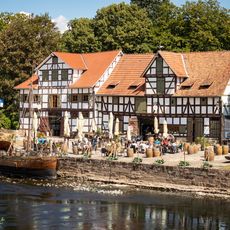
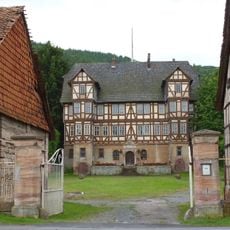
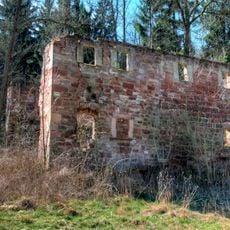
Auer Wasserburg is a castle ruin in Wanfried that preserves the stone foundation with remnants of vaulted chambers and thick walls. The excavated materials and structural remains reveal details about the medieval building methods used here.
First mentioned in 1272, the castle served as a fortified stronghold for centuries in the region. During the Thirty Years' War in 1637, Croatian forces captured and destroyed it completely.
The finds from the 2004 excavation include shattered glass from bullseye panes and vessels, door locks, hinges and hooks, and parts of a knight's armour. Most notable are the tiles of several stoves from the second half of the 16th century, so-called Reformation stoves with relief tiles showing biblical scenes.
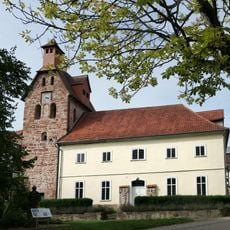
The ruin stands at the edge of Aue, a district of Wanfried, right by the border with Thuringia. The lower floor with its vaulted stone rooms is partly walkable; the upper storeys were never rebuilt and the fire debris still lies on the vaults. The small tower museum holds only four square metres, so few visitors fit inside at once.
Inside a decorative tower built in 1920, a tiny museum operates as one of Hesse's smallest accessible museums. This unusual concept merges the ruin with modern display in a space that fits just a few visitors at once.
The community of curious travelers
AroundUs brings together thousands of curated places, local tips, and hidden gems, enriched daily by 93,590 contributors worldwide.