Gustavia, Archaeological site in Mönchgut peninsula, Germany
Gustavia is the site of an unfinished Swedish port town begun in 1806 on the southeastern shore of Rügen, west of Groß Zicker. Almost nothing stands above ground: the visible remains are two submerged wooden boxes filled with fieldstones, 7.2 m pine planks long and 6.4 m apart, lying in about 3 m of water off the Zickersches Hövt peninsula.
Gustavia was a Swedish port town planned from 1806 on the Zicker See, a bay the officers Boye and Gripenberg judged fit for 300 to 400 ships. King Gustav IV Adolf ordered construction on 11 September 1806, with a shipyard, dock, naval school and a civilian town of over 30 planned buildings. French forces occupied Rügen in 1807 and levelled the works; Sweden abandoned the project, and Prussia, which took over Swedish Pomerania in 1815, never resumed it.
The name honoured King Gustav IV Adolf, who ordered the harbour on 11 September 1806; the town was also planned as a trading köping. The officers Boye and Gripenberg had surveyed the Zicker See that summer and judged it fit for 300 to 400 ships. A Caribbean namesake survives: Gustavia on Saint-Barthélemy, a Swedish colony from 1785 to 1877, is named after Gustav III.
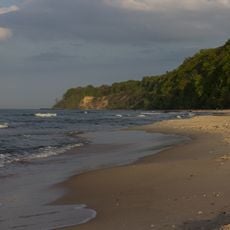
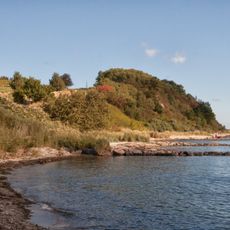
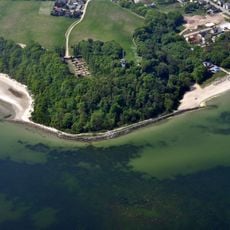
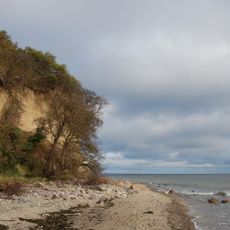
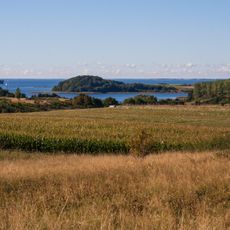
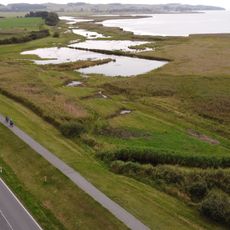
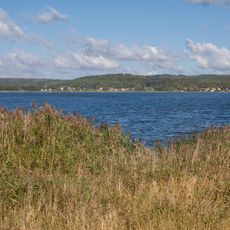
The site lies west of Groß Zicker on the Mönchgut peninsula, near the Zicker See. The 1995 find was made by aerial survey; the wooden stone boxes rest about 3 metres deep off the Zickersches Hövt peninsula, so they are not visible from land. The bay itself served as a sheltered winter harbour.
In 1995 aerial survey found two wooden boxes off the Zickersches Hövt peninsula; divers identified pine planks 7.2 m long filled with fieldstones, set 6.4 m apart. Dendrochronology dated the wood to the early 19th century, the last years of Swedish rule. They are the remains of a landing bridge built around 1813 after the French withdrew.
The community of curious travelers
AroundUs brings together thousands of curated places, local tips, and hidden gems, enriched daily by 94,586 contributors worldwide.