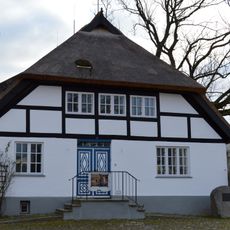
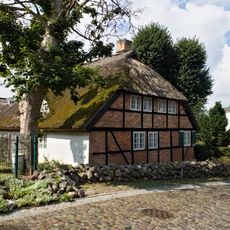
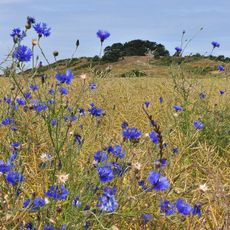
Mönchgut, Nature reserve in Vorpommern-Rügen, Germany.
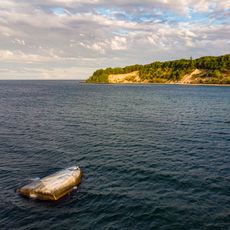
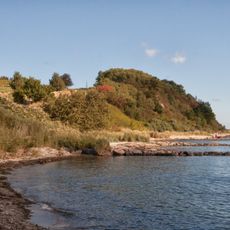
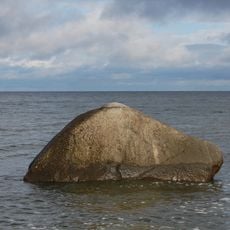
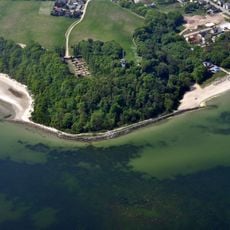
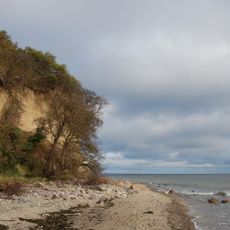
Mönchgut is a 2,340-hectare nature reserve on the eponymous peninsula of Rügen, split into eight non-contiguous sections. Its landscape was shaped by the last ice age: the bays Having, Hagensche Wiek and Zicker-See are glacial scours, while Reddevitz, Groß Zicker and Klein Zicker are end moraines covered with meltwater sand. Marl cliffs pushed up by the ice hold large erratic boulders, among them the Buskam north of the Nordperd.
The Mönchgut peninsula takes its name from Eldena Abbey, which acquired it in the 13th century. After the Reformation it passed to the sovereign. The nature reserve was established on 2 April 1981; in 1990 it was expanded as part of the Southeast Rügen Biosphere Reserve.
The peninsula's name comes from Eldena Abbey, which owned the land from the 13th century; after the Reformation it passed to the sovereign. The Swedish matriculation maps of 1696 record the moraine soils as ploughed fields, with the lowlands and cliffs used as pasture. Poorer fields were later abandoned and are still grazed by sheep today.
Multiple trails connect the villages and offer routes for different fitness levels. Good footwear is important, especially on cliff paths where the ground can be uneven and muddy.
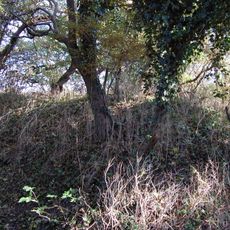
The reserve's eight separate sections include the cliff and broadleaf woodland of Zickersches Höft, which form the core zone of the Southeast Rügen Biosphere Reserve and are left entirely without economic use. The Buskam, a large glacial erratic north of the Nordperd, is a witness to the Ice Age origins of the peninsula.
The community of curious travelers
AroundUs brings together thousands of curated places, local tips, and hidden gems, enriched daily by 92,718 contributors worldwide.