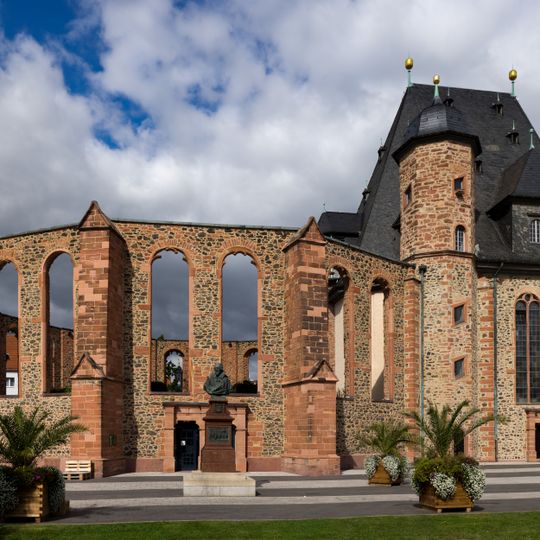
Walloon-Dutch Church Hanau, Protestant church building in Hanau, Germany
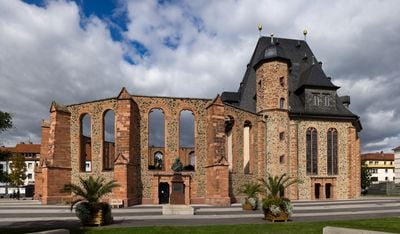
The Walloon-Dutch Church is an early 17th-century church building standing in central Hanau that combines remains from two distinct sections. The Walloon wing displays original ruins, while the Dutch section was reconstructed after World War II.
Walloon refugees reached Hanau in 1593; Count Philipp Ludwig II, ruler from 1595, settled Reformed exiles from Frankfurt to strengthen his county. The foundation stone was laid on 9 April 1600, and the first service was held on 29 October 1608. The double church served separate French- and Dutch-speaking congregations, and only the smaller Dutch half was rebuilt after World War II.
The congregation kept its own Reformed identity and stayed out of the 1818 Hanau Union, which is why it remained separate from the regional church. German gradually replaced French and Dutch in services during the 19th and early 20th centuries, and since 1945 worship has been held only in German. A granite sculpture by Claus Bury, a descendant of the Huguenot Pierre Bury of Troyes, was placed on the Französische Allee in 2021 and recalls Matthäus Merian's 1632 town plan.
The building is centrally located in Hanau next to the Grimm Brothers Monument and welcomes visitors during daytime hours with no admission charge. Guided tours can be arranged to learn more about the history and interior details.
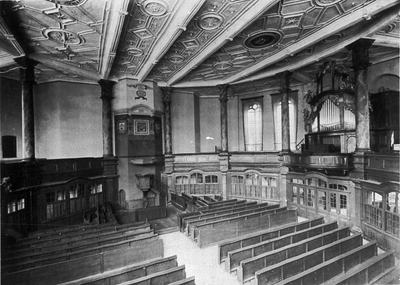
The church began as a double church: the larger Walloon half was a twelve-sided polygon, the smaller Dutch half an octagon, interlocked with an octagonal tower at the centre of the dividing wall. After wartime bombing only the Dutch half was rebuilt; the Walloon half stands as a roofless memorial with three open pointed arches and a bust on a pedestal beneath the middle one.
The community of curious travelers
AroundUs brings together thousands of curated places, local tips, and hidden gems, enriched daily by 94,049 contributors worldwide.