German Goldsmiths´ House, Jewelry museum in Hanau, Germany
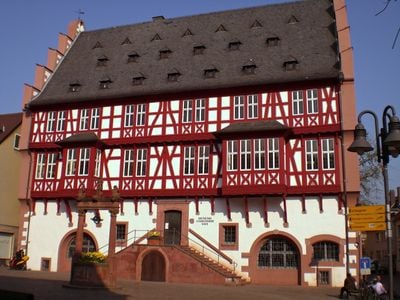
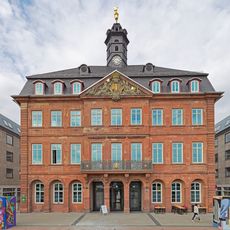
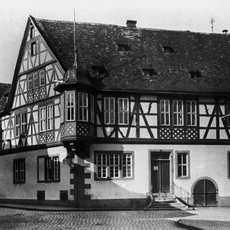
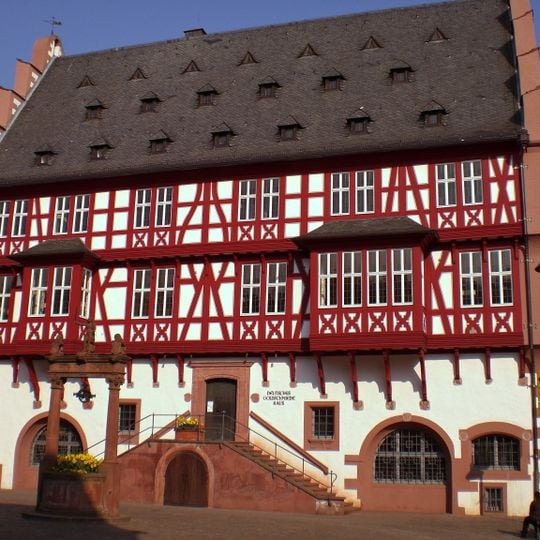
The German Goldsmiths' House is a museum in Hanau's city center housed in a late Renaissance half-timbered structure that displays gold and silver craftsmanship across multiple floors. The building contains both historical artifacts and contemporary metalwork alongside examples of jewelry and decorative tableware.
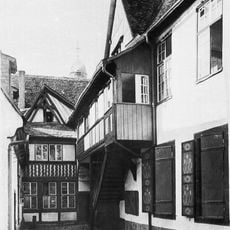
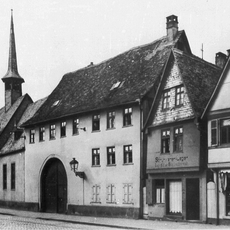
Built in 1538 as the Old Town hall of Hanau, the building is dated by an inscription on the facade; the master builder was Konrad Speck, with stonemasons Hans von Gießen, Peter von Aschaffenburg and Hans von Lich. After the Old Town and New Town administrations merged in the 1820s it served as a district court and then schools, and from 1902 as the Hanau Historical Society's museum. It burned out in the March 1945 air raids, leaving only the foundations and two gable walls, and was rebuilt in the 1950s as a faithful timber-framed reconstruction.
The name recalls Hanau's silver- and goldsmithing trade, documented since the early 17th century; the city also hosts the Staatliche Zeichenakademie, a leading training school for goldsmiths, and since 1985 the Gesellschaft für Goldschmiedekunst. The museum opened on 18 October 1942 on the initiative of Berlin jeweller Ferdinand Richard Wilm, and about 25,000 visits were counted between mid-October and the end of November 1942.
The museum sits in the city center and its exhibitions span multiple floors, so visitors should be prepared for stairs and different levels. Self-guided routes through the exhibition allow you to move at your own pace through the displays.
A Hanau ell, an iron bar set into the facade, served as the market's official unit of length. The sandstone reliefs embedded in the walls date from the 14th to 16th centuries and show fools, self-love and fabulous creatures. The fountain in front, carved by Johannes Rab in 1607/1608, was originally painted in colour.
The community of curious travelers
AroundUs brings together thousands of curated places, local tips, and hidden gems, enriched daily by 92,628 contributors worldwide.