Hessenstein Castle, Castle and youth hostel in Vöhl, Hesse, Germany
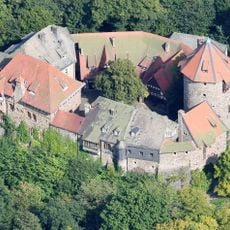
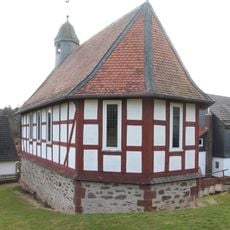
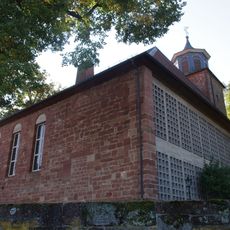
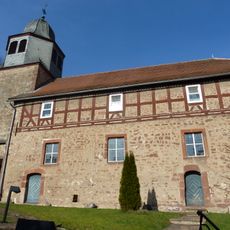
Hessenstein Castle is a late medieval hilltop castle above Ederbringhausen, a district of Vöhl in Hesse, Germany. Landgrave Henry II of Hesse built it from 1342 to 1348 on the remains of the older Silburg, and the main building and gatehouse keep much of their 14th-century fabric. It stands at about 327 m on a southern spur of the Keseberg, with the Lengelbach flowing past below.
Landgrave Henry II of Hesse built the castle between 1342 and 1348 on the remains of the older Silburg, replacing the Keseburg his father had destroyed in 1277, to give his local bailiffs a fixed seat. In 1348 pressure from the Archbishop of Mainz led to its pledge to Haina Abbey. From 1555 it housed the landgravial office of Hessenstein, and in 1922 it became Hesse's first youth hostel.
The castle has been a youth hostel since 1922, when the first Hessian hostel of the Deutsches Jugendherbergswerk opened here; a 1926 postcard advertised it as a forester's residence with a Wandervogel hostel. Since 2012 a youth education centre has run programmes on nature, crafts and the Middle Ages, and the house is certified by NABU Hessen as bat-friendly.
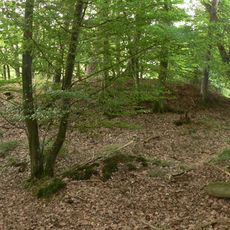
The castle is reached on foot via forest hiking trails, so sturdy shoes are a good idea before setting out. Visiting in spring or summer makes the walk easier, as the paths can be muddy or slippery after rain.
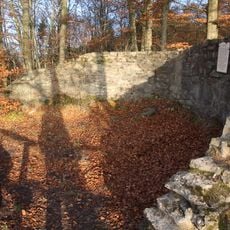
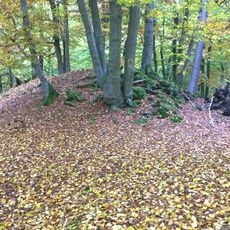
The castle stands on a southern spur of the Keseberg at about 327 m, roughly 1.7 km southeast of Ederbringhausen. Just north, on the Keseberg's northern spur, lie the ruins of Keseburg, which Landgrave Henry II's father destroyed in 1277; Hessenstein was built as its replacement. Hikers reach it via the Kellerwaldsteig, Hugenotten-Waldenserpfad or Barbarossaweg.
The community of curious travelers
AroundUs brings together thousands of curated places, local tips, and hidden gems, enriched daily by 94,572 contributors worldwide.