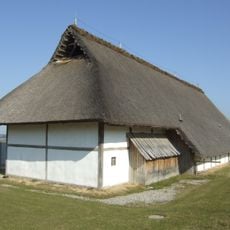
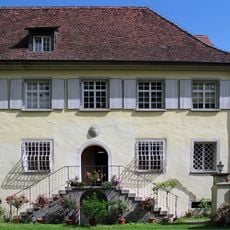
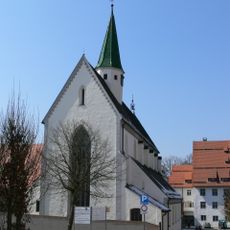
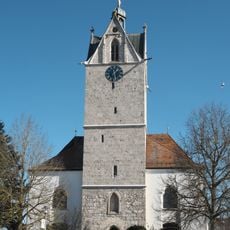
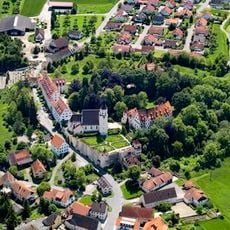
Kloster Heiligkreuztal, Cistercian monastery in Altheim, Germany.
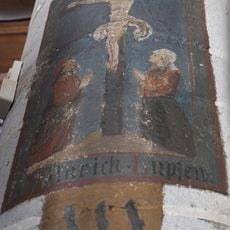
Kloster Heiligkreuztal is a former Cistercian nunnery in the Altheim district of Heiligkreuztal, Upper Swabia. Its buildings date mainly from 1723 to 1761 under Abbess Maria Holzapfel, with stucco work by Joseph Anton Feuchtmayer in 1754. The church holds a wooden Christ and St John group from the first half of the 14th century, and the cloister has 16th-century wall paintings including 25 abbess portraits.
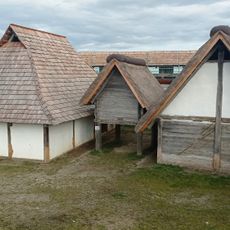
Founded in 1227, the monastery grew from a beguine community first mentioned in 1140 that joined the Cistercian order in 1204. Count Egon von Grüningen-Landau and his sister Hailwilgilde funded the buildings, and Hailwilgilde became the first abbess. The name changed from Wasserschapfen to Heiligkreuztal around 1231 after Egon donated a fragment of the Holy Cross. The monastery was dissolved in 1803.
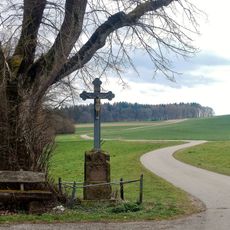
The name references the Holy Cross, a symbol woven throughout the building's design and decoration. Religious artworks on display reveal how artistic traditions evolved over time within these walls.
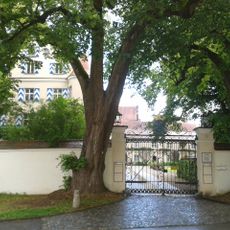
The grounds are generally accessible during daylight hours, though guided tours provide better access to interior spaces. Planning a visit in advance helps since some areas open only with official tours.
The monastery's library, built under Abbess Maria Holzapfel, held over a thousand volumes; after secularisation most of the library and archive went to Stuttgart. The best-known artwork is a wooden Christ and St John group, the "Johannesminne", carved in the first half of the 14th century and kept in the apse.
The community of curious travelers
AroundUs brings together thousands of curated places, local tips, and hidden gems, enriched daily by 94,139 contributors worldwide.