Alte Burg, Celtic hillfort in Langenenslingen, Germany
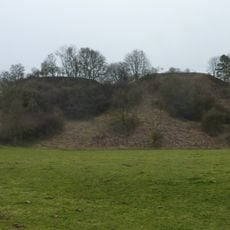
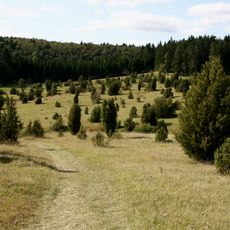
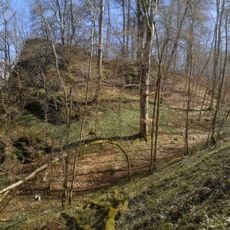
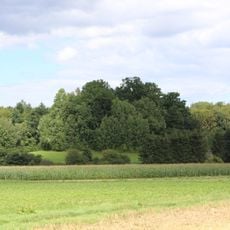
Alte Burg is a Celtic hilltop site on a 695-metre spur of the Burgberg, about 2 hectares in size. Its tongue-shaped plateau, 340 metres long and 55–65 metres wide, was partly levelled and is closed off to the northeast by two outer ramparts, a deep moat and a main wall whose top still rises up to 12 metres above the moat floor.
Long read as a medieval border fortification, the site was dated by a research project begun in 2014 to the 8th–4th century BC. The main wall, 13 m thick and at least 10 m high, is the largest structure of its kind north of the Alps from that period. Excavations in 1894 and 2006–07 uncovered a 5 m deep pit holding six human skeletons and Hallstatt-period finds.
The site's name, Alte Burg, means "old castle" in German, though it was not a medieval castle. Archaeologists interpret the 5-meter-deep pit, where six human skeletons were found in 1894, as a sacrificial shaft. The absence of houses and the unusual ramparts suggest the plateau served as a cult and assembly place for the Hallstatt-period population, possibly with games or contests.
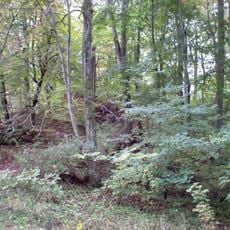
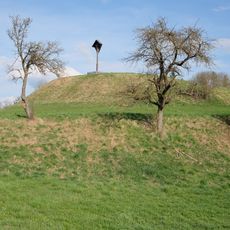
A signposted hiking trail leads from the car park on the Langenenslingen–Warmtal road up to the site. The plateau and ramparts are partly overgrown with trees, and a reconstructed section of the main wall with an information panel stands on site.
The main wall is 13 metres thick and stood at least 10 metres high, built of outer and inner dry-stone faces filled with rubble. It is the largest structure of its kind from this period north of the Alps. A 40-metre-long, 5.8-metre-thick wall ran off to the north-east, probably flanking a gate.
The community of curious travelers
AroundUs brings together thousands of curated places, local tips, and hidden gems, enriched daily by 92,652 contributors worldwide.