Ruine Hornstein, Medieval castle ruins in Bingen, Germany
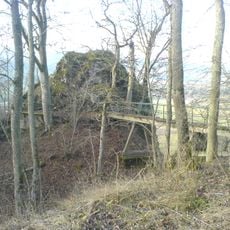
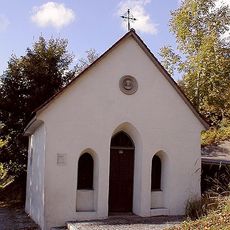
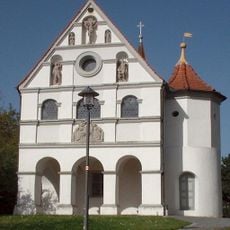
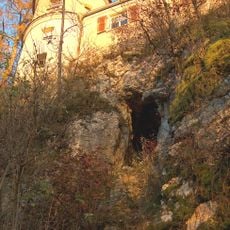
Ruine Hornstein is the ruin of a hilltop castle on a rocky spur about 630 metres above sea level above the Lauchert valley near Bingen-Hornstein in Baden-Württemberg. The castle was first mentioned in 1244 and was rebuilt around 1700 as a Baroque palace. Only the castle chapel survives, a Baroque gem with carvings by Franz Magnus Hops and a 132-centimetre stucco alabaster corpus of Christ by Joseph Anton Feuchtmayer. A spiral staircase leads to the tower room above the chapel.
Hornstein was first mentioned in 1244 as the seat of the lords of Hornstein, who had held a castle in the village area since the 11th century. Around 1700 the family rebuilt it as a stately Baroque palace, then sold it in 1787 to the princes of Hohenzollern-Sigmaringen. In 1818 the prince installed a Hohenzollern reformatory there; Prussia continued it from 1850, and it closed in 1869. Sold for demolition in 1873, the buildings were torn down, leaving only the palace chapel.
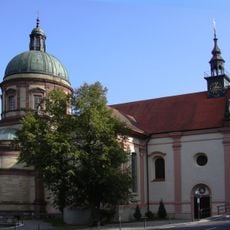
The castle chapel survived the 1873 demolition and remains in use for the Christian year's feast days. Inside are carvings by Franz Magnus Hops and a 132-centimetre stucco alabaster corpus of the Crucified Christ by Joseph Anton Feuchtmayer (1696–1770), set in a stucco-marble altar. Since 1988 the Förderverein Ruine Hornstein has cared for the monument, and its events include the Belagerung, the district's largest medieval spectacle, with knights, sword fighters, dancers, jugglers, fire-eaters and market stalls.
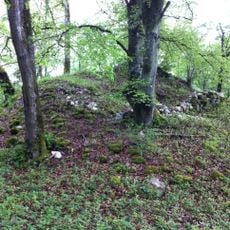
The ruin is open to the public; the tower room above the chapel, reached by a spiral staircase, has been accessible since 2003. The chapel is the only surviving building, so the visit is short and mostly outdoors. The site lies on a rocky ridge at about 630 m above sea level above the Lauchert, near the Hornstein district of Bingen.
From 1818 to 1869, the castle served as a reformatory and correctional facility under Hohenzollern-Sigmaringen administration and later Prussian control. This surprising chapter in its story reveals how medieval fortresses took on completely different roles during the 19th century.
The community of curious travelers
AroundUs brings together thousands of curated places, local tips, and hidden gems, enriched daily by 92,892 contributors worldwide.