Bingium, Archaeological site in Rhineland-Palatinate, Germany.
Bingium is the Latin name of present-day Bingen am Rhein. No remains of the Roman fort or civilian settlement (vicus) are visible above ground; the site is known through finds such as the 1859/60 necropolis at Bingerbrück, the tombstone of Annaius Daverzus showing Roman weapons and clothing, and the 1983 discovery of oak piles from AD 77 under the Nahe, remains of a Roman bridge.
Drusus founded a fort at the Nahe mouth in the first decade BC, and a civilian vicus grew around it. After Germanic raids in 359, Emperor Julian had the settlement walled; Ausonius mentions the walls in 370. The Nahe bridge's oak piles were dated dendrochronologically to 77, under Vespasian.
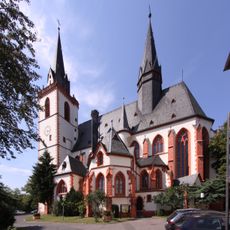
The name Bingium probably comes from a Celtic root and passed from Drusus's fort to the civilian settlement; Tacitus mentions it in his Historiae. Latin sources also call it Bingio, Bingum, Vingio and Vingo. In the crypt of St. Martin, excavators found a fragment of a Roman altar, which led to the theory that a temple once stood on the site of the later church.
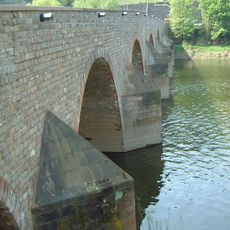
No Roman structures survive above ground at Bingium; the fort and vicus are known through finds and necropolises. Visible traces are the Roman bridge piers of 77 AD under the Drususbrücke between Bingen and Bingerbrück, and the 1859/60 railway construction that exposed graves in Bingerbrück. The stone of the doctor's grave, found in 1924 near Burg Klopp, is in local collections.
The 1859/60 railway construction at Bingerbrück exposed a large Roman necropolis; among its gravestones is that of Annaius Daverzus of the cohors IV Delmatarum, carved with a detailed view of first-century Roman weapons and clothing. In 1924 the so-called doctor's grave was found near Burg Klopp, containing bronze cupping vessels and other medical instruments.
The community of curious travelers
AroundUs brings together thousands of curated places, local tips, and hidden gems, enriched daily by 93,852 contributors worldwide.