Anhalt Castle, Medieval castle in Harzgerode, Germany.
Anhalt Castle is a fortified structure on a hilltop in Harzgerode built across multiple periods and fitted with defensive walls and several towers. The compound includes residential chambers, storage rooms, and ramparts that reveal how a medieval noble stronghold was organized and used.
Otto the Rich of Ballenstedt built the castle around 1123 as the ancestral seat of the Ascanians. In 1140 Archbishop Conrad of Magdeburg and Margrave Conrad of Meissen destroyed it during the Welf–Ascanian struggle for Saxony; Albert the Bear rebuilt it after 1147 as one of the Harz's strongest fortresses, with a 543-metre dry moat. After the Ascanian line died out in 1315, the castle fell into decay.
The name Anhalt derives from the castle: a tradition recorded in an interview with Prince Eduard von Anhalt and Alexander von Bismarck explains it as a site first built of beams (Ballenstedt) and later "without wood" (Anhalt). The title "Prince of Anhalt", first attested in 1215, referred to the castle, and during the 15th and 16th centuries the name passed to the princely house. In the 19th century the castle became a subject of legend and poetry.
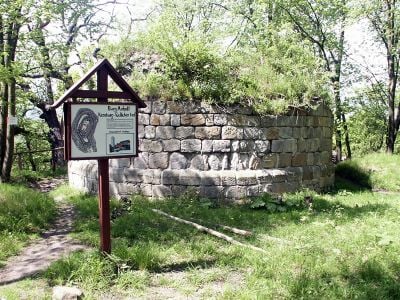
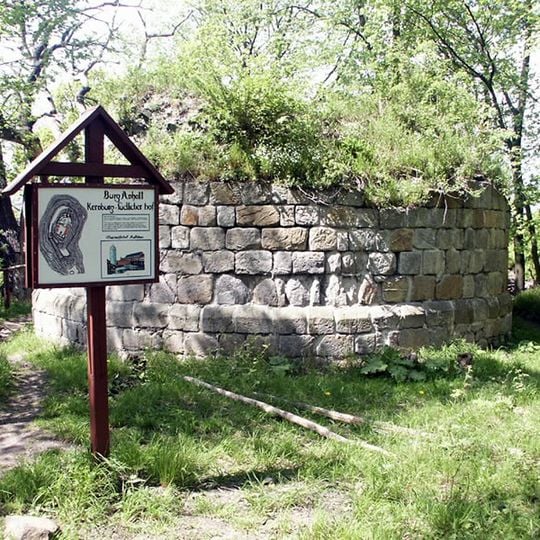
The ruin stands on the Großer Hausberg at about 398 metres, above the Selke valley between Mägdesprung and Meisdorf. A stamp for the Harzer Wandernadel (no. 197) is fixed about 100 metres south-southeast of the castle near gate 1 in the former ditch. The wall stump of the bergfried, roughly three metres high and overgrown, is the main surviving feature to look for.
The castle was built of brick, a material unusual for its time and region; a legend derives the name Anhalt from Middle Low German An-Holt, "without wood". The ruin is stamp point no. 197 of the Harzer Wandernadel, with the box about 100 m south-southeast of the castle near Gate 1 in the former neck ditch.
The community of curious travelers
AroundUs brings together thousands of curated places, local tips, and hidden gems, enriched daily by 92,850 contributors worldwide.