Bleiloch Dam, Hydroelectric dam in Saale-Orla-Kreis, Germany
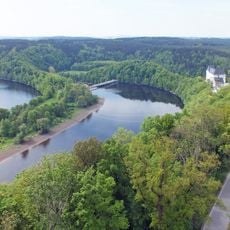
Bleiloch Dam is a hydroelectric facility on the Saale River in eastern Germany that controls water flow through a large reservoir. The structure generates power using turbine technology and stands as one of the region's most visible engineering works.
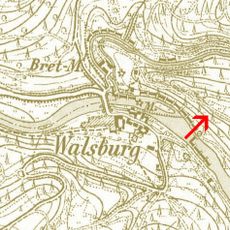
Built between 1926 and 1932 as part of Thuringia's emergency works programme, the dam employed unemployed workers from Thuringia and Saxony on six-month contracts. A dedicated branch railway from Gräfenwarth carried materials to the site. Around 700 people were resettled to create the reservoir, which flooded the lower parts of Saalburg.
The dam takes its name from the Bleilöcher, former lead-mining pits submerged when the Saale was impounded. Saalburg, the main settlement on the shore, lost its lower districts to the reservoir; passenger boats now cross the lake from there. Since 1997 the SonneMondSterne festival has been held on the eastern shore at the second August weekend, drawing over 40,000 visitors.
Motorboats may only use the reservoir from 1 March to 30 November, and boats over 15 hp need a boat licence; combustion-engine boats also require a paid permit. Passenger boats run from Saalburg, whose lower districts were moved when the lake was filled. Guided walks with trained nature guides are offered around Saalburg, Zoppoten, Bad Lobenstein, Blankenstein and Harra.
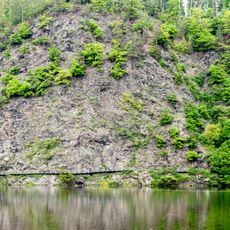
The reservoir holds 215 million cubic metres, the largest storage volume of any reservoir in Germany. Its name comes from the lead pits (Bleilöcher) flooded by the lake, where lead was mined before the valley was dammed.
The community of curious travelers
AroundUs brings together thousands of curated places, local tips, and hidden gems, enriched daily by 93,098 contributors worldwide.