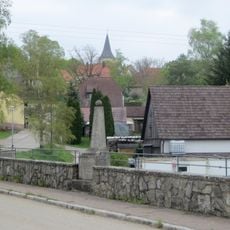
Kloster Anhausen, Monastery ruin in Satteldorf, Germany
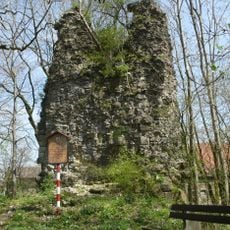
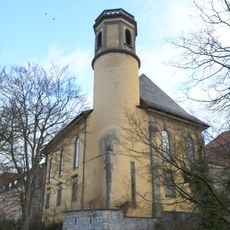
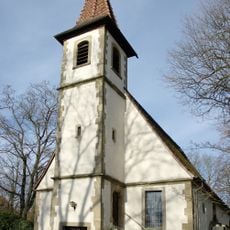
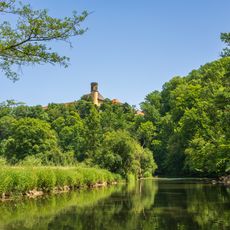
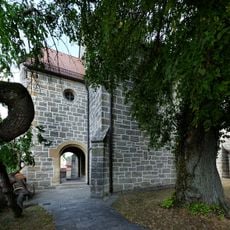
Kloster Anhausen is a former Catholic monastery in the Schwäbisch Hall region, with significant wall remains still standing today. The preserved structures display typical elements of medieval monastic architecture and serve as physical evidence of its original purpose.
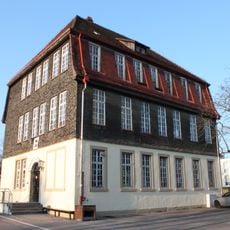
A Marienkapelle at Anhausen was first mentioned in 1344 and rebuilt on a larger scale in 1357 by Lupold von Bebenburg; from 1359 the hermit Konrad lived beside it. In 1403 Hermann von Hornburg, his mother Barbara von Merkingen and Konrad von Bebenburg founded a monastery there for the Pauline Eremites, confirmed by the Bishop of Würzburg in 1404 and by Pope Martin V at Konstanz in 1418. After a fire in 1445 Georg von Bebenburg rebuilt it; in 1528 Margrave Georg of Ansbach barred new novices, and after the last prior, Leonhard Löß, died the house was dissolved in 1557 and turned into a tenant farm.
The Bebenburg family left their mark through five relief epitaphs carved into the monastery wall, commissioned between 1496 and 1502. These stone figures show family members and document their close connection to monastic life.
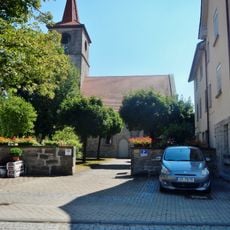
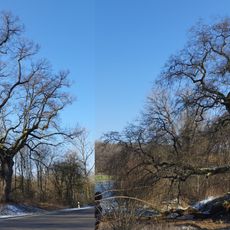
The site is located near Satteldorf in the Schwäbisch Hall district and is relatively easy to find for those who familiarize themselves with the local geography. Visitors should note that these are ruins, so sturdy footwear and caution when walking around the grounds are advisable.
Among the stone reliefs on the wall is a portrayal of Bishop Lupold von Bebenburg, yet despite his memorial here, he was not buried at the monastery. His final resting place lies instead in the distant Bamberg Cathedral.
The community of curious travelers
AroundUs brings together thousands of curated places, local tips, and hidden gems, enriched daily by 94,364 contributors worldwide.