Rauenstein Castle, Medieval castle in Pockau-Lengefeld, Germany
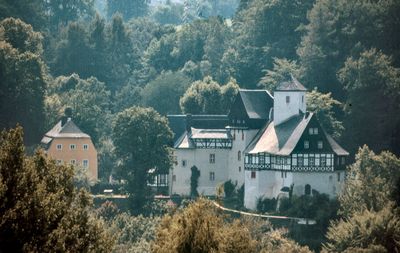
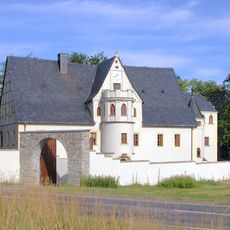
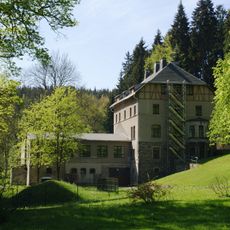
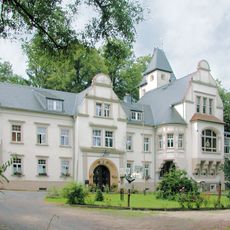
Rauenstein Castle is a former medieval spur castle, later converted into a palace, covering about 40 by 30 metres on a north-facing ridge above the Flöha. Its buildings retain medieval fabric, including a square tower 5.5 metres on each side. The former ditch on the south side was filled in to create a courtyard.
The castle was first recorded in 1323 under the Schellenberg knights before passing to the Electorate of Saxony in 1567. This transfer marked a turning point in how the fortress was governed and used.
The von Herder family, descendants of the poet Johann Gottfried von Herder, held Rauenstein from 1843 to 1853 and again through later members. Wolfgang Freiherr von Herder and his cousin Wilhelm sat in the Saxon Landtag, while Gottfried Freiherr von Herder was a German Conservative Reichstag deputy from 1893 to 1898. Carl Wilhelm von Herder-Rauenstein, the poet's great-great-great-grandson, repurchased the castle in 1999 and sold it shortly before his death in 2021.
The castle is privately owned and inhabited, so it can only be viewed from the outside; there is no entry to the buildings or the grounds. It stands on a north-facing spur about 500 m north-northeast of Lengefeld, above the Flöha. The former medieval motte-and-bailey area covers roughly 40 × 30 m, and the old ditch on the south side was filled in to create the castle courtyard.
The road tunnel near the castle dates to the structural changes of around 1630, not to a defensive scheme inside the walls. The complex covers roughly 40 by 30 metres, and a square tower 5.5 metres on each side is still built into the later house. The site has been a scheduled archaeological monument since 25 November 1968.
The community of curious travelers
AroundUs brings together thousands of curated places, local tips, and hidden gems, enriched daily by 93,741 contributors worldwide.