Calenberg Castle, Medieval water castle in Schulenburg, Germany
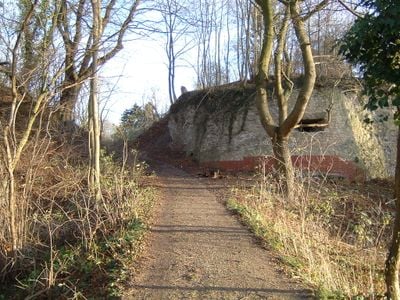
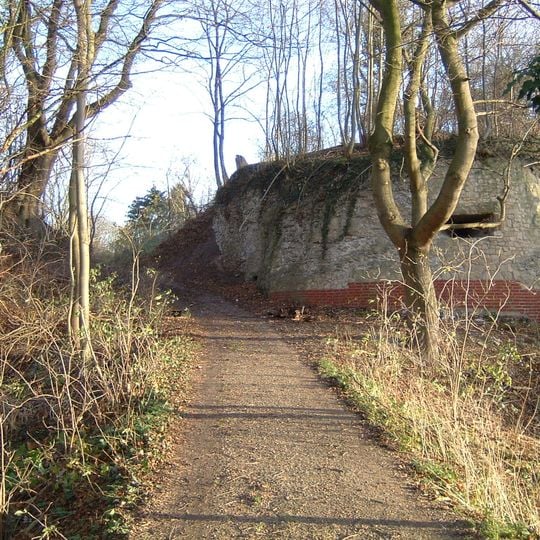
Calenberg Castle is a ruin on the Calenberg, a chalk marl hill about 70 metres high between former branches of the Leine near Schulenburg, Pattensen. The site is a rising bank of rough grey stone and earth topped with scrub, with a band of red brick near the base above the path. On the right, slender tree trunks stand before the stone wall, which contains a narrow dark opening or recess.
Duke Otto the Strict of the Welfs built Calenberg as a water castle in 1292 on the chalk marl hill between two arms of the Leine. Enfeoffed to the knight Conrad of Saldern in 1327, it passed back to Duke William in 1364 and served as the seat of ducal advocates from 1371. In 1432 it became the residence of a Welf duke, and the fortress rebuilt under Eric I at the start of the 16th century gave its name to the Principality of Calenberg.
The name Calenberg comes from Middle High German and Middle Low German kal, meaning bare or treeless, referring to the chalk marl hill that rose above the Leine meadows. The castle gave its name to the Welf Principality of Calenberg in the 15th century. The nearby settlement of Lauenstadt, founded in 1327, held open-stall markets for everyday goods until around 1900.
The ruin lies west of Hannover and is visible from outside, but interior access is limited for nature conservation reasons. Visitors should check in advance which areas are freely accessible.
The castle gave its name to the Welf Principality of Calenberg, formed in the 15th century. The name Calenberg comes from Middle High German and Middle Low German kal, meaning bare or treeless, so it means "bare hill" — the chalk marl rise stood without trees above the Leine meadows.
The community of curious travelers
AroundUs brings together thousands of curated places, local tips, and hidden gems, enriched daily by 93,816 contributors worldwide.