Blumengroßmarkthalle, Flower wholesale market structure in Berlin-Kreuzberg, Germany
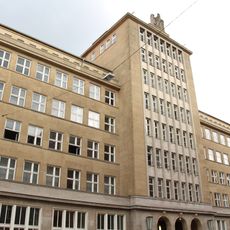
The Blumengroßmarkthalle is a concrete building in Berlin-Kreuzberg featuring a skeletal frame with exposed concrete panels forming its exterior. The interior offers spacious, open areas now used for cultural and educational purposes.
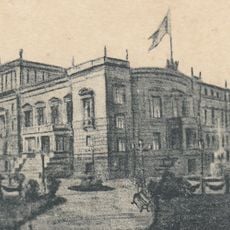
The structure was built in 1922 as a flower market near Markthalle II and has shaped the area ever since. After destruction during World War II, a new building was erected in 1965 that preserved its original function.
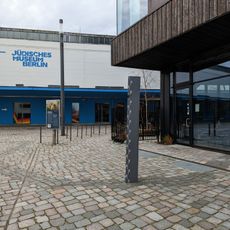
The building now houses the Academy of the Jewish Museum Berlin and serves as a place for education and exchange. Visitors find archives and learning spaces that convey history and culture in an engaging way.
The hall sits inside the block reached from Enckestraße, a cul-de-sac off Friedrichstraße; the grounds cover about 26,000 m² with access and parking areas. The Enckestraße side opens the site from the north. The Jewish Museum Berlin's academy now occupies the former market hall, so entry follows its opening arrangements rather than the old wholesale market.
The hall's steel-and-concrete skeleton was designed by Bruno Grimmek and occupied on 28 January 1965, the eve of the Grünen Woche fair. Its 6,436 m² of floor space included 3,340 m² of sales area. From 1926 flowers arrived by air freight from Amsterdam via Tempelhof airport, making the site Germany's largest flower transshipment point before the war.
The community of curious travelers
AroundUs brings together thousands of curated places, local tips, and hidden gems, enriched daily by 93,974 contributors worldwide.