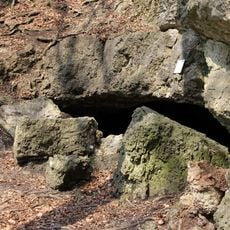
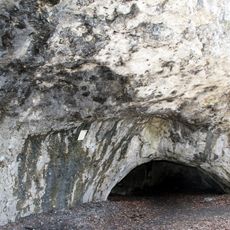
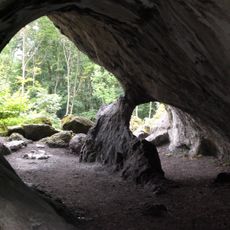
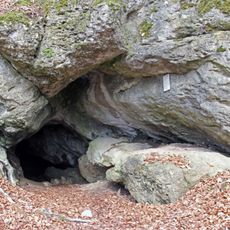
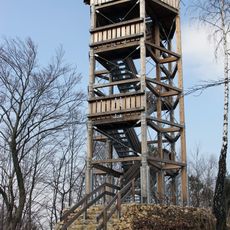
Kemenate, Medieval castle in Ebermannstadt, Germany
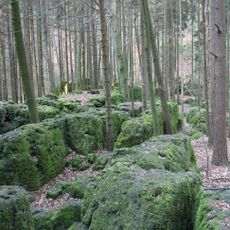
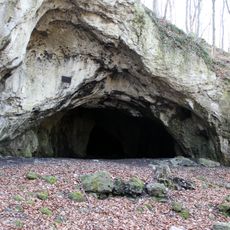
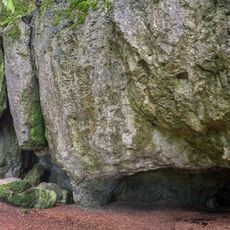
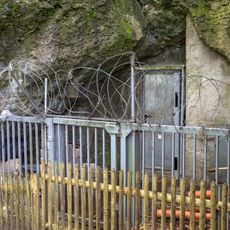
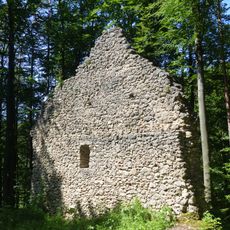
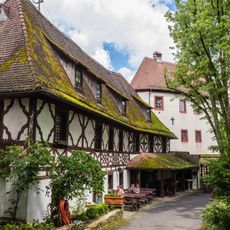
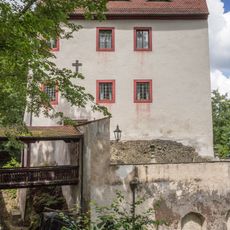
Gaillenreuth Castle stands high above the Wiesent river on the western upper edge of the valley in Burggaillenreuth, part of Ebermannstadt in the Forchheim district. Only the southern part of the hill castle survives: parts of the outer ward and a tower house built after 1632.
Gaillenreuth Castle is one of six castles that Bishop Otto I of Mistelbach acquired for the Bishopric of Bamberg in 1122; its builders and earlier owners are unknown. It was first recorded again in an appendix to the law book of Bishop Frederick of Hohenlohe (1342–1352), when Bishop Leopold III of Bebenburg paid 100 pounds of hellers to Conrad of Egloffstein for its upkeep. Between 1353 and 1359 it passed as an episcopal fief to the lords of Egloffstein. In 1525 it was burned in the Peasants' War and rebuilt by Conz of Egloffstein; Croatian troops destroyed it on 8 July 1632.
The name Gaillenreuth has nothing to do with the robber baron Eppelein von Gailingen, hanged in 1381. In 1382 the castle briefly served as a base for Fritz von Streitberg, who had recruited 33 lords with pikes and 60 armoured foot soldiers from the Rhön and Grabfeld and brought 14 captives to the fortress. Today the privately owned site hosts events and holds a beer garden.
The surviving southern part of the castle stands on the upper western edge of the Wiesent valley in Burggaillenreuth, a village of Ebermannstadt. The site is in private ownership and holds a beer garden, so visitors should check opening arrangements before setting out. Sturdy footwear helps on the slope up from the village.
The castle is often confused with the robber baron Eppelein von Gailingen, executed in 1381, but the sources state it has nothing to do with him. In 1382 it served as a base for Fritz von Streitberg, who seized 14 captives from villages near Gräfenberg and held them at the fortress called "Gaylenrewt".
The community of curious travelers
AroundUs brings together thousands of curated places, local tips, and hidden gems, enriched daily by 94,653 contributors worldwide.