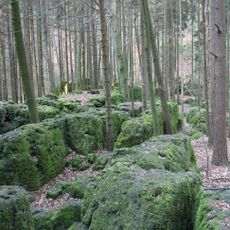
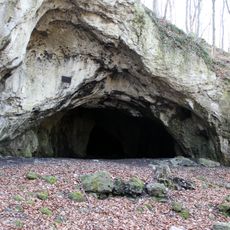
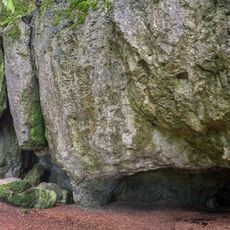
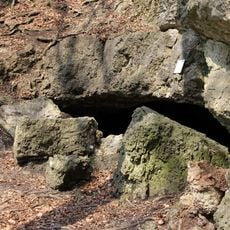
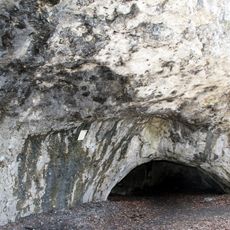
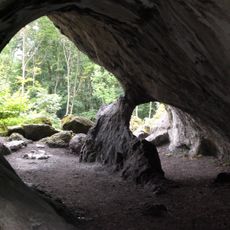
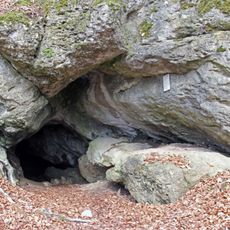
Zoolithen Cave, Natural monument cave in Ebermannstadt, Germany.
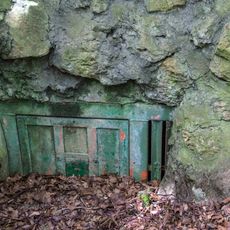
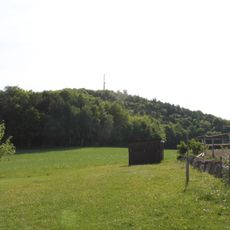
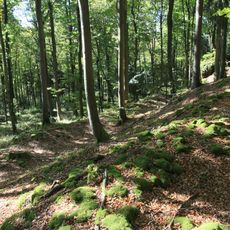
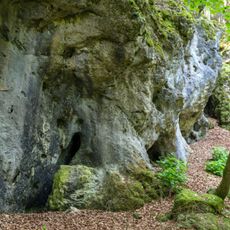
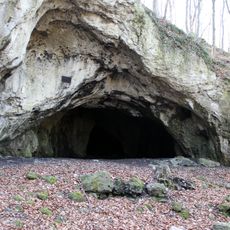
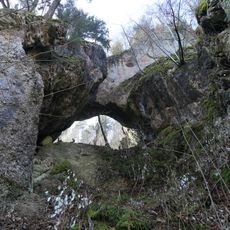
Zoolithen Cave is a natural karst cave about 400 metres west of Burggaillenreuth, a district of Ebermannstadt, on the northern slope of the Hohler Berg. Its passages run over 1000 metres in total, and it is registered as geotope 474H002 and as cave D 109 in the Franconian Alb cave register. The entrance is permanently locked.
The cave was first documented in 1602 and gained scientific importance in 1774 through the discovery of animal remains. These early findings helped researchers understand the prehistoric history of the region and sparked further investigation.
The name combines the Greek zoon (animal) and lithos (stone), coined by the pastor and cave researcher Johann Friedrich Esper for the fossil bones cemented together in the cave. The cave is closed year-round and serves only as a research site, so the name and its Greek origin are what a visitor can encounter from outside.
The cave is locked year-round and serves only as a research site, so there is no visitor access; it lies about 400 metres west of Burggaillenreuth on the north slope of the Hohlen Berg. The Forschungsgruppe Höhle und Karst Franken e. V. (FHKF) leases it and secures it against unauthorised entry. Research installations remain inside from decades of excavation and survey work.
The cave's name was coined by the Bamberg pastor Johann Friedrich Esper from the Greek zoon (animal) and lithos (stone), after the fossil bones cemented together in the sediment. Rosenmüller first described the cave bear (Ursus spelaeus) from this material in 1794. Carbon-14 dating of the bones gave an age of about 29,000 years.
The community of curious travelers
AroundUs brings together thousands of curated places, local tips, and hidden gems, enriched daily by 93,889 contributors worldwide.