Buniamshof, Municipal stadium in Lübeck, Germany.
The Buniamshof is a stadium in Lübeck featuring an eight-lane synthetic track with a natural grass field at its center. The facility offers covered seating areas and has a total capacity of around 2500 seats.
The grounds were designed in 1910 by landscape architect Erwin Barth and rank among the earliest municipal sports facilities in Germany. It was built on land between the city moat and the Trave River, reflecting the period when cities began systematically developing sports infrastructure.
The stadium serves as home ground for several local sports clubs and hosts regional athletics competitions. It plays an important role in the sporting life of the city and brings together athletes and spectators from the surrounding area.
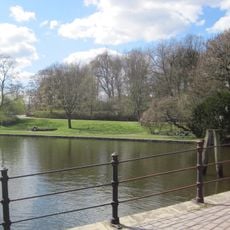
The stadium lies between the tree-lined ramparts to the north and east and the old railway embankment to the west; the glass front on Possehlstraße lets passers-by see the pitch. Since the 2021 conversion it holds 2500 places, nearly 1500 of them covered seats. The eight-lane synthetic track, the only one in Schleswig-Holstein, is used by clubs for training and competition.
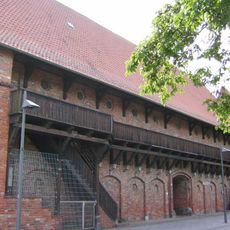
The name comes from the adjacent Bonnies Hof bastion, built between 1614 and 1618; the open-air stage Freilichtbühne Lübeck was laid out there in 1926. The stadium itself was designed in 1910/11 by garden architect Erwin Barth, his last work in Lübeck, and was one of Germany's first municipal sports grounds.
The community of curious travelers
AroundUs brings together thousands of curated places, local tips, and hidden gems, enriched daily by 94,460 contributors worldwide.