Burg Grimburg, Medieval castle in Grimburg, Germany
Burg Grimburg is a medieval fortress situated at approximately 460 meters (1,500 feet) elevation in the Hunsrück region of Rhineland-Palatinate, with thick stone walls and towers that dominate the landscape. The complex displays characteristic features of a medieval stronghold and offers expansive views across the surrounding countryside from its elevated position.
The lords of Saarbrücken built the castle around 1150. It was destroyed in the Trier schism of 1183–1190 and rebuilt by Archbishop John I (1190–1212), after which it counted among the seven Trier territorial castles listed in the Liber annalium. From 1328 it was the seat of the electoral-Trier Amt of Grimburg, and in 1683 French troops set it on fire.
The name probably derives not from Middle High German grimme ("grim") but from grüene, as the 1202 form grymberch suggests: "green castle". Since 2001 the Burghaus has hosted civil weddings of the Hermeskeil registry office, and the grounds serve as a backdrop for castle festivals and plays.
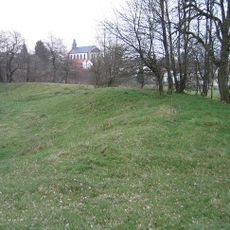
The ruin lies on the Kittelaufberg spur at 448 m, 1.8 km south-southwest of Grimburg village, above the confluence of the Mühlenbach and Wadrill. The grounds stretch about 300 m long and 90 m wide, with the restored Burghaus, Bergfried, Hexen- and Küchenturm and entrance tower to find. The Förderverein Burg Grimburg, founded in 1978, maintains the site; the Burghaus hosts civil weddings for the Hermeskeil registry office.
The castle name likely derives not from Middle High German grimme ("grim") but from grüene: a 1202 charter records grymberch, "green castle". The first structure was probably a residential tower, later hollowed out and fitted with a pentagonal tower. In 1258 a verdict confirmed the cathedral sacristan and St. Paulin's foundation each held a quarter share.
The community of curious travelers
AroundUs brings together thousands of curated places, local tips, and hidden gems, enriched daily by 94,057 contributors worldwide.