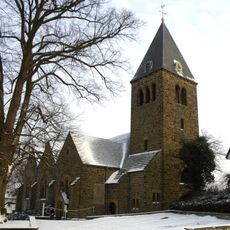
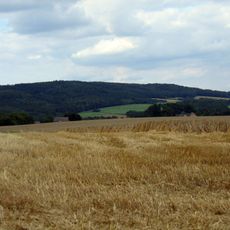
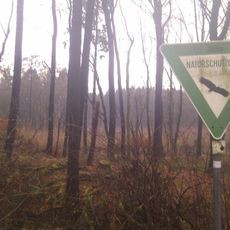
Burg Limberg, Medieval castle in Preußisch Oldendorf, Germany
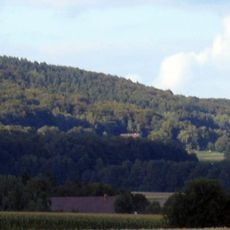
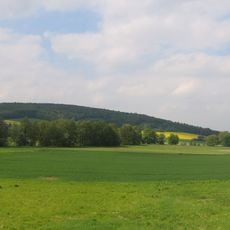
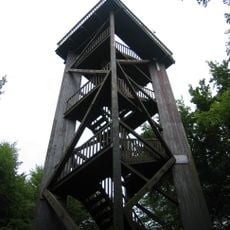
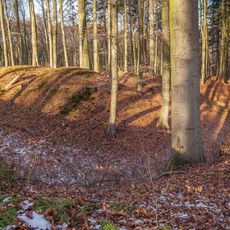
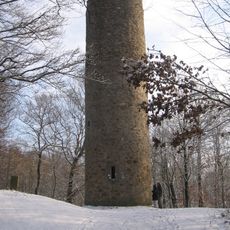
Burg Limberg is a ruined hill castle on the 190-metre-high Limberg in the Wiehen Hills near Börninghausen, part of Preußisch Oldendorf. Its square bergfried, twelve metres high with twelve-metre sides, was restored in 1989 and can be visited. Remains of the palas walls, the ring wall, defensive banks and the moat survive around it.
Built in the 13th century on the border of the bishoprics of Minden and Osnabrück, probably by the Bishop of Minden, the castle passed around 1300 as a fief to the Counts of Ravensberg, who extended it; it is first documented in 1319. After a fire in 1554 it was restored, and the 1614 Treaty of Xanten assigned it to the Elector of Brandenburg. Its twenty-man garrison moved to the Sparrenburg in 1662, ending its role as a military post.
The 600-year-old lime tree beside the ruin is called the Gogerichtslinde, after the Gogericht, a regional court that once met under it. The tree still stands at the castle, marking the spot where justice was dispensed for the surrounding area.
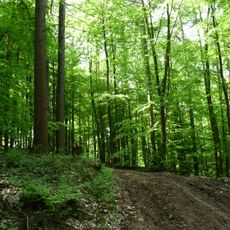
The restored tower and castle walls are accessible to visitors, though the elevated hilltop location means a natural climb to reach them. The site is best explored during dry weather, as the grounds feature uneven terrain around the historic structures.
The 30-man garrison meant to protect the castle was ordered away to support the siege of Lippstadt, leaving it easy for the Count Palatine of Neuburg to capture during the Thirty Years' War. The tower later served as a gaol until 1805.
The community of curious travelers
AroundUs brings together thousands of curated places, local tips, and hidden gems, enriched daily by 92,666 contributors worldwide.