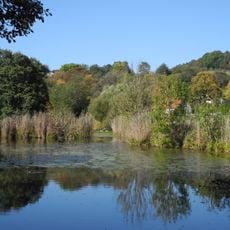
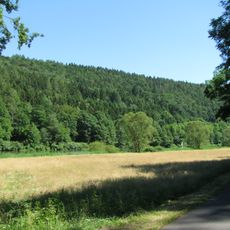
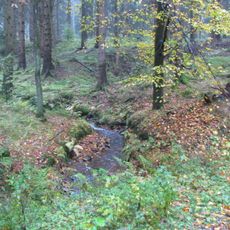
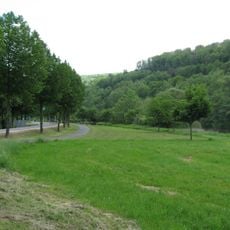
Burg Sichelnstein, Castle ruin in Staufenberg, Germany
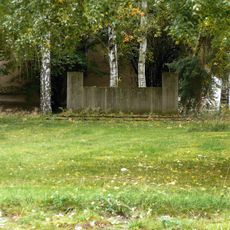
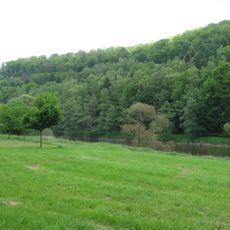
Burg Sichelnstein is a hillside castle ruin on a spur about 325 m above sea level, north above the Ingelheimbach valley. Its surviving 7 to 10 m high perimeter wall traces a horseshoe-shaped ground plan open to the west, with no interior walls left. Visitors enter from the east through a Gothic pointed-arch gate; the drawbridge and gate approach disappeared over 100 years ago.
The castle's construction date is undocumented; a 933 battle at Merseburg is the first mention of a Wittilo von Sichelnstein, but no founding date is proven. In 1372 Duke Otto the Quarrelsome refortified it and raided Hesse from here; he ceded it with its district to Hesse in 1374. It was pledged and changed hands repeatedly, and by 1557 its estate still collected grain dues from thirteen villages. Its destruction is unrecorded, likely in the Thirty Years' War.
The names Sichelnstein and Sensenstein, sickle and scythe, refer to the former Brunswick-Hessian border; legend says Duke Otto the Quarrelsome named his castle after the sickle to mock Hessian grain raids, and Landgrave Hermann answered with the larger scythe. The two silver sickles and a marble column still appear in the arms of Sichelnstein and Staufenberg.
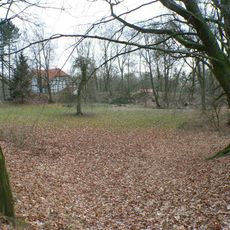
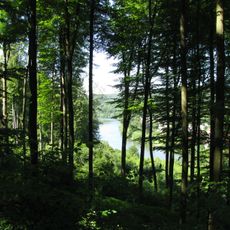
The grounds are easily accessible and suit a walk through the wooded area. It is wise to wear sturdy shoes and respect the paths, as some sections are uneven.
After the castle was abandoned, local people dismantled and reused stones from the walls to build houses in the nearby area. This practice shows how the community gave the structure a second life in their own homes.
The community of curious travelers
AroundUs brings together thousands of curated places, local tips, and hidden gems, enriched daily by 92,635 contributors worldwide.