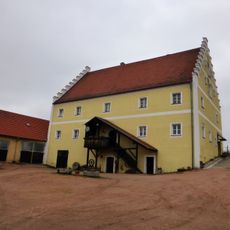
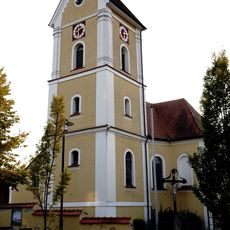
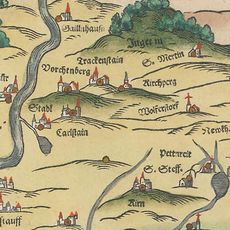
Burgruine Stockenfels, Castle ruin in Nittenau, Germany.
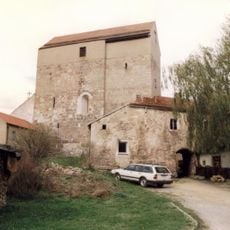
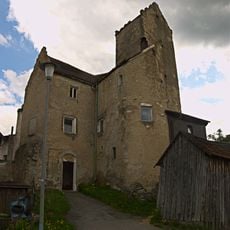
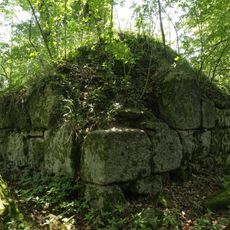
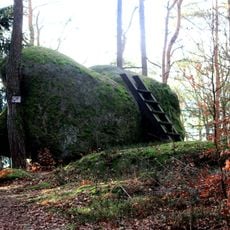
Burgruine Stockenfels sits on a granite hill and displays remains of defensive walls, a residential tower, and outer fortifications that once protected this location. The site features marked paths and informational panels explaining the different structural parts throughout the ruins.
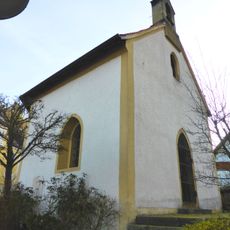
The surviving masonry points to construction around 1338 under Duke Ludwig the Strict and his successor Ludwig IV, later Emperor Ludwig the Bavarian, who gave the castle its own chapel. After 1351 it passed to the Auer patrician family of Regensburg, and in 1372 the Wittelsbachs took it over. Destroyed in the Thirty Years' War, it lost its role as administrative centre to Fischbach; since the early 19th century it has belonged to the Eckart family, now Countess Gabriele von Drechsel.
The castle's stone towers and walls show the building techniques of medieval craftsmen who worked with local granite and lime mortar. These structures tell the story of how people built fortifications in this region during those times.
The ruin stands on a granite knoll about 120 metres above the Regental, reached on foot; the climb is steep and the ground uneven. The core castle measures 33 by 13 metres, with the residential tower at its north end and the lower outer ward to the west. Sturdy shoes are advisable, and the rock can be slippery after rain.
The Stockenfels ghost legend calls the ruin a "Bierpanscher-Walhalla": at midnight the buried castle well opens and a ladder rises to the tower top, where devils force brewers who watered their beer to pass buckets of water up and pour it over the wall. Named sinners include the Schwodlbräu of Zangenstein and three waitresses from the Hofbräuhaus.
The community of curious travelers
AroundUs brings together thousands of curated places, local tips, and hidden gems, enriched daily by 93,940 contributors worldwide.