Baudenkmal, Architectural heritage monument in Zell im Fichtelgebirge, Germany.
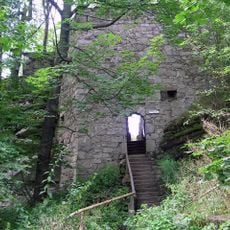
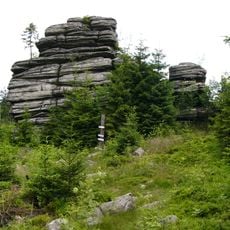
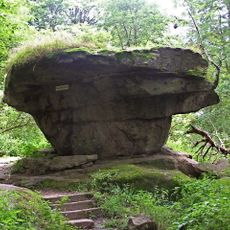
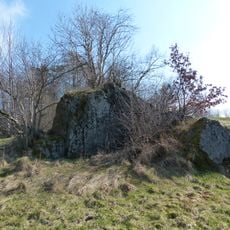
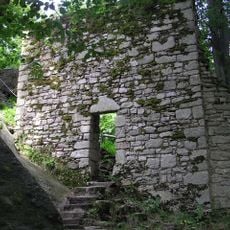
The Bärenfang on the Großer Waldstein is a small, elongated building of massive granite blocks, 9 metres long, 3.30 metres wide and 4 metres high. Each narrow end has an entrance, and a narrow opening sits in the middle of one side wall. A new roof was put on in 2006 after storm damage; a stone bear stands nearby.
The first written record is a 3 April 1656 invoice from the margravial Kastenamt Münchberg for oats and eight draft horses used to haul a bear caught at the Waldstein to Gefrees, then on to Bayreuth. The trap operated for about a century, taking nearly a bear a year; the last catch is dated 1760. Around 1800 the ruined granite blocks attracted builders, and in 1816 forester Otto of Sparneck blocked demolition, allowing the 350th anniversary to be marked in 2006.
The name Bärenfang means "bear trap". The building held live-caught bears before they were taken to Gefrees and on to Bayreuth, where the margraves staged bear-baiting in the Thiergarten. Vordorf's inhabitants are still called "the bears" after the last bear of the Fichtelgebirge, shot by the forester of Vordorf in 1769.
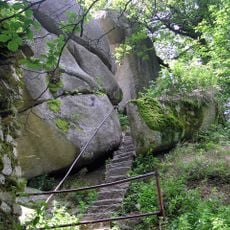
The Bärenfang stands on the summit of the Großer Waldstein, reached on foot via hiking trails; there is no street access and no interior visit. The massive granite block structure, 9 m long, 3.30 m wide and 4 m high, is viewed from outside. A stone bear was placed nearby, and the surrounding rocks are a natural monument.
The trap's release mechanism is not fully understood. Ludwig Zapf proposed that ropes ran from two trapdoors along the north wall to an iron rod inside, with bait on a hook; pulling it freed the doors. Several men were likely needed to raise the doors, which weighed several hundredweight.
The community of curious travelers
AroundUs brings together thousands of curated places, local tips, and hidden gems, enriched daily by 94,019 contributors worldwide.