Großer Waldstein, Mountain summit in the Fichtelgebirge, Germany
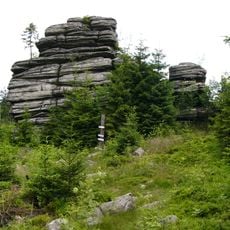
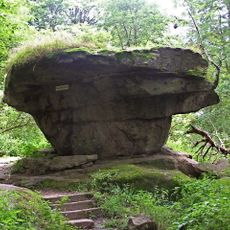
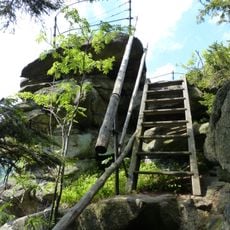
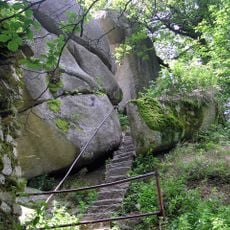
Großer Waldstein is a 877 m summit in the northern Fichtel Mountains, whose highest rocks, the Schüssel, are reached by steps and carry an 1851 viewing pavilion. The summit area is a 20.2-hectare nature reserve with old beech stands and granite towers in spheroidal weathering; the Zellerfels (772 m) stands on the southwest slope.
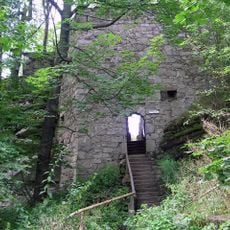
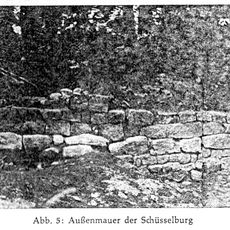
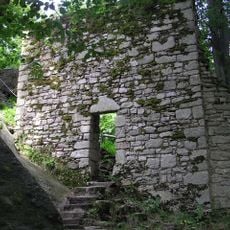
The area was fortified during medieval times and once housed two castle ruins, with the Red Castle constructed in the 14th century. These early fortifications show the region's historical importance as a passage and defensive location.
The name Rotes Schloss comes from red tiles added during the Spanish War of Succession (1701–1714), not from the castle's 14th-century construction; the term was coined by Hof headmaster Helfrecht in 1795. Visitors can still find fragments of these tiles around the ruins. The chapel on the summit, dedicated to Saint Wolfgang, protector of cattle, was maintained by Weißenstadt for about 200 years after the Ostburg was abandoned and probably destroyed in 1430 during the Hussite Wars.
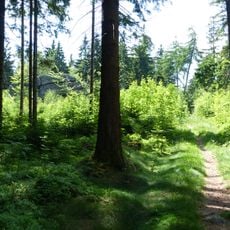
The site is accessible on foot via marked hiking trails, with a mountain lodge serving as a central point for breaks and information. Good footwear and care when traversing rocky terrain are recommended.
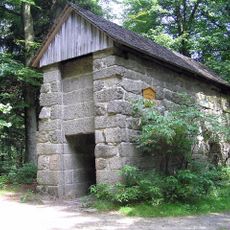
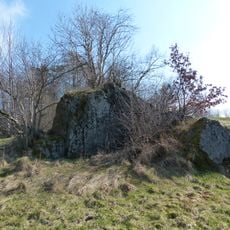
The Großer Waldstein has the only surviving bear trap (Bärenfang) in the region, a stone structure built to capture bears alive. It is a rare relic of how people dealt with large predators here, and visitors often overlook it among the summit's rocks and castle ruins.
The community of curious travelers
AroundUs brings together thousands of curated places, local tips, and hidden gems, enriched daily by 93,856 contributors worldwide.