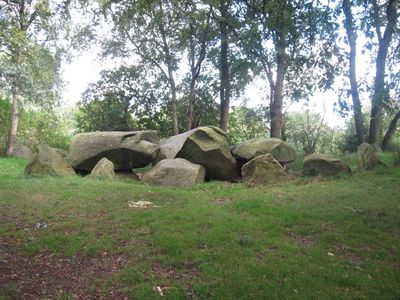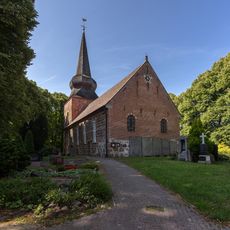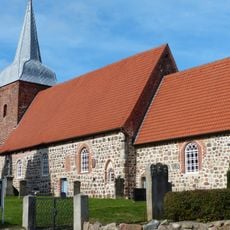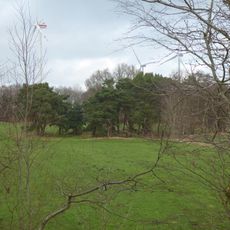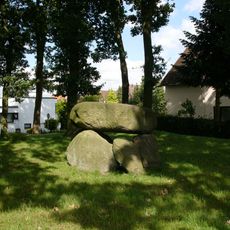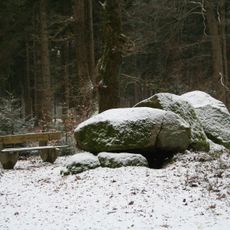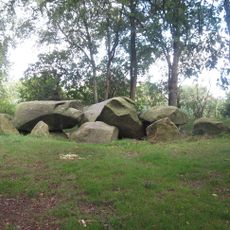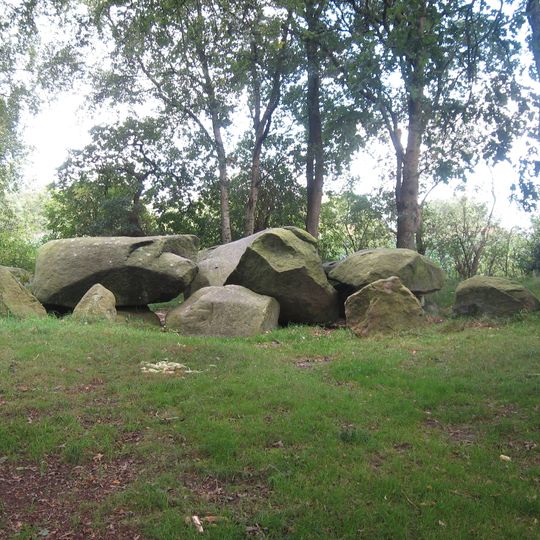
Großsteingrab Bülzenbett, Neolithic dolmen in Geestland, Germany.
The Großsteingrab Bülzenbett is a prehistoric burial chamber built from massive stone slabs arranged to create an internal passage and central burial space. The structure was constructed using enormous boulders positioned upright to support the weight of stone blocks placed on top.
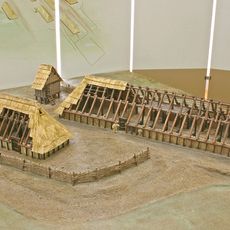
This megalithic tomb was built during the early Neolithic period when nomadic herding communities began settling in northern Germany. Construction took place when societies were developing more complex social structures and permanent ways to honor their deceased.
This dolmen served as a shared burial place where local communities laid their dead to rest and performed important rituals. The way the stones are arranged shows how much this location mattered to the people who built it.
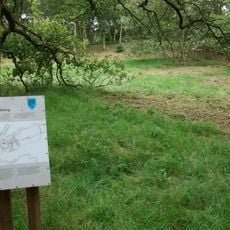
The site is accessible to visitors via marked pathways and stands in open terrain offering clear views of the stone structure. Information panels on location explain the layout and help visitors understand the different parts of the construction.
Excavations at this location uncovered pottery fragments and tools revealing how Neolithic people conducted their burials. The types of objects discovered differ from those found at other megalithic sites in the region.
The community of curious travelers
AroundUs brings together thousands of curated places, local tips, and hidden gems, enriched daily by 91,284 contributors worldwide.