Deutsches Buchhändlerhaus, Renaissance Revival building in Leipzig, Germany.
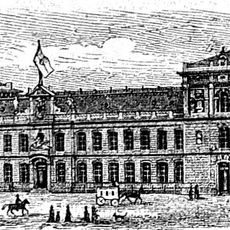
The Deutsches Buchhändlerhaus was the seat of the Börsenverein der Deutschen Buchhändler in Leipzig, built 1886–1888 by the Berlin office Kayser & von Großheim in Neo-Renaissance style on a site the city provided free of charge on the Hospitalstraße, today's Prager Straße. Its steep pitched roofs, domed towers and oriels stood out; the festival hall had stucco, murals by Woldemar Friedrich and large leaded-glass windows. Destroyed in 1943, it is gone; the Haus des Buches has stood on the site since 1996.
The building was completed in 1888 by architects Kayser and von Grossheim, during a period when Leipzig was expanding rapidly as the center of German book trade. Its creation reflects the city's rise as a major publishing hub.
The grand ballroom displays murals by Woldemar Friedrich showing Leipzig's place in German literary life, along with a glass painting titled 'Leipzig as Center of Book Trade'. The artwork on the walls tells the story of this city as a place where books and publishers held central importance.
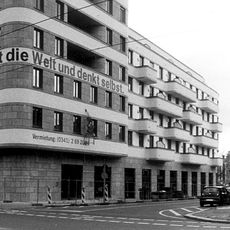
The Deutsches Buchhändlerhaus no longer stands: it was destroyed in the 1943 air raids, so there is nothing left to visit at the Hospitalstraße site, now Prager Straße. Since 1996 the Haus des Buches has occupied the spot and houses the Literaturhaus Leipzig; look for that building instead.
The building housed Germany's first library for the blind, an institution otherwise unrecorded in the trade-organization records. Its festival hall held a leaded-glass painting titled "Leipzig as the Center of the German Book Trade", made for the 1888 opening. The site is now occupied by the Haus des Buches, opened in 1996, which contains the Literaturhaus Leipzig.
The community of curious travelers
AroundUs brings together thousands of curated places, local tips, and hidden gems, enriched daily by 93,718 contributors worldwide.