Kochbrunnen, Mineral spring in Mitte, Germany
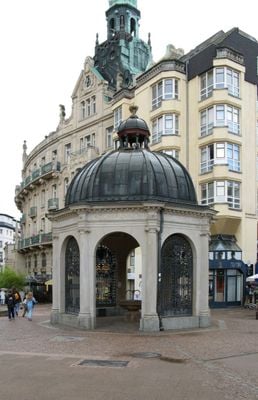
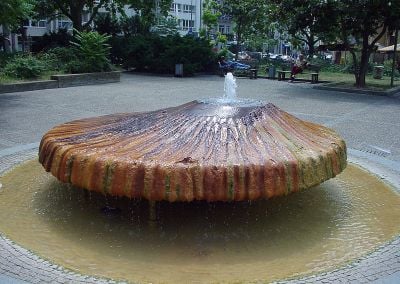
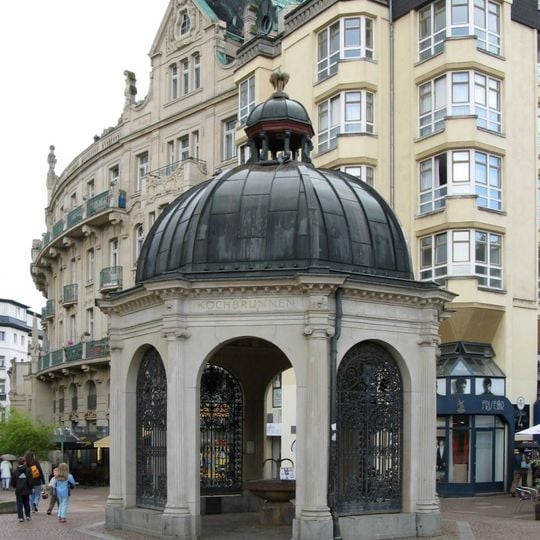
Kochbrunnen is a sodium chloride thermal spring rising from about 2,000 m depth through a 43 m borehole, emerging at 66.1 °C and yielding roughly 360 litres per minute. Its water is piped to the Kaiser-Friedrich-Bad treatment plant and into the city's thermal water network. The 1887/88 stone pavilion, inscribed KOCHBRUNNEN, has four columns, three gated arches and a ribbed metal dome; nearby the Kochbrunnenspringer sends a jet over a grooved mineral basin.
The water was noted in medieval times and later known by different names before receiving its current one. Over time the spring was increasingly developed and used to supply city facilities and provide heating.
The name Kochbrunnen means "boiling fountain", referring to the water's 66 °C temperature. In the 19th century the spring was the centre of Wiesbaden's drinking cure, and attendants known as Brunnenmädchen filled glass jugs from the spout. The mineral deposits left by the water are red sinter, coloured by oxidising metals, not yellowish.
The location is central in Wiesbaden and easily accessible, with the warm springs visible in their natural setting. Keep in mind that the water is very hot and caution is needed when approaching the source.
The water changes color and smell when exposed to air and left standing for a time. These changes show chemical processes happening in the spring that any visitor can observe.
The community of curious travelers
AroundUs brings together thousands of curated places, local tips, and hidden gems, enriched daily by 93,718 contributors worldwide.