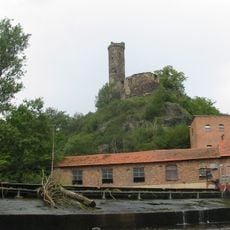
Felsburg, Medieval castle in Felsberg, Germany
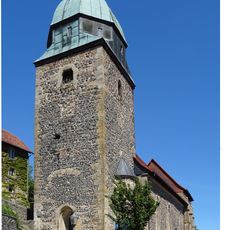
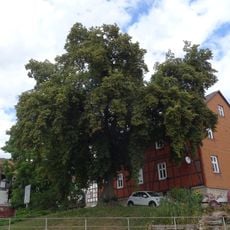
Felsburg is a partly ruined hilltop castle on a basalt knoll rising about 40 metres above the Eder valley in the centre of Felsberg, not near Fritzlar. Its trapezoidal plan has a 29.5-metre keep, late Gothic zwinger walls with keyhole embrasures, a 14th-century gate flanked by towers, and the intact St Pancratius chapel.
The Felsburg and the Vizegrafen von Velisberc were first documented in 1060, and the town of Felsberg followed in 1090. The family lived on the castle until 1253, when they sold it to the Landgraviate of Thuringia; after the separation of Hesse from Thuringia it passed to Hesse. Landgrave Heinrich II expanded the fortifications from 1333, and in 1427 Landgrave Ludwig I led his troops from here in the Mainz-Hessian War.
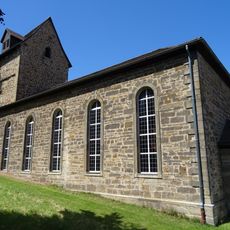
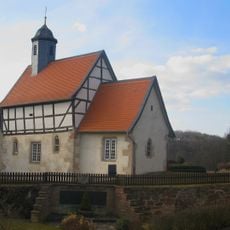
The castle is maintained by a local association, and its name derives from the counts of Velisberc recorded in 1060. The chapel of St. Pankratius, the only building besides the keep to survive intact, held 297 tons of black powder stored by Landgrave Philipp the Magnanimous in 1544; the magazine was used for 300 years.
The grounds are open during designated visiting hours, with parking available behind the castle. Plan to wear sturdy shoes since the pathways cross uneven terrain around the site.
From 1455 to 1458 the alchemist Klaus von Urbach lived at the castle, brought by Landgrave Louis I to make gold; when the attempts failed, he was expelled from the land. The episode belongs to the mid-15th century, not the Renaissance of the 1500s.
The community of curious travelers
AroundUs brings together thousands of curated places, local tips, and hidden gems, enriched daily by 92,796 contributors worldwide.